Start hereWhat a Sensory Spinning Chair Actually Does
A child climbs into a molded plastic bowl that sits low on a rotating base, pushes off the floor with one hand, and spins. Then she climbs out, wobbles two steps across the room, and climbs back in for another round. Occupational therapy clinics have owned these chairs for decades. Living rooms caught up fast, and product listings now promise everything from calm to coordination in one seat.
A sensory spinning chair is a floor-level rotating seat, nothing like a swivel desk chair even though search results mix the two together. What it actually delivers is vestibular input. The vestibular system sits in the inner ear and reports head movement and position to the brain. Research links its function to balance, posture, emotion, and autonomic regulation in children (Urbančič et al., PMC, 2023). For a child who craves rotational movement, the chair is a contained way to get a strong dose of it.
The chair occupies one corner of a wider family of sensory seating. Rocking chairs and platform swings feed linear movement input. Compression garments and weighted pads target the proprioceptive system, the one that registers pressure and body position. Wobble cushions and active stools work on posture during desk time. The spinning chair is the rotary option in this family, and it is the most intense input of the group. That intensity is exactly why it deserves the most screening before it lands in your home.
The honest version is narrower than a listing suggests. Rotating play gives a child practice in balance, coordination, and body awareness. For some children it settles the nervous system, and for others it revs it up. A small group should not use one at all. Which group your child falls into matters more than any brand comparison, so this guide handles the screening before the buying.
Find your typeThe Five Chair Types and What Each One Is For
“Best” is unanswerable until you know which type fits your child. The category splits into five forms, and they run on different hardware under the seat. Four of them get a section here. The fifth, adult-sized spec seating, matters for a specific group and earns a sentence at the end.
Bowl-Style Floor Spinners: The Default First Chair
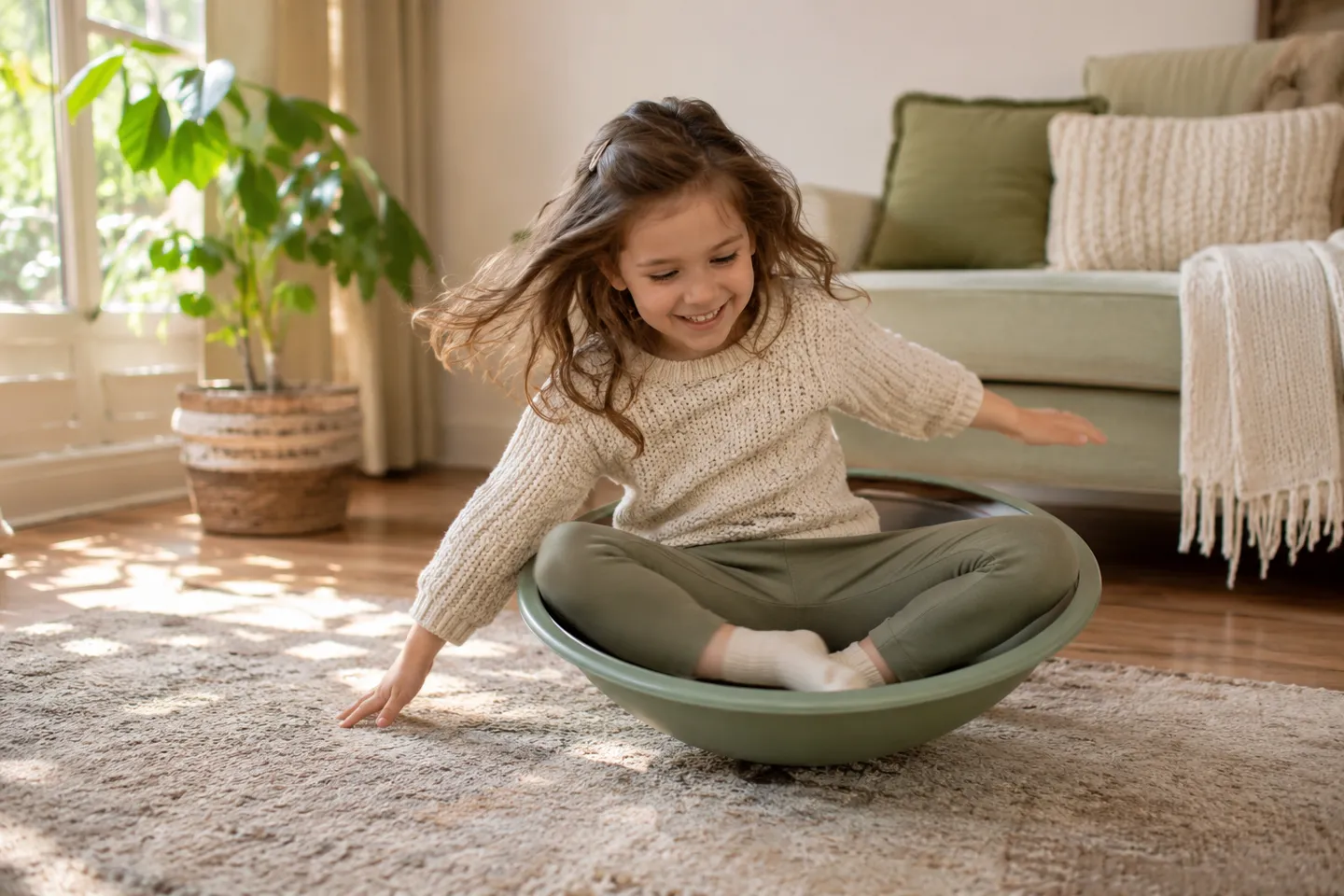
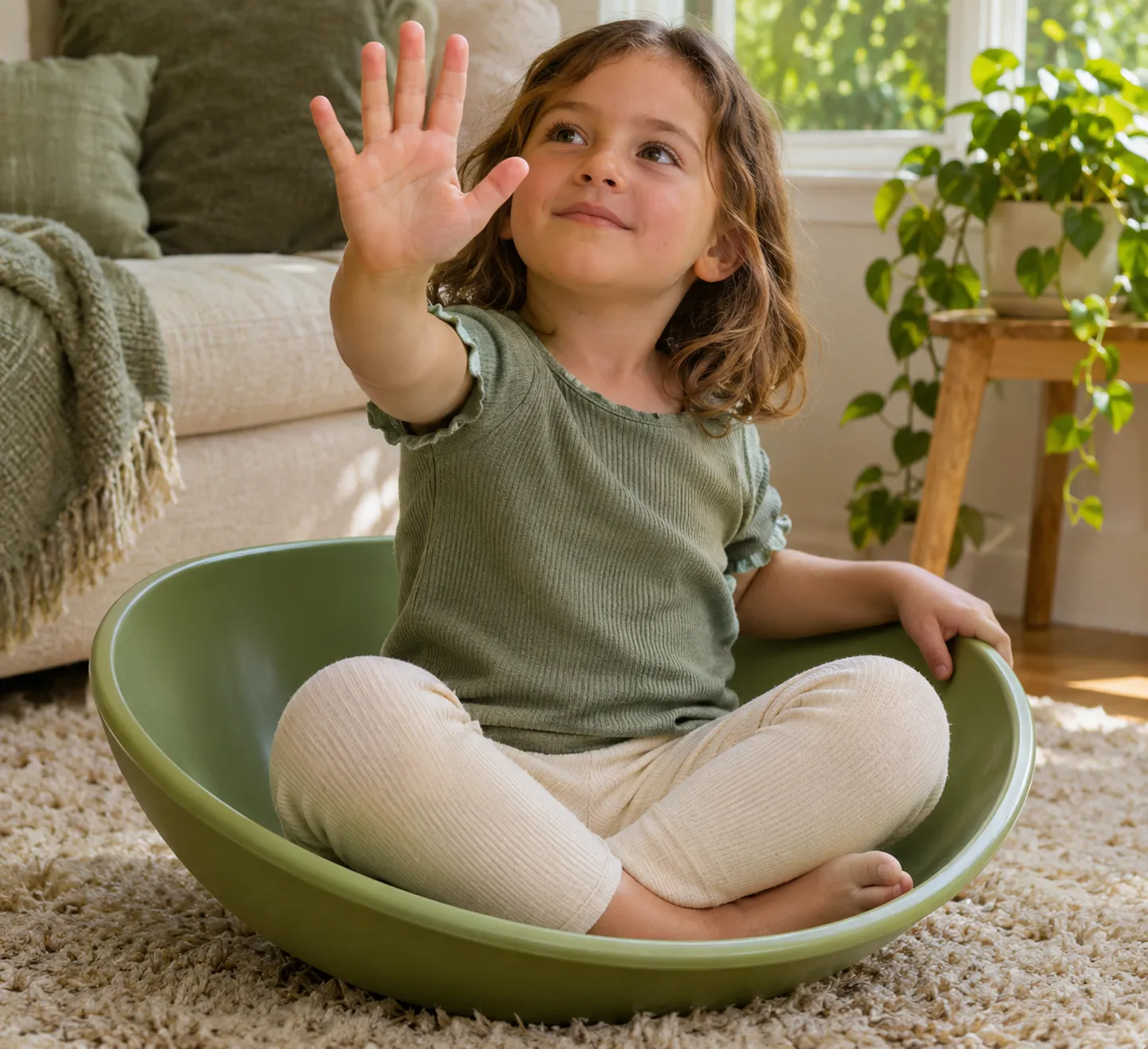
This is the type most rankings mean when they say sensory spinning chair: a shallow molded bowl on a rotating base, seat low to the floor, hands doing the pushing. The shape keeps the center of gravity near the ground, which makes it forgiving for toddlers and early-elementary kids. It is the cheapest and most available form, and for a first chair at home it is the sensible default.
The boundary is weight headroom, not age. Kids outgrow seats faster than they outgrow spinning, so measure your child against the stated rating before buying, not against the age label on the listing. A strong six-year-old can load a chair the same way a heavier one does.
Platform and Disc Spinners
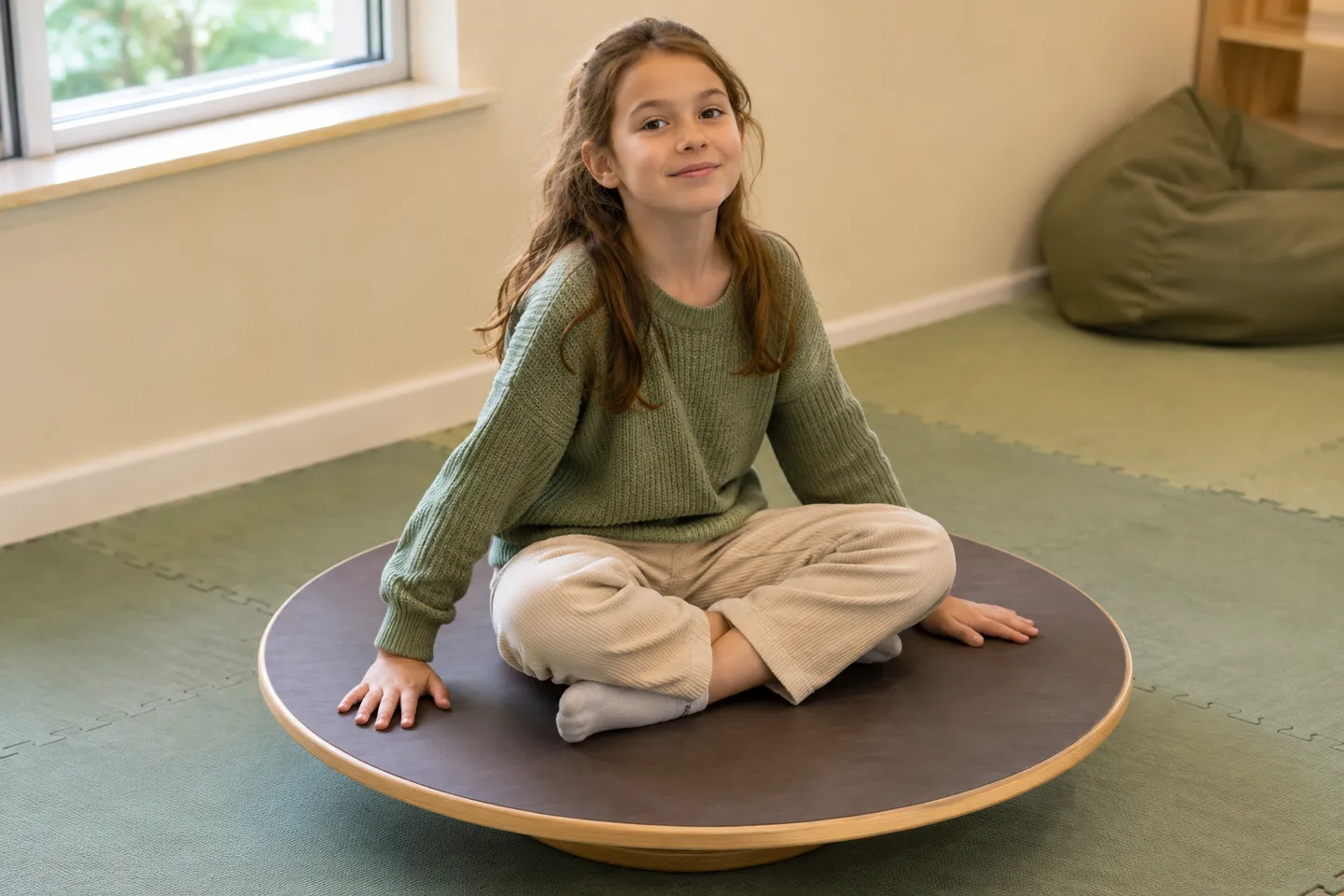
A flat disc replaces the bowl. The child can sit cross-legged, kneel, lie on their stomach, or stand and shift weight, which gives this type the widest movement vocabulary of the five. Therapy rooms favor it for gross-motor work, and bigger kids stay interested in it longer.
The tradeoff is containment and space. A disc gives a moving child more ways to fall off it, so clear a generous fall zone before choosing this type. Skip it if your child startles easily or flails during fast movement.
Backed and Handle Models
Adding a seat back and grip handles changes who the chair is for. Kids with weaker trunk control, or with a startle response to fast motion, get something to brace against and hold. Cautious spinners build confidence here before moving to open seating.
The handles take real abuse, because a spinning child grips them hard through every rotation. Twist each handle by hand before you buy. Any wiggle at the mount will get worse under a spinning child, and a loose handle at speed is a hand injury waiting for its moment.
Therapy-Grade Swivel Chairs
The professional version swaps plastic hardware for reinforced rotating mechanisms and, in some models, metal bases. Clinics and sensory rooms buy this grade because it survives dozens of children a week. It sits at the far end of a spectrum whose other end is the toy-aisle sit-and-spin: same idea, very different engineering, and the price jump is structural rather than cosmetic. Ask what the rotating mechanism is actually made of before paying the difference.
For teens and adults, the practical route most families end up taking is searching adult disability seating instead of kids’ products. Weight ratings and bearing sizes scale up properly there.
Chair types at a glance
| Type | Best fit | One-line boundary |
|---|---|---|
| Bowl-style spinner ⭐ | Toddlers and early-elementary, first home chair | Measure the child against the weight rating, not the age label |
| Platform-disc spinner | Bigger kids, gross-motor play, therapy rooms | Clear a wide fall zone and skip it if your child startles at speed |
| Backed and handle models | Weak trunk control, cautious spinners | Twist the handles by hand and reject any mount wiggle |
| Therapy-grade swivel | Clinics, sensory rooms, schools, daily heavy rotation | Ask what the rotating mechanism is made of before paying the premium |
| Adult disability spec | Teens and adults over kids’ ratings | Search adaptive seating, where ratings scale up honestly |
Screen firstShould Your Child Actually Get One?
The screening matters more than the model. Spinning delivers the strongest input this equipment family produces. Clinical guidance treats rotation as alerting input rather than calming input, scheduled before focus activities rather than before sleep (Westside Children’s Therapy, 2026). Run these three checks in order.
First, watch how your child treats rotation. A seeker spins on office chairs, twirls in place, and rarely seems dizzy afterward. An avoider resists being moved, clings during swings, and pulls away from tipping games. The chair is a candidate tool for the seeker. For the avoider, rocking or compression tools fit better, and pushing rotation on them backfires.
Second, apply the rule that every clinical source agrees on: the child has to be able to signal stop. Child-led spinning only, never adult-driven. If your child cannot yet communicate “stop” clearly, passive spinning is off the table entirely, no matter how much the listing promises.
Third, schedule the input and watch what it does. Product pages promise calm. Clinical language says alerting. Both describe real outcomes, in different children. The way through is your own observation. If your child comes off the chair wired and fast, treat it as alerting input and keep it in daytime routines, before focus tasks. If your child settles after spinning, you have a regulating tool, and a one-week note of before-and-after behavior will tell you more than any marketing claim.
Two flags belong here as well. Children prone to travel sickness or ear infections handle rotation worse, so shorten sessions and stop during flare-ups. And switching spin direction every minute or so balances the dizziness effect, which is standard advice in occupational therapy communities.
Before you buy, confirm
- My child seeks rotation and recovers quickly afterward
- My child can ask or signal to stop
- Sessions run before focus time, not before sleep
- No active ear infection and no motion-sickness pattern
- Spin direction switches every minute or so
DurabilityHow to Tell a Sensory Spinning Chair That Lasts From One That Cracks
A search for the best sensory spinning chair returns polished ranking posts with star ratings and price tiers. Parent communities tell a different story. In one r/Autism_Parenting thread, a parent reports that an eleven-year-old has cracked the base of three spinning chairs (r/Autism_Parenting, 2025). Under a mother’s video with thousands of reactions, a commenter counts five chairs worn out, all failing at the same spot (Facebook, 2026). A separate video shows a brand-new chair cracking on first use despite a 100 kg label (TikTok, 2026). These are not random accidents. The failures cluster at one structural point, and once you see it, you can shop around it.
Why Almost Every Broken Chair Fails at the Same Spot
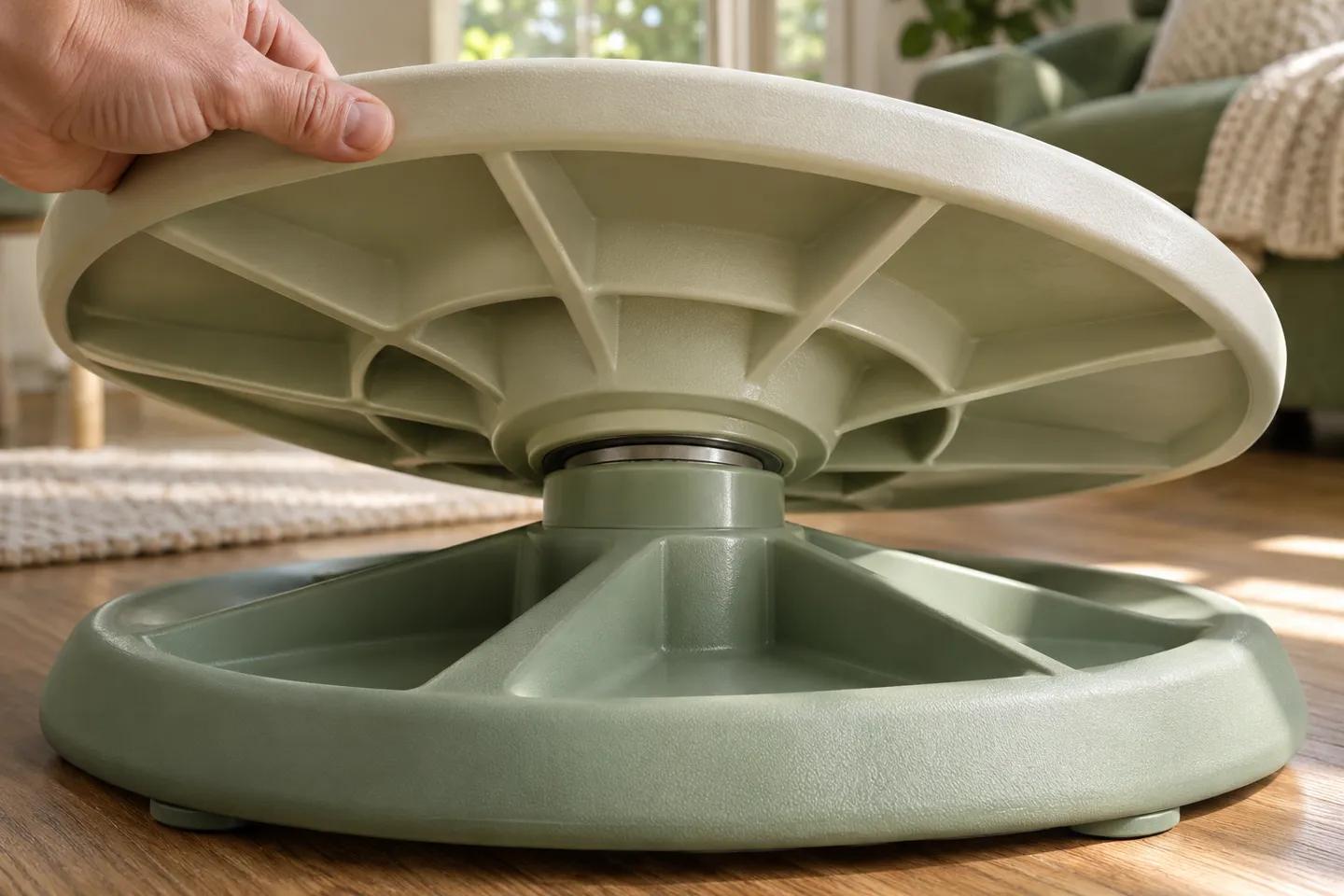
The weak point is the hub: the center plate where the seat meets the rotating base, plus the bearing or bushing inside it. Injection-molded plastic handles static weight well, but spinning concentrates stress at that hub geometry, and repeated torque flexes the joint through thousands of cycles. A plate molded thin, or without reinforcing ribs around the hub, fatigues and cracks radially. The rotating element inside fails first when it is a plain bushing, which wears into wobble, rather than a sealed ball bearing. Base skirts crack separately, usually from side impacts or brittle recycled material. The takeaway for a buyer is simple: the plate and the rotating mechanism decide the lifespan, not the seat shell. Ask the seller what the rotating hardware actually is before anything else.
Five chairs worn out. All of them failed at the same spot.
Bearing wear is also the one failure you can plan for, because it announces itself. Wobble and grinding noise from the base mean the rotating element is worn, and replacing it is a small job. A tutorial on exactly this repair has collected thousands of views (YouTube, 2026). Plate cracks are a different species, covered below.
What the 220-lb Rating Actually Tells You
Almost every bowl-style chair on the market tops out around a 220-pound weight limit (Westside Children’s Therapy, 2026). The rating answers one question only: can the seat hold this much mass while it sits still.
What the label measures
220 lbs
A 220-pound (about 100 kg) rating is a static sitting weight, not a promise about how long the chair survives under daily hard spinning.
A sixty-pound child generating violent rotational torque loads the hub in a way static mass never does, and the fatigue from those cycles is what eats the plate. For a bigger or unusually strong child, the rating is about margin, and daily hard spinning consumes margin faster than weight alone would. That is why parents of serious spinners so often end up in adult adaptive seating, where the hardware scales with the load.
Matching the Spec to Your Situation
No single chair wins every scenario, so rank the hardware against your intensity instead of comparing price tags.
Buying routes by situation
| Route | Fits | Structural must-haves | Signal to switch solutions |
|---|---|---|---|
| Budget bowl chair | Toddler, a few sessions a week | Any plate in good condition, non-slip base | Child near the middle of the weight rating, or spinning daily |
| Standard kids chair, 220-lb class | Elementary age, regular home use | Reinforced hub plate, sealed bearing over plain bushing, virgin PP | Plate cracks, bearing wobble inside the first year |
| Big-kid or teen route | Strong spinners near the rating ceiling | Adult adaptive seating with scaled bearings and higher ratings | Any daily grinding noise from the base |
| Therapy-grade multi-user | Clinics, classrooms, shared sensory rooms | Reinforced rotating mechanism, replaceable bearing parts, certification documents on request | Volume grows beyond one room, or spec sheets stay vague |
Then demand the specs in writing. Four questions sort sellers fast. Is the rotating element a sealed bearing or a plain bushing? Does the plate have reinforcing ribs at the hub? Is the plastic virgin or recycled PP? And can the seller produce test documents against EN71, ASTM F963, or a Children’s Product Certificate on request? A vendor who answers these four is accountable. One who cannot is selling you a seat shell and hoping.
So what is the best sensory spinning chair? The honest answer is that the best one is the chair whose rotating hardware matches your child’s intensity, and no ranking post can substitute for those four questions.
Ask us for the written specs and EN71 or ASTM F963 certificates behind any chair in the STARTINAL range before you commit to an order.
Request the spec sheetWhere to buyWhere Sensory Spinning Chairs Are Actually Sold
Three channel types sell these chairs, and each one fits a different buyer. Mass online retail suits a family buying one chair, with easy returns covering the quality gamble. Therapy-equipment retailers serve professionals: they carry grades suited to clinics and schools, help with selection, and handle institutional invoicing. Factory-direct and wholesale channels serve volume buyers: multi-room fit-outs, resellers, and programs that need consistent units, customization, and a paper trail with the price advantage.
The channel choice sets what you should demand. From retail, read the listing and reviews for hub failures specifically. From a professional retailer, ask which models they re-order and which they have dropped, because their returns history is the review you cannot see elsewhere. From a factory or wholesale source, ask for certification documents and their batch inspection process before discussing price.
That last point settles the trust problem parents describe in community groups, where people hesitate over marketplace sellers with no reputation. Seller credibility is a document chain. A seller who can produce a Children’s Product Certificate, EN71 or ASTM test reports, and a description of their inspection process is verifiable, whatever their review count. A seller who cannot is a gamble at any price.
Repair or replaceWhen Chairs Break: Diagnose, Repair, or Replace
Three failure patterns cover nearly everything. Grinding or wobble from the base means the bearing or bushing is worn; it is a wearable part by design and the cheapest fix. A hairline crack radiating from the hub means the plate has fatigued through its spin cycles. A cracked base skirt means the chair took a side impact or the material was brittle from the start, often a sign of recycled plastic.
Retire the chair the day a crack appears in the plate or base. A spinning seat fails at speed, and a cracked hub under a rotating child is a fall and laceration risk, not a cosmetic flaw.
The repair economics split along that same line. A worn bearing is a small parts cost and, for anyone patient with a tutorial, a home repair. A cracked plate is structural: the plate is a load-bearing part, glue does not restore its rating, and a repaired chair is a chair with an unknown limit. Replace it.
Usage intensity decides between repair and replacement. A home chair with light daily use is worth a bearing swap, which buys seasons of life. A shared classroom or clinic chair with plate damage gets replaced, not patched. Load-bearing parts with unknown margins do not belong under rotation in a setting where the next user is a child you have not met.
Whatever the channel, hold after-sales to a written standard before you need it. Three terms belong in writing: a defined response window for replacements, free parts for confirmed quality defects, and photo-based claim assessment. A broken part should not have to ship back first.
For bulk buyersReading Sensory Spinning Chairs as a Procurement Decision
Everything above rewinds differently for a buyer equipping a sensory room, a clinic, or a retail shelf. The listicle logic of comparing price and rating fails systematically in institutional use. The reasoning is already on the table. Institutional intensity runs several times a family’s, and the failures converge at the hub. In a clinic, a broken chair is not a refund request. It is a safety event and a disrupted session.
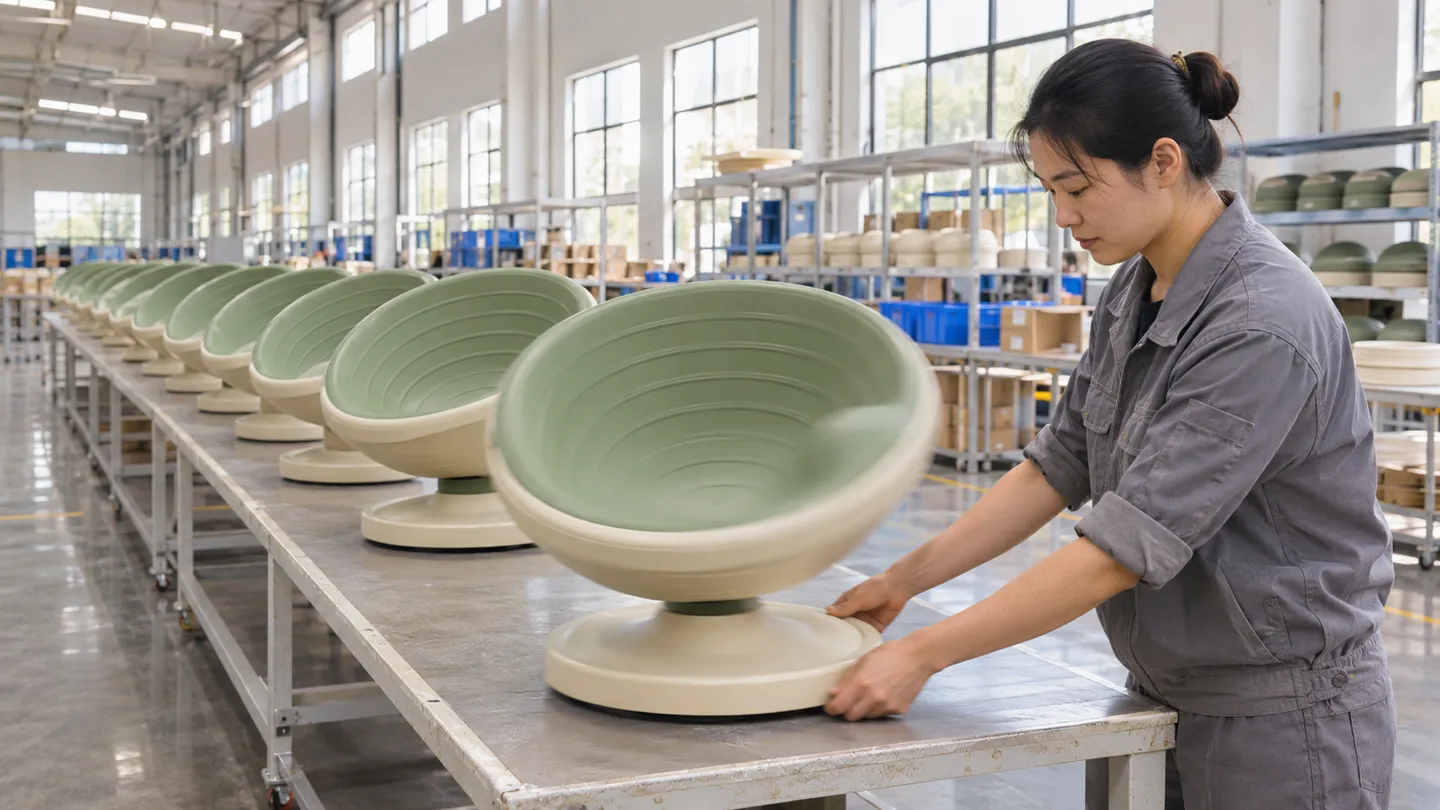
That rewires the buying logic in four moves. First, procurement specs should be written on structure, the same hardware facts from the repair section: sealed bearing type, plate thickness with hub ribs, virgin PP. Keep vague terms like “industrial grade” out of the spec sheet, because they verify nothing. Second, certification is legal ground, not marketing. In the United States, children’s products must pass third-party testing at a CPSC-accepted laboratory and carry a Children’s Product Certificate (CPSC, 2026). Importers have been required to file those certificates electronically with customs since July 8, 2026. For European programs, CE marking under the EN71 toy-safety standards is the entry requirement. Request the documents themselves, not logo images. Third, press the supplier on consistency: what share of each batch gets inspected, whether production is traceable to a batch record, and what the warranty terms say in writing. Fourth, confirm the operational realities early: lead times, custom color or logo work, packaging for export, and minimum order quantities that actually flex by order type.
Two buying logics side by side
| Decision factor | Consumer listicle logic | Institutional procurement logic |
|---|---|---|
| Deciding factor | Price and star ratings | Structural spec plus certification documents |
| Weight rating read as | A headline number | A static figure, with spin intensity and duty cycle judged separately |
| Certification | Assumed from the listing | Requested as documents, market-specific (CPC, CE/EN71, ASTM F963) |
| Supplier proof | Review count | Batch inspection records and traceability |
| Failure handling | Return within window | Written warranty terms and parts availability before purchase |
The single most expensive mistake in institutional buying is treating the 220-pound static rating as a lifespan promise. Multi-user intensity reaches the hub failure point far sooner than a family’s use does. The spec sheet is where that problem gets prevented.
STARTINAL’s own spinning chair line runs through this same checklist. The seven-style sensory spinning chair range we build carries EN71 and CE marking for Europe and ASTM F963 for the United States, with certificates available on request. Our wholesale kids spinning chair line ships to distributors, schools, and therapy centers with flexible minimums. If you are equipping a room instead of a play corner, ask any supplier, us included, for those documents first.
Get the Spec Sheet and Certificate Pack for Your Market
Tell us where you sell and how many chairs you need, and we will reply with EN71, CE, and ASTM F963 documents, the hub and bearing specs, and wholesale terms for the STARTINAL spinning chair line.
Start a wholesale inquiryReferences
- U.S. Consumer Product Safety Commission. “Children’s Product Certificate.” cpsc.gov
- Urbančič, N. B., et al. “Appropriate Vestibular Stimulation in Children.” PubMed Central, 2023. pmc.ncbi.nlm.nih.gov
- Westside Children’s Therapy. “Best Chair for a Child with Autism: A Guide by Sensory Need.” 2026. westsidechildrenstherapy.com
- r/Autism_Parenting. “Spinning Chair—We’ve Broken 3, Help!” Reddit, 2025. reddit.com
- “How to Replace the Bearings on a Child’s Sensory Spinning Chair.” YouTube, 2026. youtube.com
- WonderfulLifeOfEmily. “If You Have a Super Spinner or a Kid Who Loves to Spin, This Sensory Spinning Chair…” Facebook, 2026. facebook.com
- @creativelifeofmst. “Spinning Chair Sensory Chair Fail, Cracked Apart with First Use.” TikTok, 2026. tiktok.com