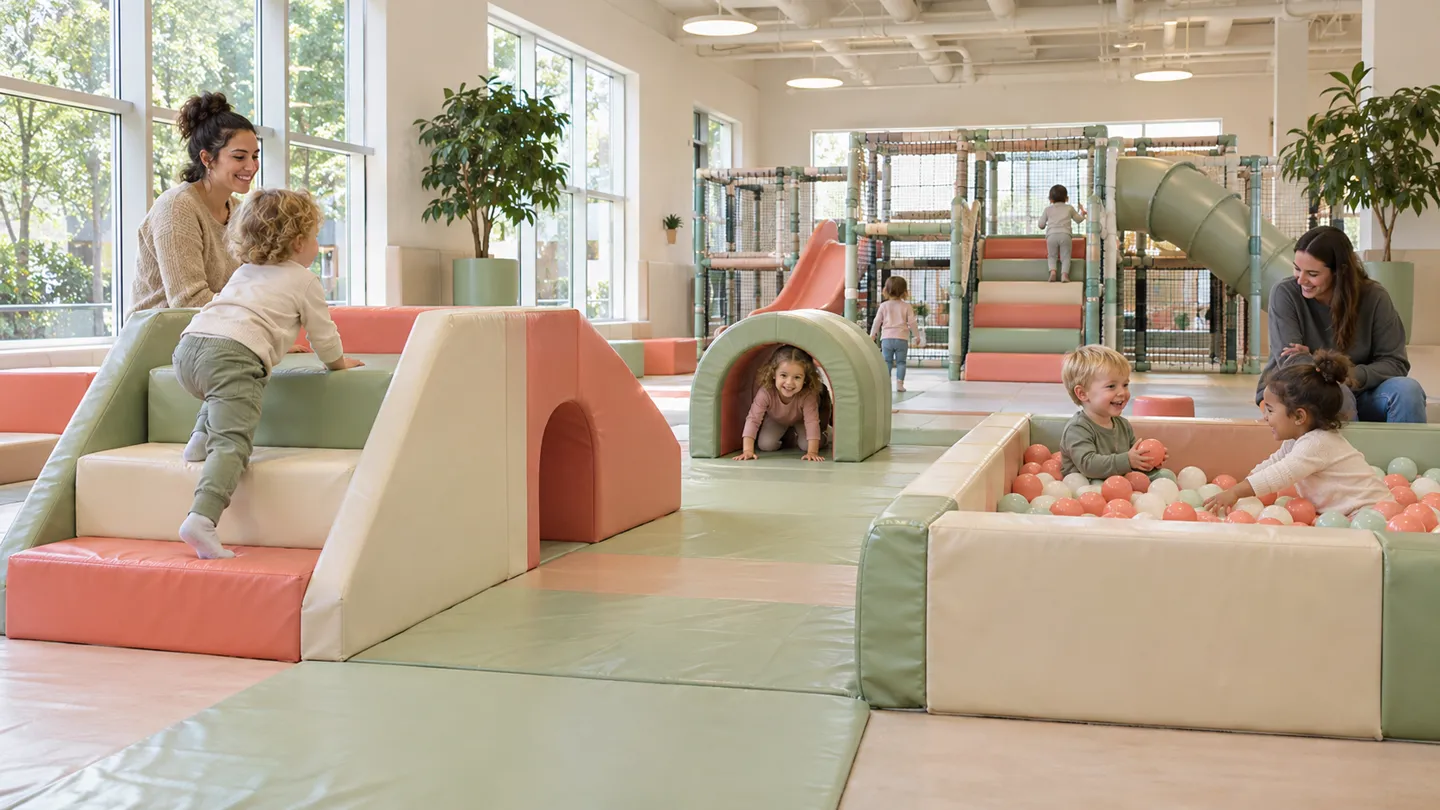
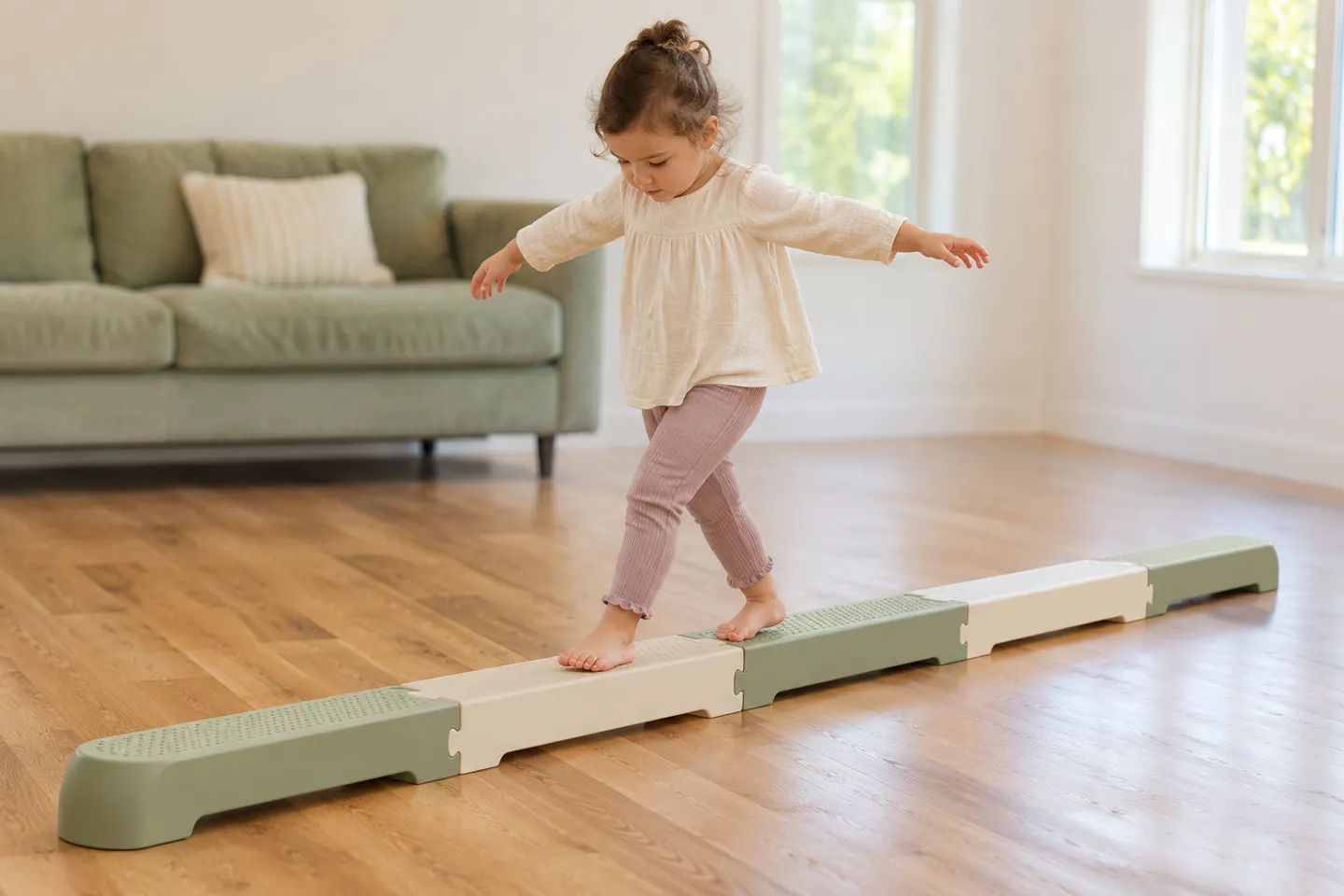
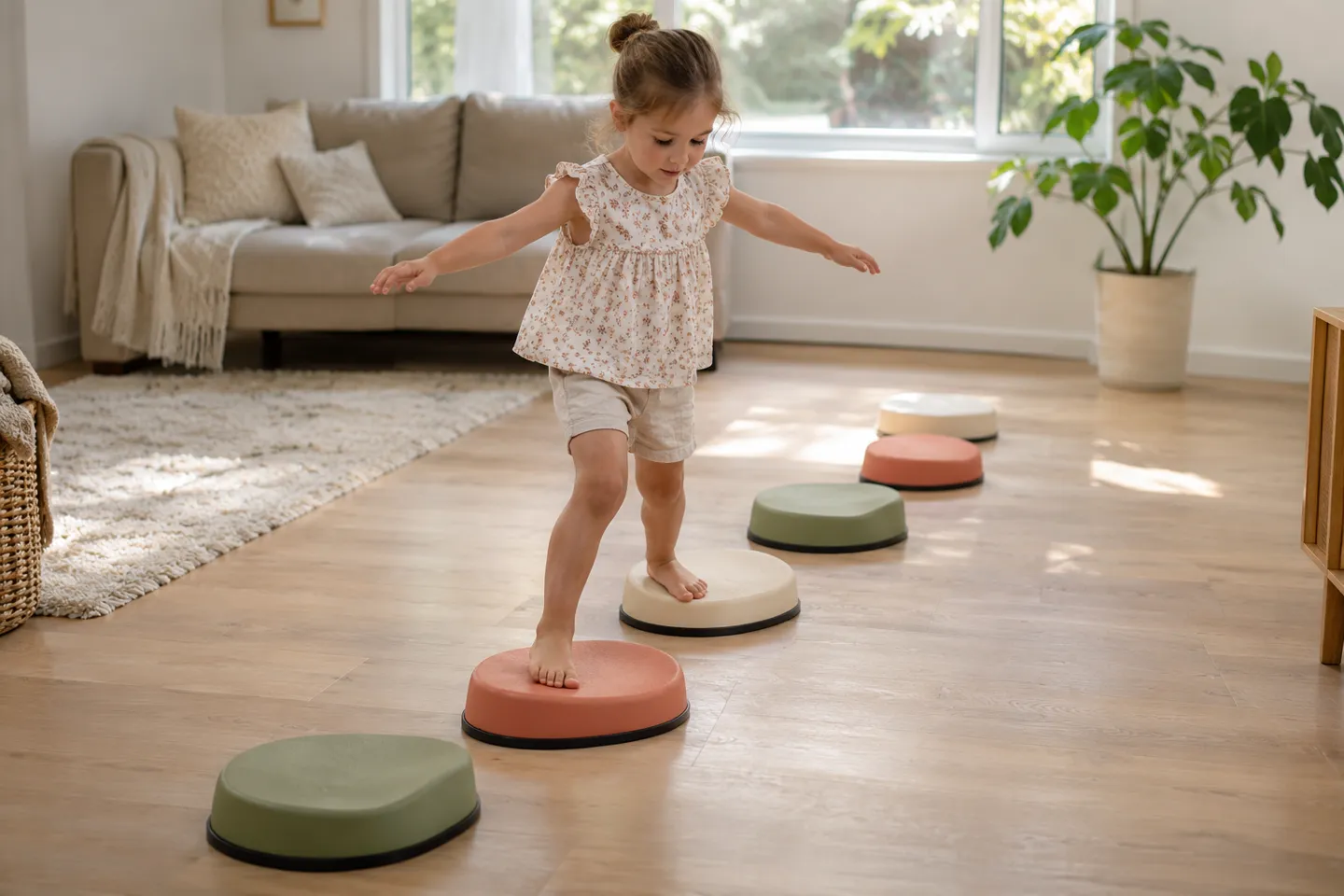
You found the exact toy the therapist described: chunky stepping stones, bright colors, a grippy bottom. Then the price hunt began. The same set sits on a marketplace for $32 and in a specialty catalog for $58. A factory quote sheet lists it under $9 a unit, if you order a pallet. Nothing about the product changed between those three numbers. What changed is the layer of the supply chain you happened to be standing in.
That is the real answer to “where to buy sensory toys.” People ask the question as if the answer were a store name. It is not. The same category of product flows through four layers, and each layer sells a different bundle of price, protection, and responsibility:
- Retail shelves: marketplaces, big-box stores, and local shops, built for one-item buyers who want it now and want returns to be easy.
- Specialty and therapy catalogs: curated stores that organize products by sensory need and can hand institutions the compliance paperwork.
- Wholesale distributors: domestic warehouses where sellers and gift shops restock at low minimums.
- Factory-direct and OEM: the source itself, where unit prices drop, customization opens up, and the buyer takes on quality checks, compliance documents, and freight.
“Sensory toys” itself covers two loose buckets worth separating for one sentence. The first is small hand-held fidgets and weighted items. The second is larger gross-motor equipment: balance stones, beams, spinning chairs, and soft play structures. Both buckets travel through the same four layers, but the layer gap matters far more in the second one. A $2 fidget is cheap almost everywhere; the price spread on something bulky is where a layer can double what you pay.
So the useful question is never just “which store.” It is: how big is my need, and which layer matches it? A parent replacing one chewed fidget and a preschool furnishing a sensory room are standing at different layers of the same supply chain. This guide walks all four, and at each one tells you where to buy, how to judge quality before you pay, and which documents to ask for.
The Retail Map: Where Families Buy Sensory Toys
Most searches for sensory toys end at layer one and two, so start there. Each retail option sells convenience in a different shape, and each charges for it.
Marketplaces and big-box stores are the fastest path. Amazon, Target, and local chains carry fidgets, chewables, and small balance items at everyday prices, with returns that cost you nothing but a trip. The tradeoff is generic selection: the algorithm sorts by keyword and review count, not by what a specific child’s sensory profile needs.
Specialty and therapy stores are the curated layer. Retailers focused on autism and therapy needs, like National Autism Resources, price their sensory catalog anywhere from $4.99 to $174.99. That range spans pocket fidgets to full equipment sets (National Autism Resources, 2026). What the markup buys is filtering: these stores group products by the need they serve, and many will supply documentation that schools and clinics require.
Local and in-person shops cover a narrow but real slice: you can hand your child the object before paying. For tactile-sensitive kids that single feature can prevent a wasted purchase, but the tradeoff is depth; almost no local store can match a catalog’s coverage of vestibular or proprioceptive tools.
| Retail layer | What it gives you | What it costs you |
|---|---|---|
| Marketplace / big-box | Speed, easy returns, lowest effort | Generic selection, no expert filtering |
| Specialty / therapy store | Need-based curation, compliance documents | Higher unit prices |
| Local shop | Try before you buy | Thin selection on larger equipment |
The price anchors here are worth memorizing, because they reappear later as a mystery to solve. An occupational therapist’s gift guide pegs most therapeutic toys in the $20 to $30 range, with simple hand fidgets available for $1 to $10 (Children’s Therapy Team, 2018). Retail layers, in other words, are not where this category gets cheap. They are where it gets safe to be wrong.
How to Pick a Sensory Toy a Child Will Actually Use
Wherever you buy, the most expensive sensory toy is the one a child never touches. Therapists see this constantly: the bin of fidgets that sits untouched while the child chews on a sleeve instead. The failure is not in the toy. It is in buying by shelf category instead of by what the child’s nervous system is asking for.
Match the Tool to the Nervous System, Not the Shelf
Pediatric OTs organize tools by sensory need, not product type. Seekers, kids who crash into furniture and jump constantly, are asking for proprioceptive and vestibular input: heavy work, jumping, spinning, deep pressure. Avoiders need the opposite kind of help: noise-canceling headphones, predictable spaces, calming tools (Coral Care, 2026). Buying a vibrating plush for a child who actually needed heavy work is how the untouched toy bin happens.
Two ground rules come with this frame. First, weighted items follow a dosage: the common guideline is about 10% of the child’s body weight, not “heavier is calmer” (Coral Care, 2026). Second, tools are not therapy. The most effective sensory inputs are often free: hauling groceries, five minutes on a swing, crunchy snacks. If a purchase is not plugging into a specific need, it is decorating.
Before you buy
Is this child a seeker (crashes, jumps, hangs) or an avoider (covers ears, hides from light)?
Which sense is the toy actually serving: proprioceptive, vestibular, tactile, visual, or oral?
What will this child do with it in the first five minutes?
What OTs Reach for First
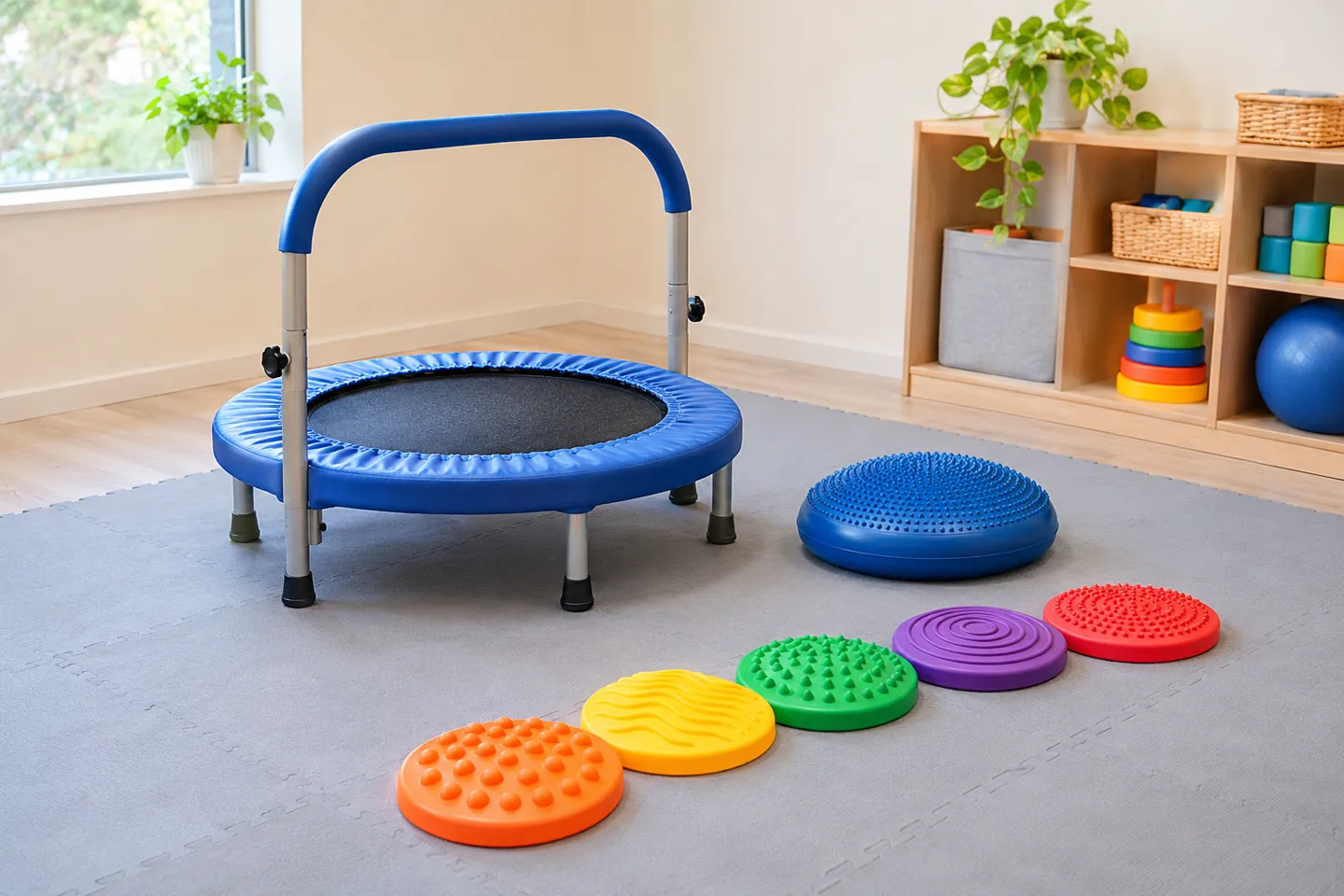
Ask what practicing therapists actually restock, and a short list repeats across guides. A mini trampoline with a handlebar is probably the single most consistently recommended piece of equipment for sensory-seeking kids. A few minutes of bouncing before homework or dinner can visibly change a child’s regulation (Coral Care, 2026). Wobble cushions earn their place in classrooms because they let a restless kid move while staying seated. Tactile discs and textured balance paths do double duty: balance practice and sensory feedback in one purchase, which is why schools reorder them for therapy corners.
The budget reality matches the mid-range you saw on the retail map. OTs themselves recommend keeping most purchases in the $20 to $30 band and treating the cheap hand fidgets as consumables rather than investments (Children’s Therapy Team, 2018).
The Two Purchases to Rethink
Not everything on the shelf deserves the shelf price, and two categories stand out.
Light-up and noisy fidgets sell extremely well and are recommended surprisingly rarely. Occupational therapists tend to point kids toward Tangle toys, putty, and smooth or textured discs, and to skip the flashing, sound-making versions entirely (Coral Care, 2026). The lights sell because parents imagine visual appeal helps; in practice they often add stimulation a dysregulated child does not need.
The second is the trampoline math. Standard backyard trampolines are off the list entirely, nets and all, for young sensory seekers (Children’s Therapy Team, 2018). And here is the counterintuitive part. Mini trampolines marketed to adults are usually cheaper and more durable than the pastel ones sold for children, for what is functionally the same frame and mat. The kids’ packaging is a price layer, not a product feature.
Untouched-toy failure: a whole bin of fidgets bought by type, not by need, gets ignored while the child chews a sleeve. Diagnose seeker or avoider first, then match the sense, then shop the layer.
Quality and Compliance: Judge It Before You Pay
Price tells you which layer you are in. It does not tell you whether the item is any good, and in this category the quality spread between lookalike products is wide. Four checks cover most of it.
Material Tells First
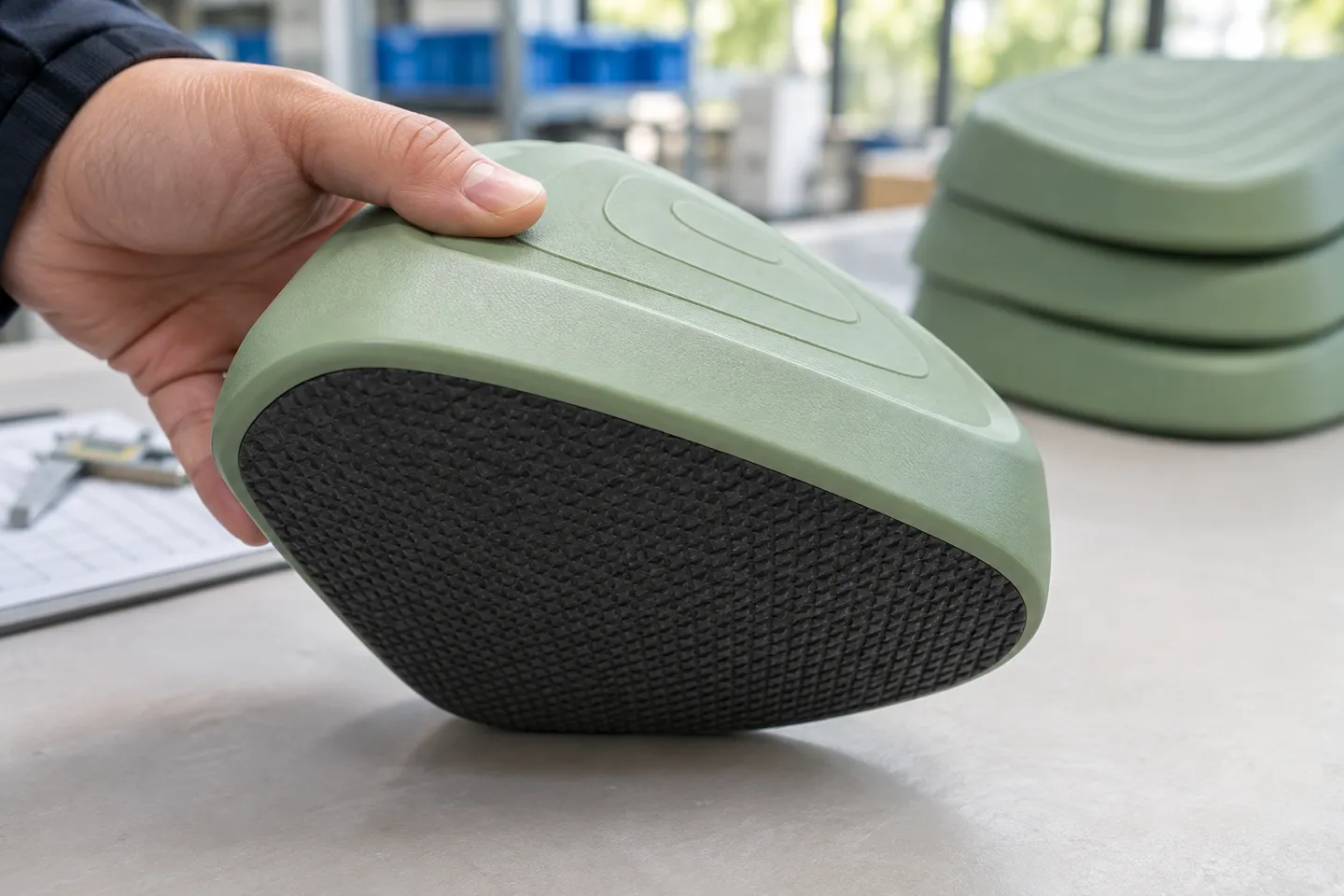
Pick up any plastic sensory toy and two questions come first. Is it virgin, food-grade PP or ground-up recycled stock? Virgin polypropylene feels denser, smells like nothing, and shows color evenly; recycled mixes often carry a faint odor, uneven color, and brittle edges. Then check the grip: balance stones, beams, and stepping surfaces should have a real anti-slip base, usually TPE or rubber, and thickness there is a cost formula, not a detail. Thinner pads cost less and slide sooner; the supplier that saves on the base is quietly transferring fall risk to you. Edges matter too: a well-made injection part has no flash, no sharp seams, no gaps that pinch small fingers.
Certifications by Market
Documents are where consumer intuition runs out and paperwork takes over. The rules differ by destination market, and “it passed a test somewhere” is not an answer; a compliant supplier can name the exact certificate for your market.
| Certification | Market | What it certifies | Ask the seller for |
|---|---|---|---|
| CPC | United States | Children’s Product Certificate: the written certificate, based on third-party testing, required for children’s products (CPSC, 2026) | The CPC document and its test lab |
| ASTM F963 | United States | The toy safety standard children’s toys must be third-party tested against (CPSC, 2026; ASTM International, 2023) | Current test report citing F963 |
| CE + EN71 | European Union | Compliance with EU toy safety legislation, marked with CE (European Commission, 2026) | Declaration of Conformity and EN71 report |
| CPSC rules | United States | The federal oversight framework behind the CPC system (CPSC, 2026) | Tracking label details |
One practical habit: certifications attach to batches and models, not to brands. A store can sell compliant and non-compliant variants of the same design, so the question “does this unit have its CPC” is always asked per product, per shipment.
What the Price Actually Pays For
Here is the mystery from the retail map, solved. A $22 fidget at a specialty store and a $2 factory version of the same object differ by stackable layers. Every layer is doing something:
- Compliance testing: third-party lab work per product and per market, amortized into the unit price.
- Design and patents: original, protected designs cost more than copies, and copies carry takedown risk for anyone reselling them.
- Curation and need-matching: the specialty store’s filtering, which lowers your odds of the untouched-toy failure.
- Two to three layers of margin: factory, then importer or distributor, then retailer.
- Freight engineering: stackable sets and flat-pack cartons ship cheaper per unit; a design that nests cuts freight cost before any discount negotiation starts.
None of these layers is theft. But a buyer who needs bulk quantities pays for all of them anyway, which is exactly why the wholesale layer exists.
The Pre-Purchase Check Matrix
| Buying scenario | Confirm before paying | Failure signal | If it fails, switch to |
|---|---|---|---|
| Small fidgets for one child | Certification line on the listing; no chemical smell; sealed paint | Peeling coating, strong odor within days | Specialty store version with documents |
| Balance stones / beams for home or class | Virgin PP body; TPE anti-slip base thickness; stated load rating | Base slides on hard floors, flex under adult weight | Supplier that publishes load data |
| Trampolines / spinning chairs | Handlebar and stability spec; adult-version comparison | Kids’ version priced above an equivalent adult model | Adult-marketed equivalent |
| Bulk or institutional orders | CPC/CE documents per model, per batch; sample before the PO | Supplier cannot name the test lab or standard version | Factory or distributor with full files |
Running that matrix against a real supplier? Startinal’s team sends free samples (freight collect) and answers certification and MOQ questions before you commit to a purchase order.
Request a Free SampleWhen Buying Turns Into Sourcing: Wholesale and Factory-Direct
Somewhere between “one for home” and “a shelf of them for customers,” the vocabulary changes from shopping to sourcing, and layer three appears.
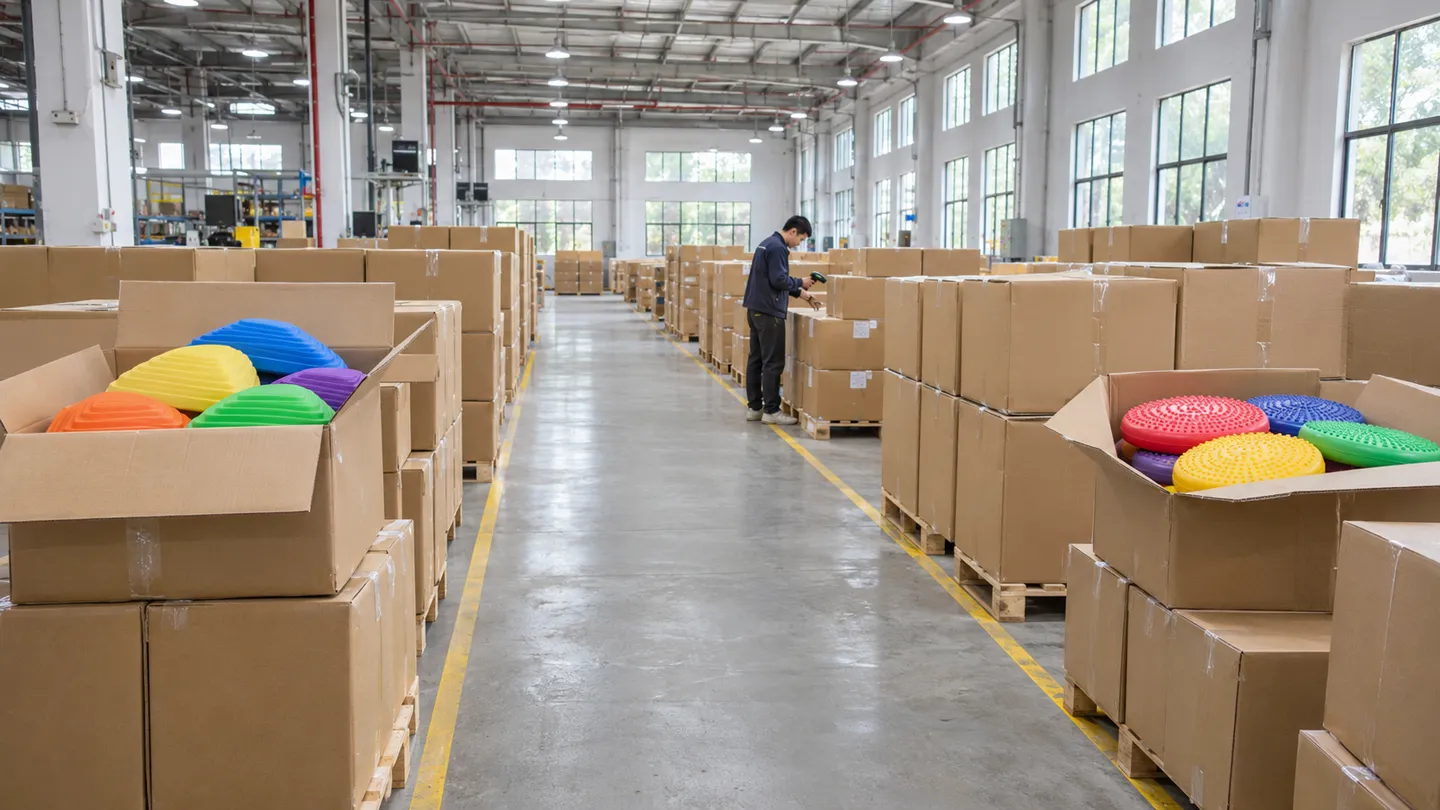
Wholesale distributors are the domestic warehouses: gift-shop suppliers, novelty wholesalers, therapy-equipment resellers who buy containers and break them into cases. Their value is speed and accessibility. Minimums are low, stock is in-country, and restocking takes days. What you pay for that convenience is a layer of margin and, more quietly, a catalog identical to the one every competitor down the street can also order from.
Factory-direct sourcing skips that layer. Unit prices drop to the floor of the market, customization opens up: your colors, your logo, your packaging. The tradeoff is that the responsibilities distributors used to absorb become yours: quality checks, compliance paperwork, freight planning. The comparison looks like this:
| Wholesale distributor | Factory-direct / OEM | |
|---|---|---|
| Minimum order | Very low, case-level | Higher for custom; many factories hold stock items with no MOQ |
| Unit cost | Mid; distributor margin included | Lowest available |
| Lead time | Days (in-country stock) | Samples in a few days; stock ships within a week; light customization (color, logo, packaging) commonly 15 to 25 days |
| Compliance documents | Usually can provide | Directly from the testing source |
| Differentiation | None; shared catalog | Private label, exclusive colors, custom sets |
| Best for | Testing demand fast, emergency restocks | Established sellers, own-brand lines, margin control |
A pragmatic path into direct sourcing runs three steps. Start with a sample order to judge material and finish firsthand. Move a small stock-item trial through, ideally a factory with ready stock and no minimum, to test your market’s demand. Only then commit to light customization, which is where the real margin shift begins. And know the boundary. Direct sourcing fails when volumes are too small to move freight economics. It also fails when a first order outgrows your inspection ability, or when peak-season production slots are full. Each of those has the same answer: let a distributor carry you through, and try again next cycle.
The Supply Chain Math: Where the Margin Lives
Read back through the layers and a single sentence falls out: your margin lives at the layer you buy from. Every retailer and distributor in this category stands somewhere on the same four-layer ladder, and the wholesale layer is where catalogs converge into identical shelves. As more sellers enter, the fight at layer three is a price fight, because everyone there is selling the same goods at similar costs.
The clock matters too. The sensory toys market is projected to grow from about $2.46 billion in 2026 to $6.16 billion by 2035, an 11% compound annual growth rate (Business Research Insights, 2026). Growth at that pace pulls in new entrants every quarter. The ones who build direct sourcing and compliance capability first keep the differentiation profit. Latecomers inherit the price war.
Sensory toys market
$2.46B
2026
$6.16B
2035
About 11% CAGR through 2035
Source: Business Research Insights, 2026
For anyone weighing the move up the ladder, the supplier checklist from the last two sections doubles as a vetting list. Ask for three things: certifications matched to your market, a real list of original designs and patents, and products engineered to ship cheap: stackable, flat-pack, nestable.
That checklist is not theoretical for us. Startinal runs a 10,000-square-meter factory in Wenzhou with plastic, metal, and textile lines under one roof. Our stepping stones, balance beams, and sensory spinning chairs ship against CE, CPC, and ASTM F963 requirements, backed by BSCI-audited production and more than 60 global patents. Our certification and patent overview is public (Startinal’s certification and patent overview). For distributors and brand owners, that combination is the difference between a supplier who can survive your customers’ audits and one who cannot.
If you are comparing sourcing routes for your own catalog, Startinal’s team shares free samples (freight collect) and answers wholesale questions around the clock at startinal.com.
Source Sensory Toys Straight From the Factory Floor
Stepping stones, balance beams and sensory spinners from Startinal’s Wenzhou factory, shipped with CE, CPC and ASTM F963 documentation. Free samples, freight collect.
Start a Wholesale InquiryReferences
- U.S. Consumer Product Safety Commission. “Children’s Product Certificate.” 2026. cpsc.gov
- U.S. Consumer Product Safety Commission. “Rules Requiring Third-Party Testing and a Children’s Product Certificate.” 2026. cpsc.gov
- ASTM International. “Standard Consumer Safety Specification for Toy Safety, F963-23.” 2023. astm.org
- European Commission. “Toys.” 2026. ec.europa.eu
- Business Research Insights. “Sensory Toys Market Size, Share, Trends 2035.” 2026. businessresearchinsights.com
- Coral Care. “Sensory Tools and Products for Kids: OT Approved.” 2026. coralcare.com
- Children’s Therapy Team. “An OT’s Ultimate Gift Guide: Best Therapeutic Toys for Kids.” 2018. childrenstherapyteam.com