The child spins until the rest of the room disappears. Or lines up the same cars in the same order, forty times, or chews through a sleeve collar before lunch. Any adult who lives or works with an autistic child has watched one of these loops. The same question follows every time: is there a toy that actually serves this, instead of another plastic thing that ends up forgotten in a bin?
That question is the right one, and it is why sensory toys deserve more scrutiny than a shopping list usually gets. A sensory toy is any object built to deliver input to one of the body’s senses, so the child can seek out or dial down the stimulation they need (Autism Speaks). The trouble is not finding toys marketed for autism. The trouble is that the label covers everything from a dollar-store fidget to a therapist-grade balance beam, and those two products answer completely different needs.
This guide walks through that difference. First the toy types themselves. Then how to match a toy to a specific sensory need, and the durability and price reality that product lists leave out. Then how therapists choose, what institutions require, and finally what all of this looks like from the supply side.
What Sensory Toys Actually Are, and the Types Worth Knowing
Every sensory toy belongs to a small number of functional families. Knowing the family tells you what the toy is for before you read a single product description.
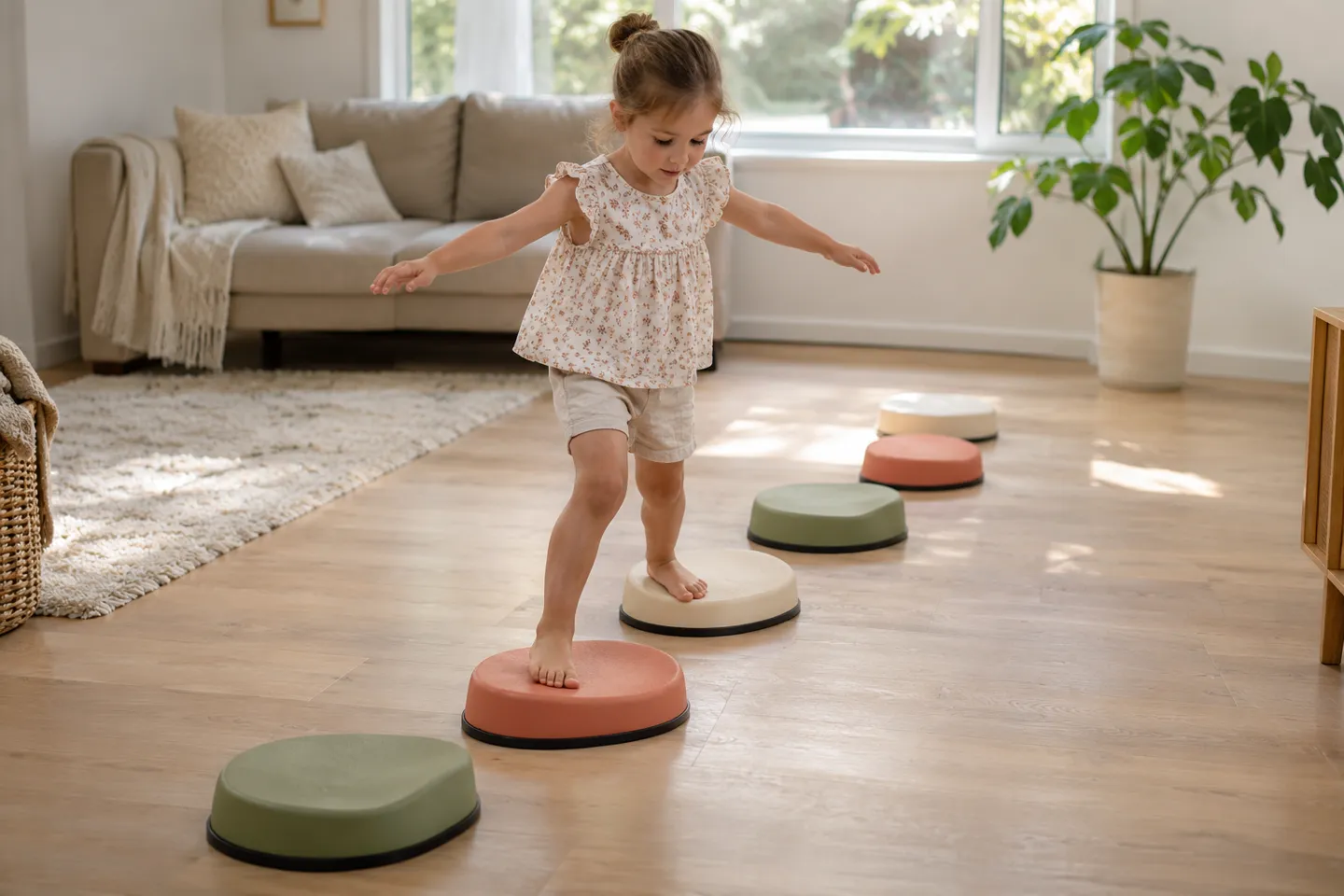
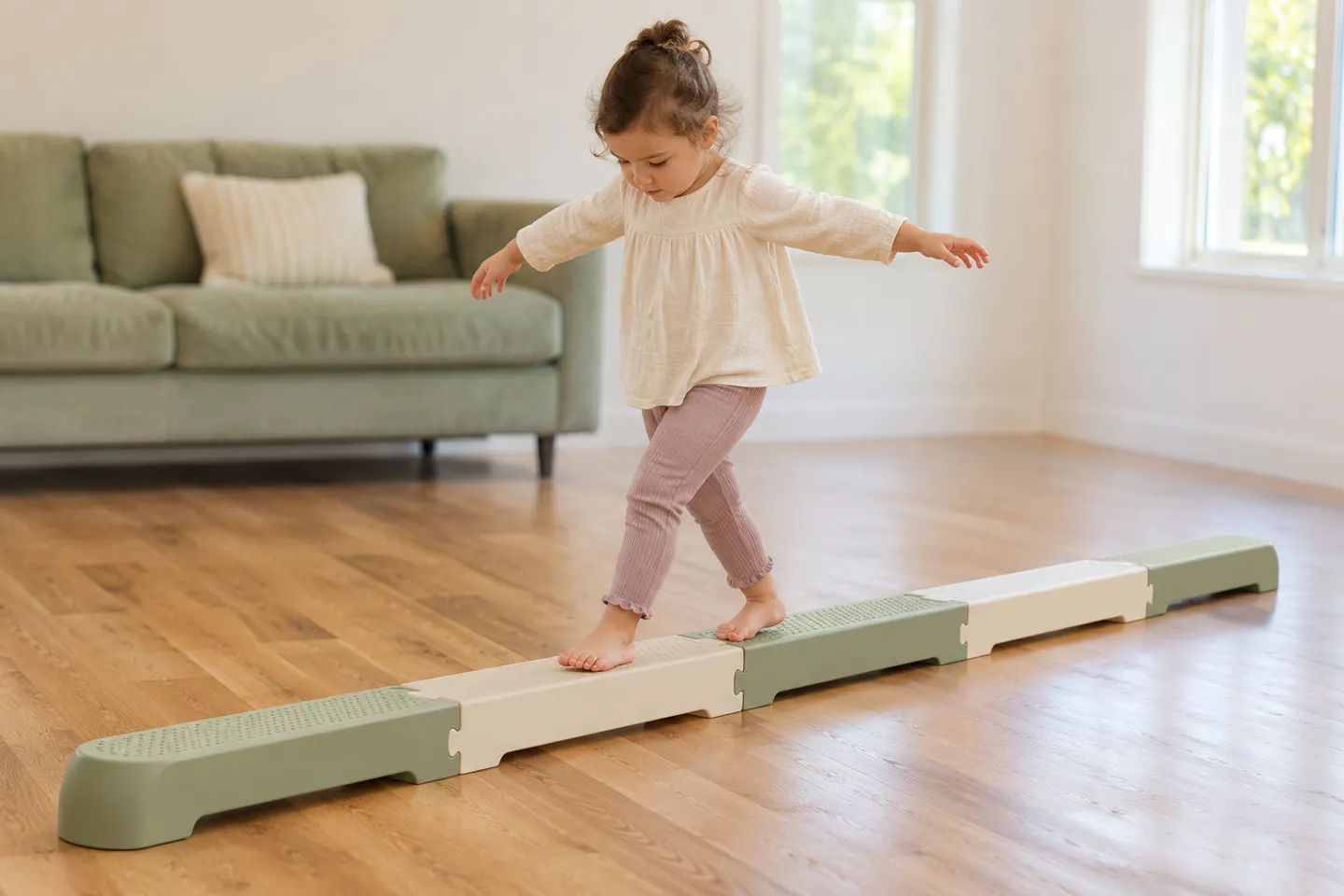
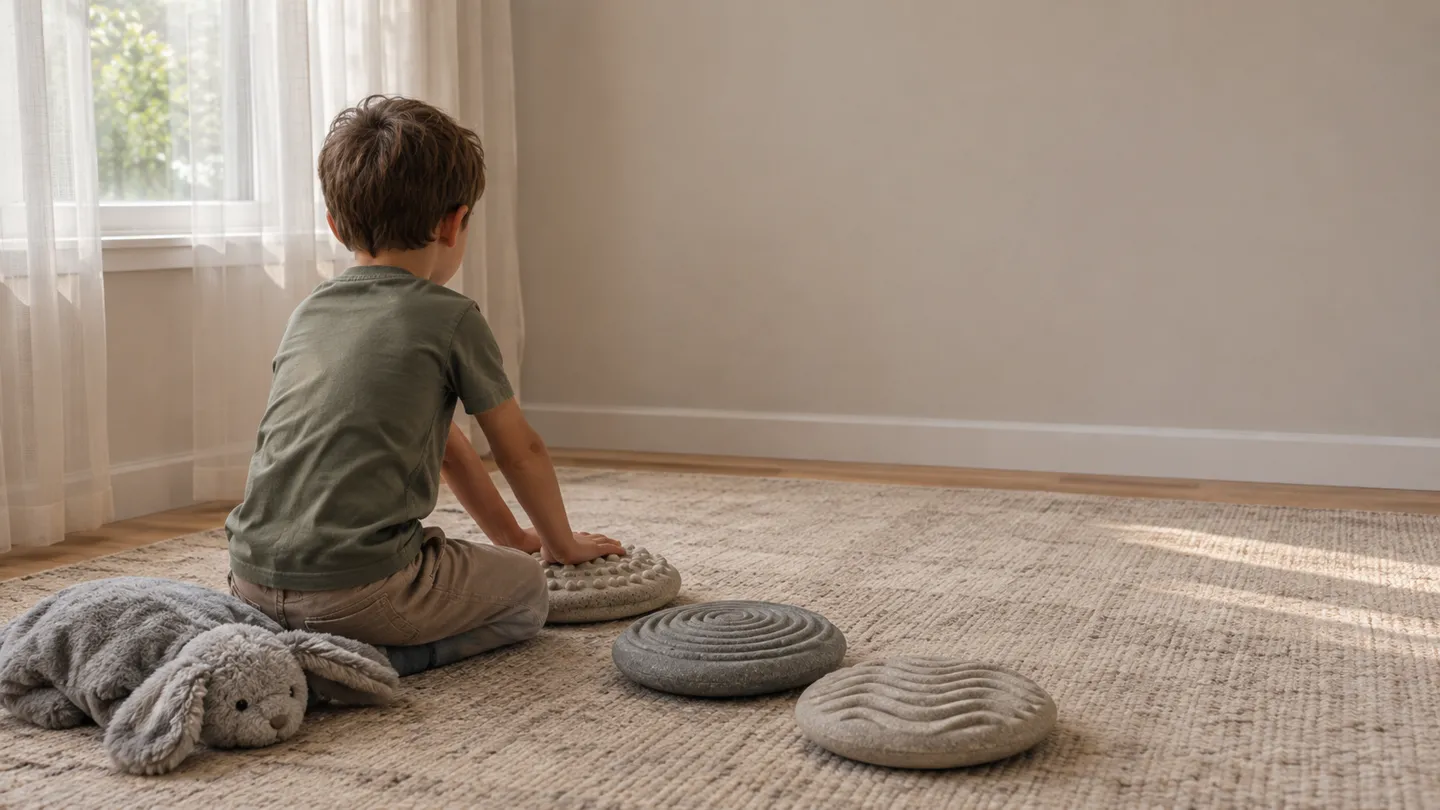
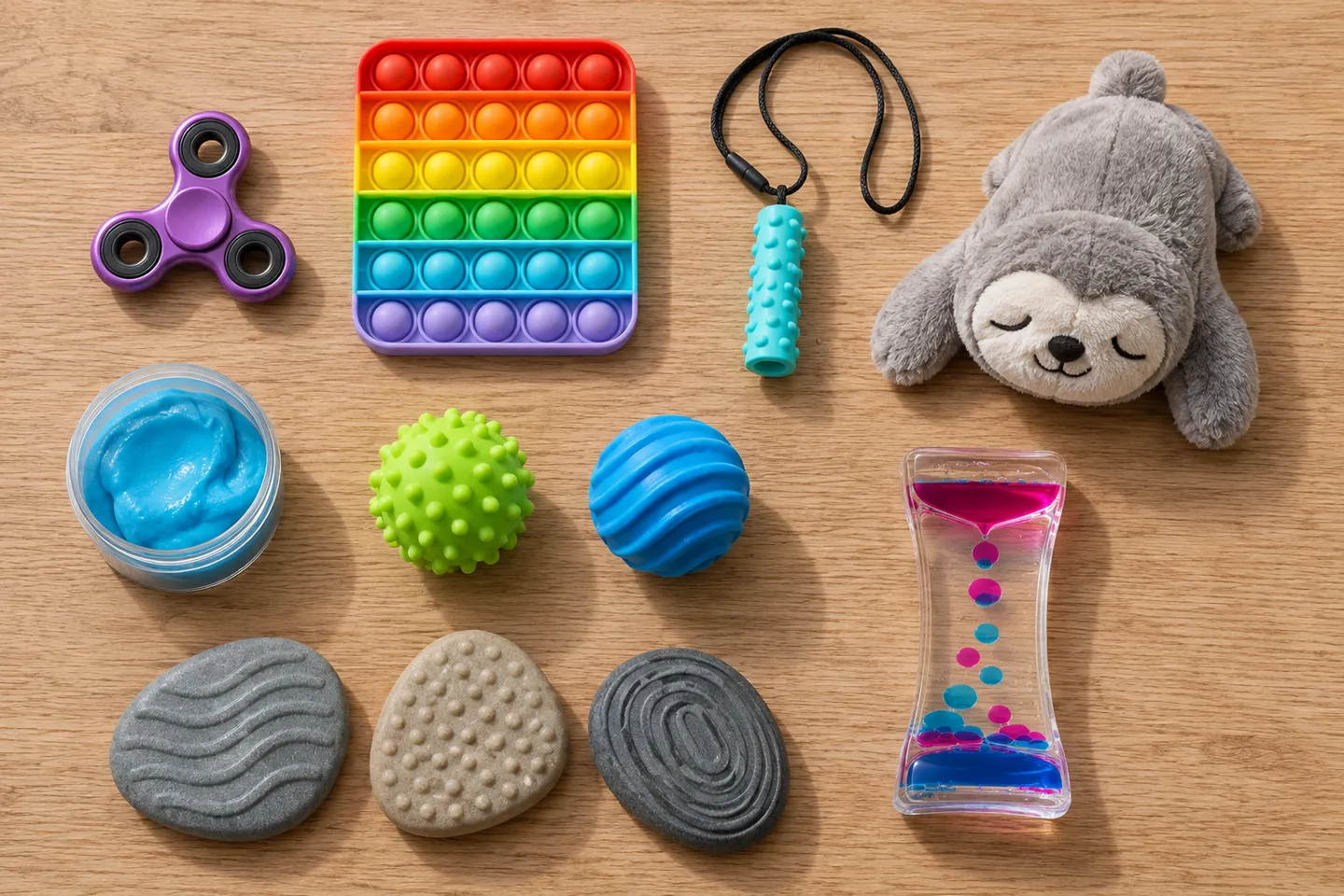
Fidgets are hand-sized objects for repeated manipulation: spinners, pop-its, stretchy strings, putty. They occupy the hands and can help with focus during seated activities. Chewables are oral-motor tools, usually food-grade silicone, made for kids who mouth objects past the toddler years. Weighted items, from lap pads to plush toys, deliver deep pressure input that many children find organizing and calming. Spin and movement toys, which include sit-and-spin chairs, hopper balls, and swings, feed the vestibular system, the inner-ear sense that registers motion and head position. Balance and stepping toys, such as river stones, balance beams, and tactile paths, load the proprioceptive system, the body’s sense of where its limbs are, while also training coordination. Tactile exploration toys, sensory bins filled with rice or beads, textured balls and discs, and therapy putty, let fingers do the seeking. Visual and auditory toys, light-up wands, liquid timers, and simple musical instruments, round out the set for children whose regulation runs through eyes and ears.
| Type | Sensory input | Typical forms | Common ages |
|---|---|---|---|
| Fidgets | Tactile, focus | Spinners, pop-its, putty, stretchy strings | 4+ to adult |
| Chewables | Oral | Silicone pendants, tubes, chew blocks | 2+ (mouthers of any age) |
| Weighted items | Deep pressure | Lap pads, weighted plush, blankets | 3+ (weight by size) |
| Spin & movement | Vestibular | Sit-and-spin chairs, hoppers, swings | 2+ |
| Balance & stepping | Proprioceptive, coordination | River stones, beams, stilts, tactile paths | 3+ |
| Tactile exploration | Touch | Sensory bins, textured discs, therapy putty | 18 months+ |
| Visual & auditory | Visual, auditory | Light-up toys, liquid timers, instruments | 12 months+ |
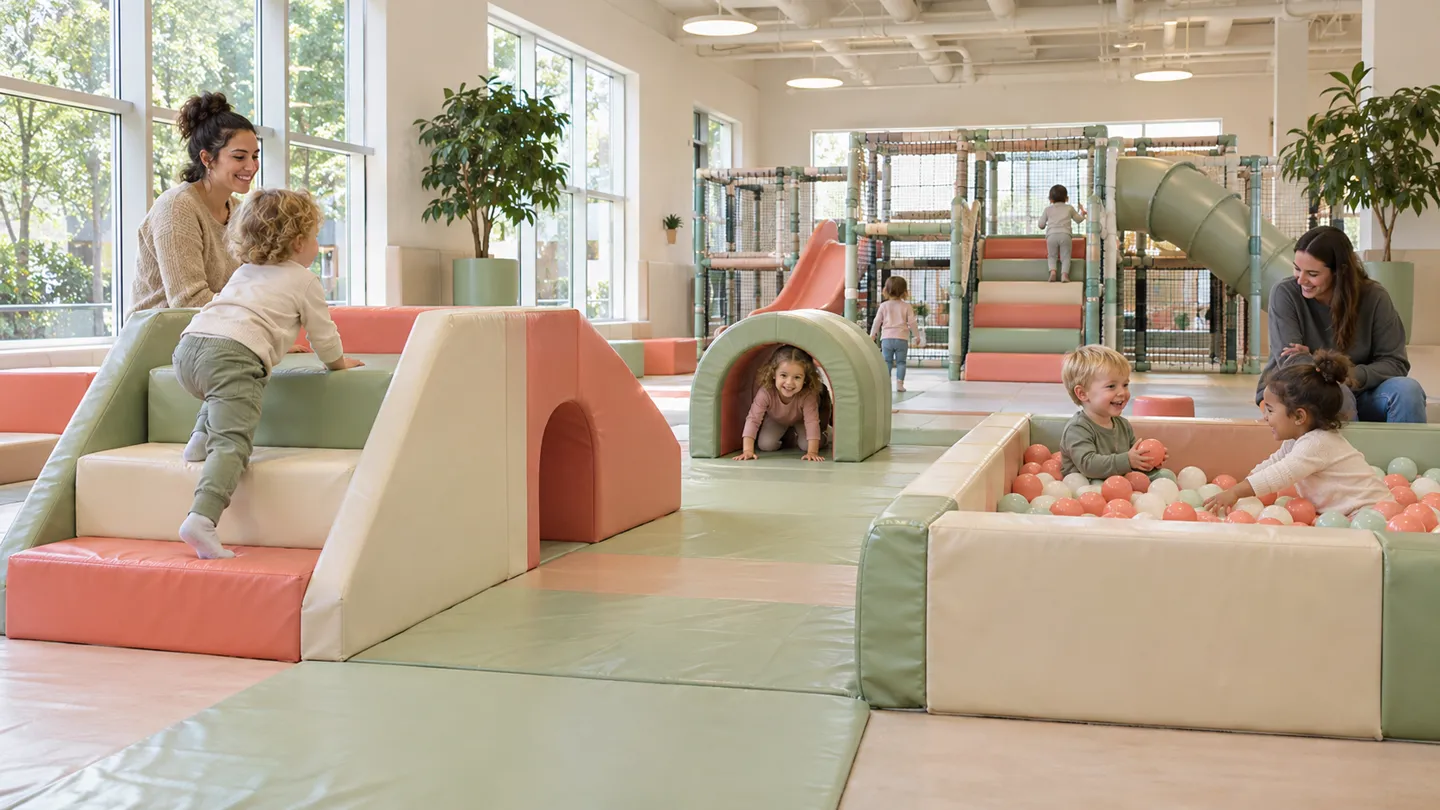
Everything above is a toy or a movable piece of equipment, not a fixed installation. A full sensory room, with its padded walls and interactive projectors, is a different scale of purchase entirely. The same logic of matching input to need applies, but with planning and budget questions attached. The types in the table are the building blocks that homes, classrooms, and clinics all assemble from.
Matching the Toy to the Sensory Need
The fastest way to waste money on sensory toys is to buy someone else’s list. Parents comparing notes online recommend wildly different things for the same diagnosis, and both recommendations can be correct, because the children were seeking different inputs (r/Autism_Parenting).
The useful question is not “what is the best sensory toy” but “what is my child’s sensory profile right now”. Seekers crave input: they crash into furniture, spin constantly, chew sleeves, dump bins of rice over their own heads. Avoiders retreat from it: certain textures on hands, loud rooms, unexpected touch. Most children are a mix, and the mix shifts with stress and sleep.
Calming and alerting is the second half of the match. Slow, rhythmic, and heavy input tends to settle a revved-up nervous system: rocking, deep pressure, slow stretching. Fast spinning, jumping, and bright erratic light tend to wake one up. A child who needs to wind down before bed does not need a light-up spinner, even though they would love it at noon. An avoider handed a bouncy, noisy toy on an already-hard day can tip into overload rather than play.
Three days of observation is enough to turn this into a working method. Note what the child seeks when unstructured (movement? mouth? hands busy?), what reliably calms them, and what reliably sets them off. Sort each note into a channel: movement, mouth, touch, pressure, sound or light. Then buy two or three things that serve the top channel, one calming form and one alerting form, and watch which one gets reused. A toy that gets reused is the answer. A toy that matches the profile but gets ignored is data too: it usually means the channel guess was wrong, not that the toy was cheap.
One honest boundary applies here. When the profile match is wrong, no quality level fixes it. A premium, therapist-approved spinning chair cannot rescue a toy selection aimed at the wrong channel. That is why observation comes before any purchase decision, including the durability decision that comes next.
The Durability and Price Truth No Listicle Puts in the Table
Listicles rank toys by features. Families live with toys by usage intensity, and intensity is where the real buying decisions hide. Three levels of use exist, and they are roughly an order of magnitude apart.
Household casual use means the toy comes out a few times a week under supervision. Almost anything with safe materials survives this. Daily heavy use is different: the toy gets dragged, dropped, sat on, mouthed, and spun into walls every day, often by a child who tests physical limits as part of play. Institutional use in a classroom or clinic is harsher still: multiple children, no single owner, hours of daily contact, and nobody watching the way a parent watches.
Parents who live with a heavy user describe the consequence directly. In one autism parenting group discussion about toys for children who break things, the answer was blunt. Sensory toys that are strong and can take a beating sure come at a cost (Facebook, autism parenting group, 2026). Strength exists, but it is not free.
What Heavy Use Actually Breaks
Failure is predictable once you know where the stress lands. Hinged fidgets snap at the pivot, usually within weeks for a child who flips them constantly. Inflatable hoppers and cushions puncture at seams or on anything sharp left on the floor. Glued-on texture pads peel once a determined chewer or picker finds an edge. Thin-walled stepping stones crack when jumped on from a height rather than stepped on. Soft-coated foam items tear at corners once picking starts. Cheap chargers and battery doors on light-up toys fail first, usually followed by the whole unit becoming landfill.
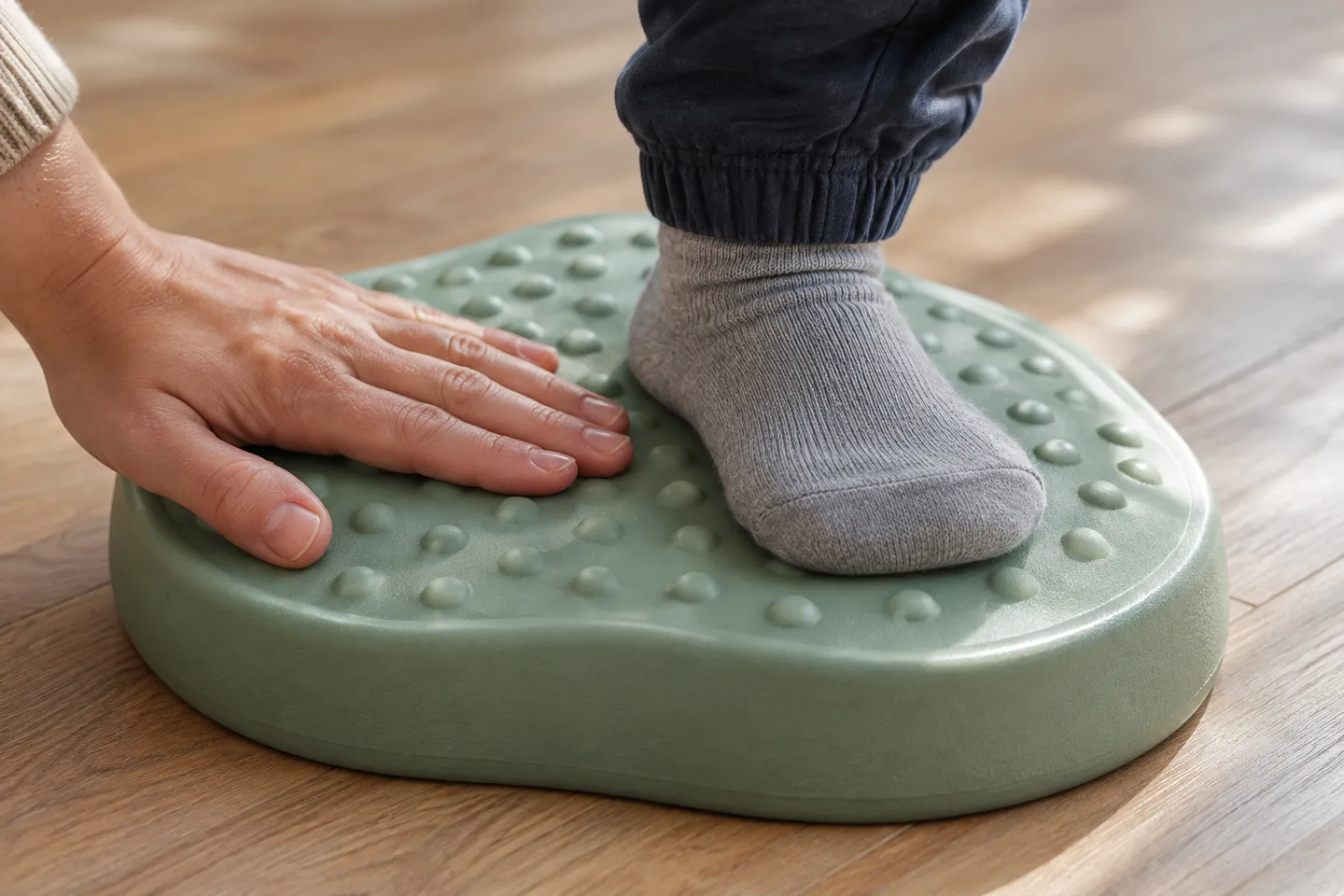
The pattern behind these failures is structural, not accidental. Thin walls, glued layers, hollow seams, and small separate parts each give heavy use a place to start. The toys that survive daily abuse tend to share the opposite traits. They carry thicker walls in the same molded shape, one-piece construction instead of glued assemblies, and textured surfaces molded in rather than applied. Materials are chosen for the job: food-grade PP plastic for bodies that take impact, TPE or silicone where grip or mouthing is expected. None of these traits show up in a product photo. All of them show up in week six.
A parent can read their own situation honestly with one question: does my child use toys the way a casual user does, or the way a small demolition crew does? Crashing, constant mouthing, repetitive loading past the obvious limit, daily reorganization of the same object, these are not misbehavior, they are the usage spec. Buying for the real spec is the whole game.
| Toy type | Casual home use | Heavy daily use | Institutional requirement |
|---|---|---|---|
| Fidgets | Almost any safe unit survives | Pivot hinges snap; prefer one-piece or metal-core | Replaceable, sanitize-safe, no small detachable parts |
| Chewables | Any food-grade silicone works | Check for bite-through; swap on wear marks | Documented food-grade material; inspection schedule |
| Weighted items | Any well-sewn cover | Seams and covers take abuse; inner fill must stay sealed | Reinforced covers, wipeable, weight per child’s size on file |
| Spin & movement | Most rated chairs work | Base bearings and seat wall take repeated loading | Rated for repeated mounted use, stable base, commercial grade |
| Balance & stepping | Light plastic fine | Thin walls crack under jumps; want thick, molded grip texture | High load rating, non-slip regardless of floor type |
| Tactile bins, discs | Anything goes | Contents scatter; discs need molded-in texture | Sealed or easily cleaned contents, sanitize-safe |
If the heavy column in that table reads like your house, the grade question is worth asking a manufacturer directly: Startinal builds the same designs in household and institutional grades.
Ask Which Grade FitsWhy the Good Stuff Costs More
Parents also notice the price tags. A popular thread in an autism parenting community put it as a rant: sensory toy prices feel predatory (r/Autism_Parenting, 2025). The feeling is understandable, and the breakdown is worth reading carefully, because the price is not one price.
Part of the premium is real cost. Thicker walls use more material. TPE overmolding and food-grade certified resins cost more than commodity plastic per kilo. Molds that produce one-piece parts cost more to cut. Certification testing, which institutions require and careful families benefit from, adds real lab fees per product line. Part of the premium is specialty-retail markup, curated collections sold to a motivated audience. And part of it, on marketplaces, is plain opportunism: an ordinary product with “autism” added to the listing.
The practical move for a heavy-use family is cost per use, not sticker price. Price the same year of play two ways and the ranking flips. An 8-dollar fidget that survives two weeks of heavy handling needs replacing again and again, while a single 30-dollar durable unit covers the school year once. The cheap route can cost five to seven times more over twelve months for an identical shelf.
The Cost per Use, Flipped
A fidget that breaks in two weeks and a fidget that lasts a school year can look identical in a product photo. Buy for the usage spec, not the unboxing.
A toy bought for the real usage spec is the cheapest toy a heavy-use family will ever own. That single comparison is the durability decision in miniature. The same math scales up to spin chairs and balance sets. There the price gap between casual and built-to-last versions is wider, and the replacement cycle for the cheap version is shorter. For a family with a genuine heavy user, the expensive durable option is usually the cheaper one by spring.
Choosing Like a Therapist: Matching Toys to Goals, Skills, and Age
Occupational therapists buy with a sequence, not a list, and the sequence transfers to any serious buyer. It runs: goal first, skill match second, age and safety lines third, shared-use rules fourth.
Step One and Two: Goal First, Skill Match Second
Every purchase starts from a therapy or development goal, because the goal picks the sensory channel. Regulation goals, helping a child settle or organize, point to calming forms: weighted input, slow rhythmic movement, deep-pressure seats. Vestibular goals, building tolerance and integration for movement, point to spinning, swinging, and jumping equipment. Occupational therapists’ published picks lean heavily on this family, naming yoga and peanut balls, hops, and spinning seats among their most-recommended tools (NAPA Center, 2025). Proprioceptive goals point to climbing, pushing, pulling, and carrying work. Tactile desensitization points to graded texture: discs and paths a child can progress across from smooth to bumpy.
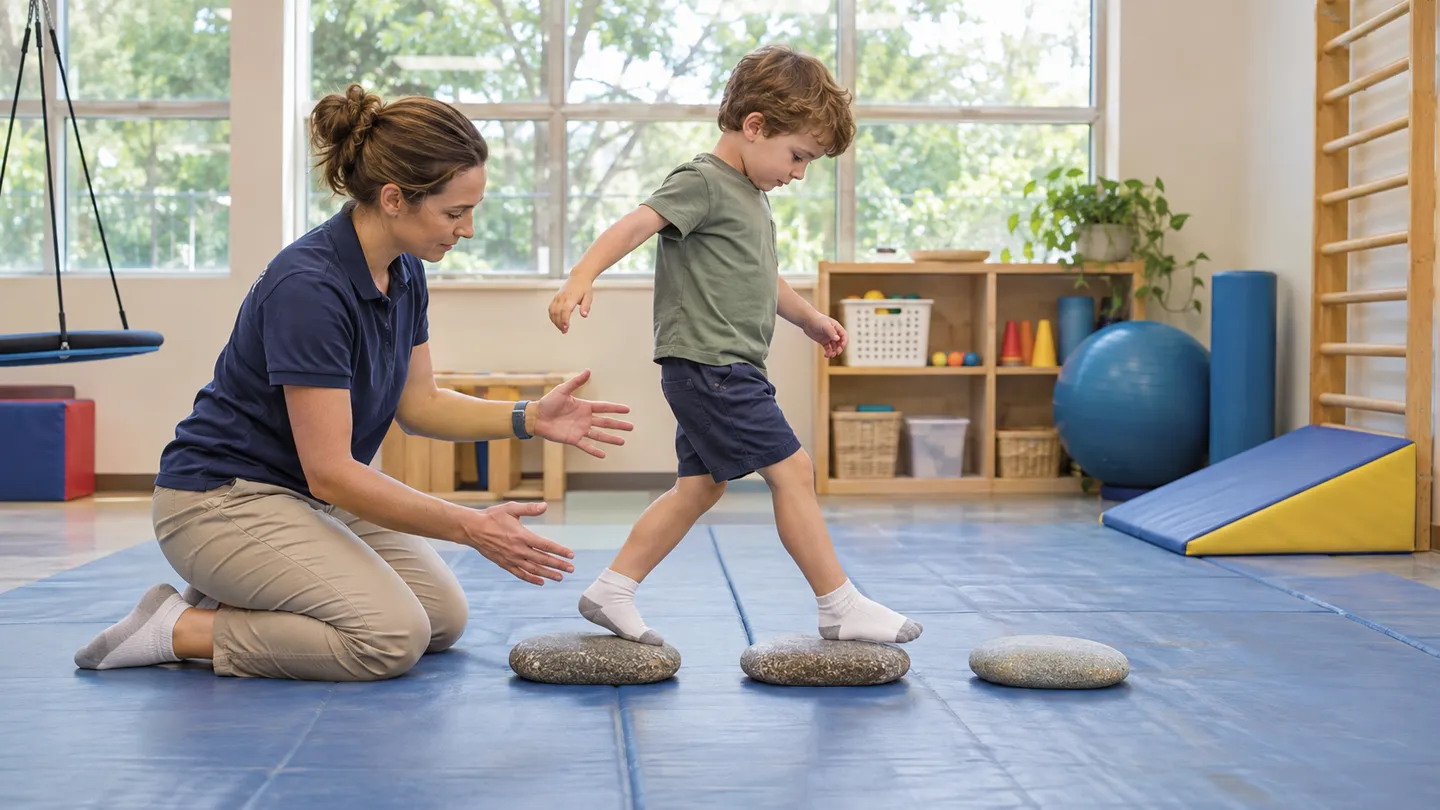
The skill match comes immediately after, and it is where enthusiasm causes mistakes. A child with weak fine-motor control will quit a small-clasp fidget in frustration, so the right form is a whole-hand grasp: large pop beads, chunky textured balls, palm-size rollers. A child still building balance confidence starts on low, wide stepping stones close to the floor, not on raised beams. The toy must sit inside the child’s current ability with a small stretch, one stretch per toy. Two mismatches, fine motor and gross motor, explain a huge share of abandoned toys. The toys were not bad; they asked for skills the child did not have yet.
Step Three: Age Lines That Are Not Negotiable
Age grading exists for safety, not marketing, and the lines are firm. Under-three users mouth everything, so small parts and unsealed batteries are out, and chewables must be documented food-grade silicone. Preschool users can handle standard sensory toy forms, but weight rules still bind: weighted products follow the sizing guidance printed on the product, not adult intuition. School-age and older users can take more complex forms, and interest tends to shift toward fidgets that do not look babyish. Wherever a child sits, the age label on the product reflects the safety testing behind it, and overriding it is the one corner that should never be cut.
Step Four: The Shared-Use Rule for Classrooms and Clinics
Multi-child environments add one more filter that homes never think about: turnover and hygiene. Surfaces need to wipe clean, because textured fabric crevices cannot be disinfected between users. Sealed units beat open containers, because bin contents travel. Structural durability matters more each year, which is the institutional version of the family durability math. Occupational therapists setting up sensory spaces on tight budgets note that equipment without supervision gets damaged very easily, and damage stings most when the budget is already tight (The OT Toolbox, 2024). A short checklist keeps the whole sequence portable:
Therapist-Style Selection Checklist
- 1Name the goal (regulate, integrate movement, build body awareness, desensitize touch).
- 2Pick the channel and one calming plus one alerting form.
- 3Check the skill match: one stretch beyond current ability, no more.
- 4Verify age line and materials (sealed battery doors, food-grade silicone, weight by size).
- 5For shared use: wipeable surfaces, sealed units, replaceable parts.
Run any purchase through those five checks and the wrong-buy rate drops to near zero. The same checks also explain what institutions demand formally, which is where certifications enter.
The Institutional Standard: Safety, Certification, and Budget Order
Buying for a school, clinic, or therapy center is the same logic with paperwork attached. Three boundaries separate institutional purchasing from family purchasing.
First, usage without supervision. Equipment lives a harder life when five children and no owner share it, so the durability bar from the previous section becomes a formal requirement rather than a preference. Second, compliance on paper. A family can rely on a brand’s reputation; an institution needs documents, because an inspector or an insurer eventually asks. Third, public health: surfaces and materials must survive regular disinfection, which eliminates a surprising number of well-loved plush and textured items.
The certificate landscape is smaller than it looks. In the United States, children’s products must be tested by a CPSC-accepted third-party laboratory, and the importer or manufacturer must issue a Children’s Product Certificate based on those passing results (CPSC). The testing behind a toy CPC normally covers the ASTM F963 toy safety standard plus lead and phthalates limits (CPSC). In the European Union, toys must meet the EN 71 toy safety standard series and carry CE marking. A buyer asking a supplier for the actual test report, not the claim, can cover both markets with two documents.
| Certification | Market | Status | What to request |
|---|---|---|---|
| CPC | United States | Mandatory for children’s products | The certificate itself, in English, naming the testing lab |
| ASTM F963 | United States | Toy safety standard behind the CPC | Test report referencing the standard |
| EN 71 | EU/UK | Toy safety standard series | Test report per relevant part |
| CE | EU/EEA | Conformity marking | Declaration of conformity plus technical file |
Budget order matters as much as certificates. The money goes first to the items in daily contact with the most children: movement and balance equipment, seating that organizes, tactile paths. It goes last to atmosphere pieces, the light-up and novelty items that help a room feel special but do not carry a program. Safety-critical pieces, anything a child climbs, sits, or mounts, come before everything decorative, always.
One mismatch deserves its own warning: household-grade products placed into institutional service. They fail early under multi-child use, and their paperwork usually will not satisfy an institutional compliance check. The reverse mismatch, buying full institutional grade for a home that uses toys twice a week, wastes real money. Grade follows usage, and the certificate file follows the grade.
What This Market Looks Like from the Supply Side
Each of the previous sections doubles as market data, and together they sketch the shape of this niche. Demand here is validated twice, by families and by clinics. The same movement, balance, and spinning equipment that occupational therapists publish as core recommendations (NAPA Center, 2025) is what parents in heavy-use households discuss replacing and re-buying. This is a repeat-purchase category, not a one-gift category, which changes what a sensible product strategy looks like.
The category structure splits cleanly. Handheld fidgets are the crowded end. Production is easy, listings are everywhere, and the search results page for this topic is itself saturated with list-style content, a visible signal of how crowded that end of the market is. Durable movement and balance equipment is the opposite end: fewer suppliers per listing page, higher unit prices, and a real barrier to entry in certification and mold investment. The same physical product family serves both tiers discussed earlier. A heavier-wall, textured-grip version of a stepping stone is simultaneously the family product for a demolition-crew child and the institutional product for a clinic. One supply chain, two price grades.
The Reseller’s Entry Card
Durable movement and balance equipment. Handheld fidgets are the crowded end of the market.
One mold line, two grades: the heavier-wall, textured-grip version serves the demolition-crew household and the clinic at the same time.
CPC testing and certificate for the US, EN 71 and CE for the EU, plus clean IP on original designs.
The entry requirements mirror what buyers on both tiers now ask for. For the US market, a sellable children’s product needs the CPSC testing and certificate path (CPSC); for the EU, EN 71 testing and CE marking. And because this niche rewards original designs, clean intellectual property is part of the product, not an afterthought.
Our own line follows that exact logic. Startinal designs and molds its sensory balance and spinning toy range, river stones, balance beams, swivel chairs, and tactile discs, in food-grade PP with TPE anti-slip surfaces. The original designs carry patent protection registered separately in China, the United States, and the European Union, so resellers can list without IP exposure. We build the same molds across household and heavier institutional grades, which is the two-tier structure this article keeps circling, available in one supply chain (our sensory therapy range).
Whether you are stocking a sensory corner for one child or a catalog for many, the through-line is the same. Match the toy to the actual use, buy for the real usage spec, and let durability math, not sticker price, close the decision.
Source the Durable Grade Direct
Startinal designs and molds its balance and spinning range, river stones to swivel chairs, in food-grade PP with TPE grip, in household and institutional grades with CPC and CE files ready.
Request a QuoteReferences
- Autism Speaks. “What Are Sensory Toys and How Do They Help?” autismspeaks.org
- NAPA Center. “28 Best Sensory Toys Recommended by Occupational Therapists.” 2025. napacenter.org
- r/Autism_Parenting. “What Toys Are Actually Helpful?” reddit.com
- r/Autism_Parenting. “Why Are Sensory Toys So Freaking Expensive—A Rant.” 2025. reddit.com
- Autism Parenting Group. “What Toys Are Durable for Autistic Children Who Break Things?” Facebook, 2026. facebook.com
- The OT Toolbox. “Sensory Room Equipment: OT Recommendations.” 2024. theottoolbox.com
- U.S. Consumer Product Safety Commission. “Children’s Product Certificate.” cpsc.gov
- U.S. Consumer Product Safety Commission. “Third-Party Testing Guidance.” cpsc.gov