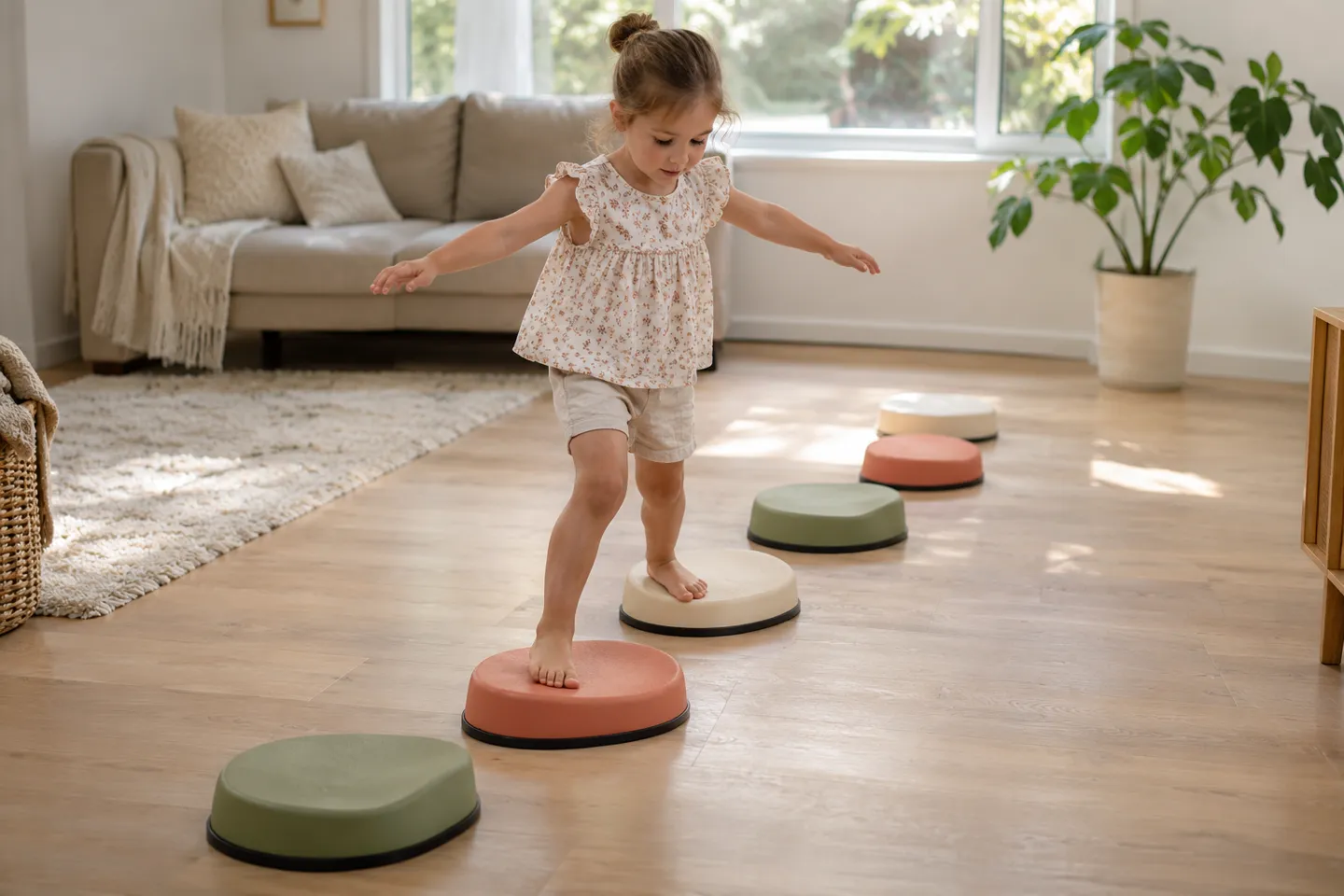
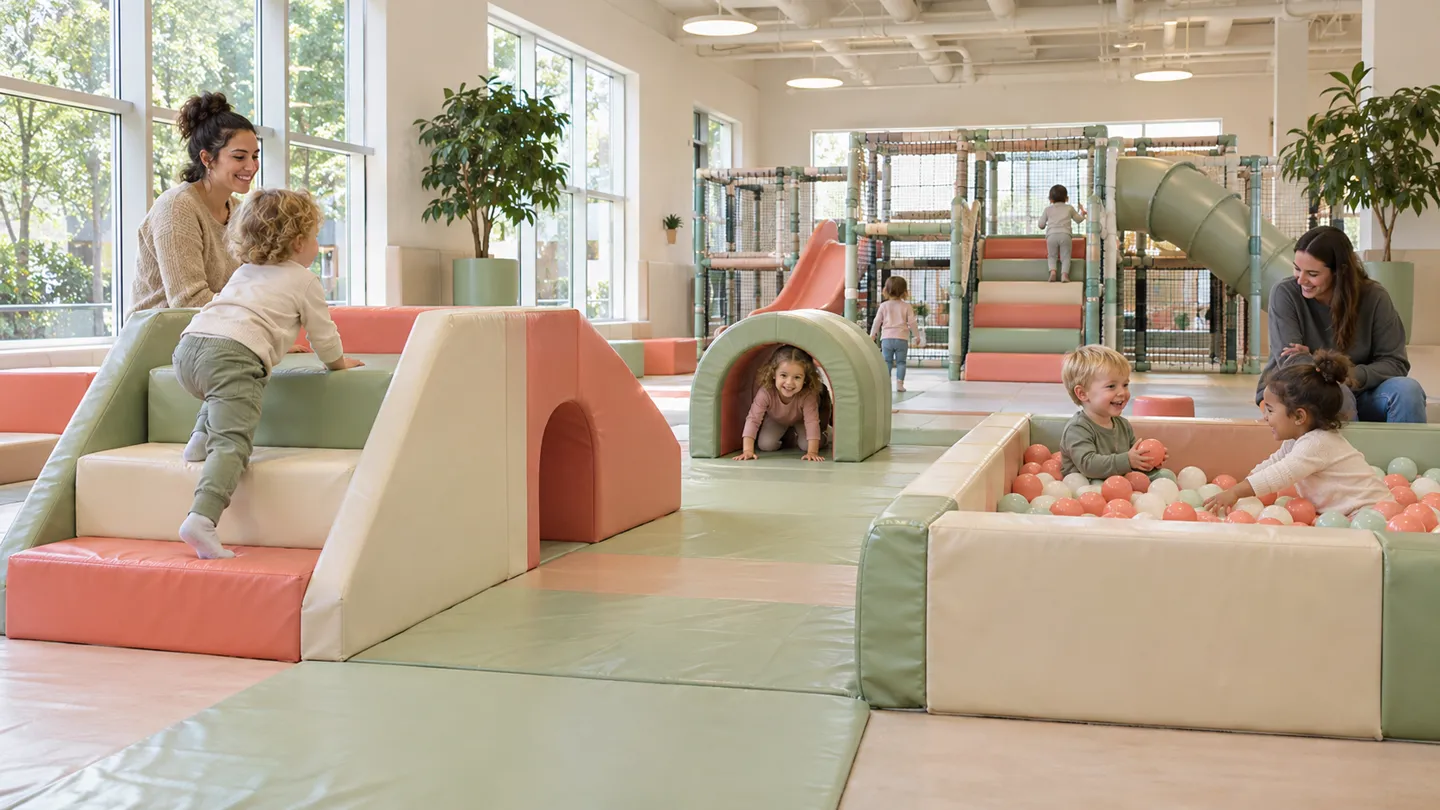
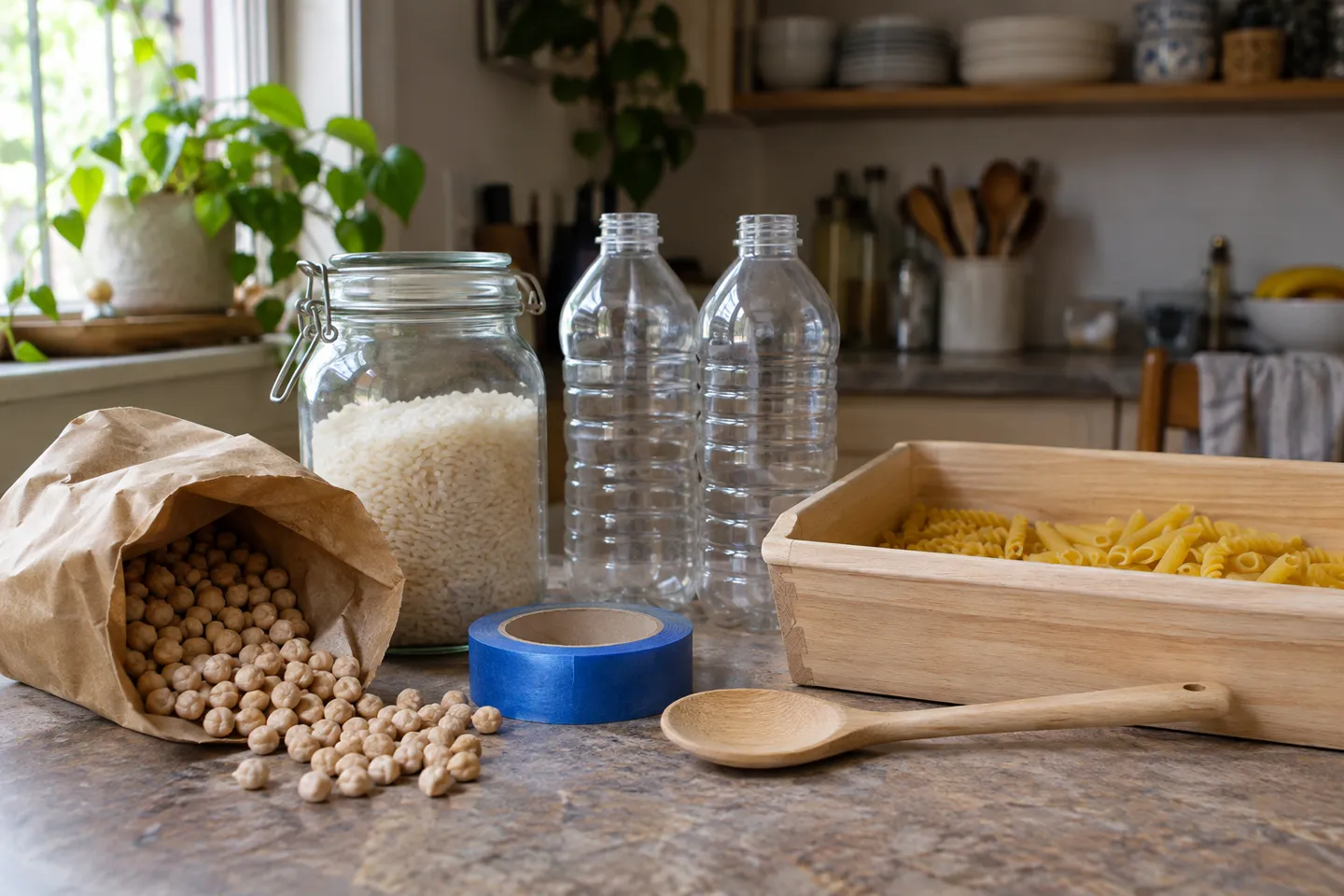
A bag of dried chickpeas, two empty plastic bottles, a roll of painter’s tape on the kitchen counter. That is enough to build a sensory activity a toddler will play with for twenty minutes. Most of the classic sensory play ideas really do work at home: rice bins, discovery bottles, homemade playdough, simple fidgets. Parents have been making them for decades, and early-childhood teachers keep asking for more of them.
What sensory play actually trains is worth one paragraph, because it explains why the materials matter. Touch-heavy activities (sand, rice, dough) feed the tactile system. Movement activities (spinning, swinging, rocking) feed the vestibular system, which governs balance. Pushing, pulling, lifting and climbing feed the proprioceptive system, which tells a child where their body is in space. A good sensory toy gives one of these systems honest input, and a household has plenty of raw material for all three.
What DIY cannot do is survive an upgrade in intensity. The bin that delights one supervised toddler at home is a different object in a classroom of twelve, used daily, disinfected weekly, and chewed on by a child who mouths everything. The rules change with the setting, and most DIY guides never mention it. The rest of this article follows that gap. It starts with the ideas worth making and moves to the point where each one fails as settings get more demanding. It ends with a way to decide when buying wins.
DIY Sensory Toys by Sensory Channel: Ideas from Household Materials
Lists of ideas are everywhere, so this one is organized the way sensory development actually works: by the channel each activity feeds. Pick the channel first, then the material, then check the age floor. Everything below uses items from a kitchen or a craft drawer.
DIY sensory play ideas by sensory channel
| Sensory channel | Ideas that work | Household materials | Age floor |
|---|---|---|---|
| Tactile | Rice or pasta sensory bins; cooked playdough | Rice, dried pasta, dried beans, oats; flour, salt, cream of tartar | Loose fillers from age 3; dough at any age with supervision |
| Visual | Discovery bottles | Clear plastic bottles, dry pasta, beads, water, glitter, a spoon of oil | Any age while the bottle stays sealed |
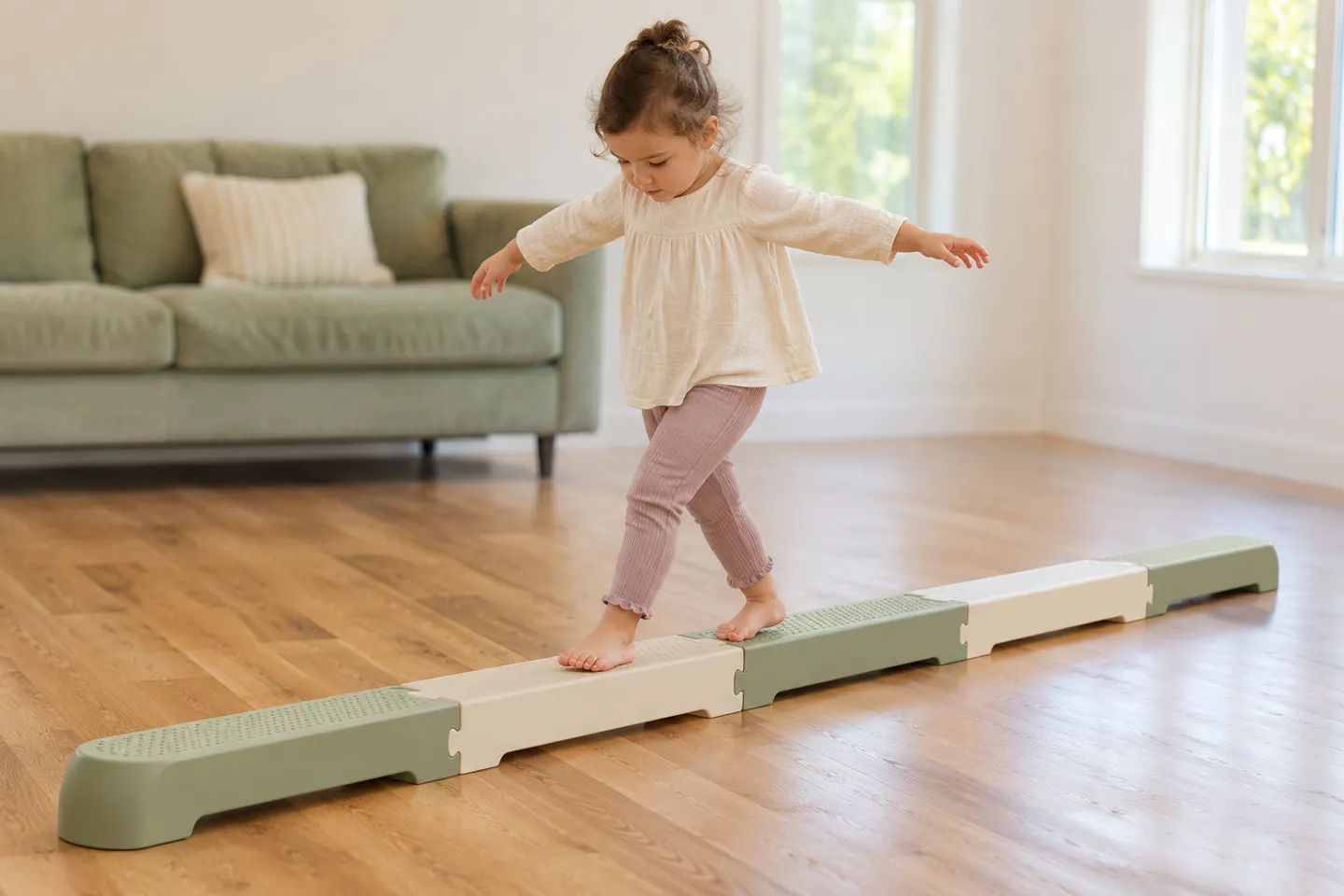
| Vestibular (movement) | Spinning, swinging and rocking games; painter’s-tape balance line | Painter’s tape, cushions, a sturdy chair | Any age with supervision |
| Proprioceptive (push, pull, lift) | Carrying-and-climbing games; flour-filled balloon stress fidgets | Balloons, flour, cushions, laundry baskets | Any age with supervision; loose fillers away from under-3s |
Sources: common early-childhood practice; parent and educator communities.
A few practical notes on sourcing. Rice, dried pasta, dried beans and oats are the backbone of tactile bins; buy the cheapest bulk bags, because this material will not survive forever. Clear plastic bottles from the recycling bin make discovery bottles; add dry pasta, beads, or water with glitter and a spoon of oil. Flour, salt and cream of tartar make cooked playdough that outlasts the no-cook kind by weeks. Balloons filled with flour become stress fidgets; painter’s tape on the floor becomes a balance line for a dollar.
One boundary belongs here rather than in a footnote.
The under-3 line: dried beans, beads, water beads and anything smaller than a ping-pong ball stay out of activities for babies who still mouth objects; that gate lifts at roughly age three.
The rule is not about tidiness. It is about the single most documented failure in this whole category, and it gets the attention it deserves in the next section.
Why a Toy That Works at Home Fails in a Classroom
The same activity changes character as the setting around it gets more demanding. There are four levels to this, and each one fails for a different reason. Walk the ladder from the bottom and you can see exactly where your own situation sits.
The intensity ladder
Home
Safety fails first
Therapy
The match fails
Classroom
Durability and hygiene fail
Institution
Compliance fails last
The home level: safety fails first
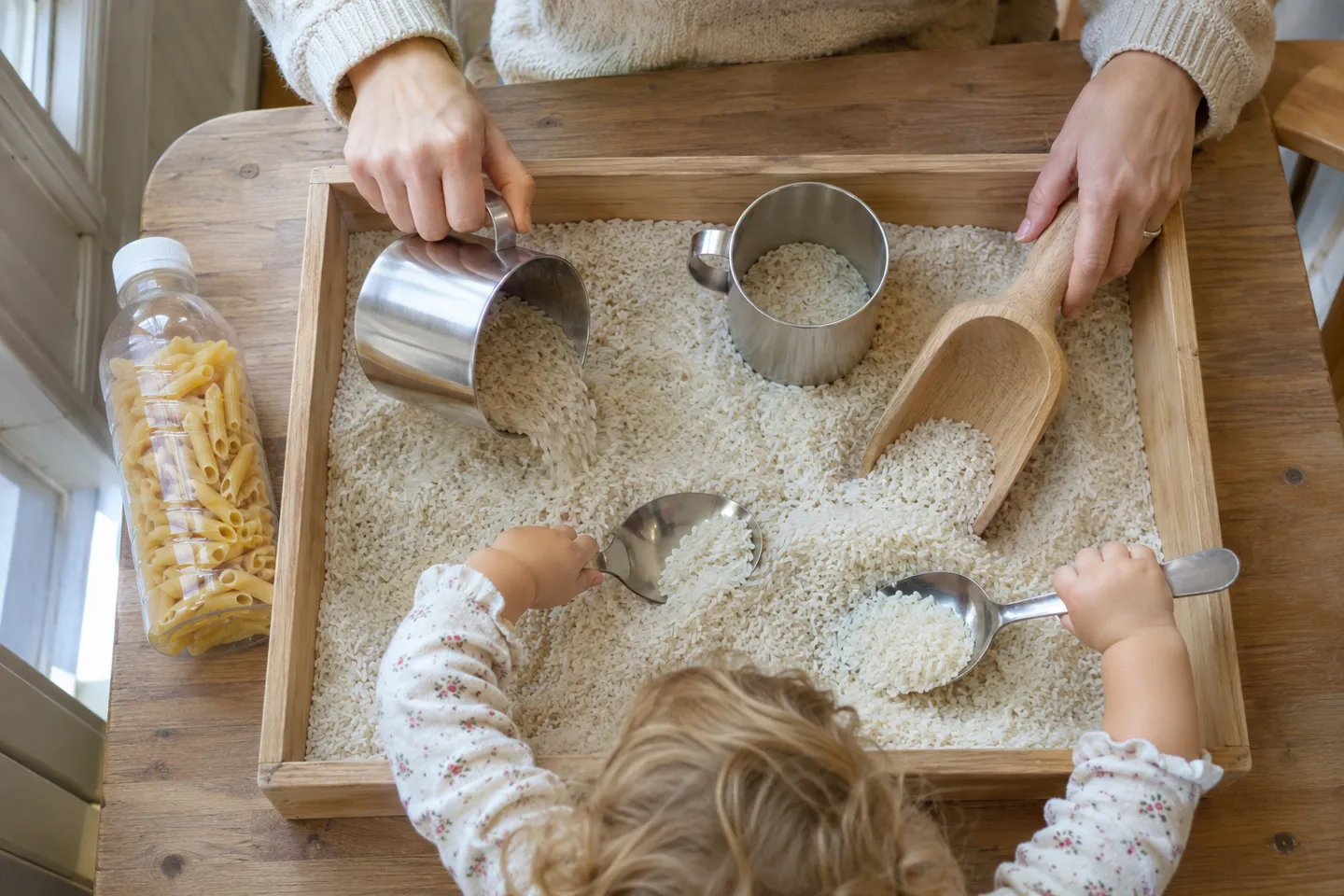
At home, the material rules are simple but absolute. Supervision is present, the group is one child, and the main risk is ingestion. The stakes are real. The US Consumer Product Safety Commission maintains an entire information center for water beads, the small polymer balls marketed as a sensory play staple. Swallowed beads keep expanding inside the body, and they have caused choking, intestinal blockages, internal injuries and deaths in young children (CPSC, 2026). The National Capital Poison Center reaches the same conclusion from the medical side: the risk of intestinal obstruction and choking clearly outweighs any toxicity concern, and no amount of play value cancels that (Poison.org, 2026).
Safety warning
CPSC official warning: water beads can kill
Water beads, a popular sensory play filler, can kill. Swallowed beads expand in the body and have caused choking, intestinal blockages, internal injuries and deaths in babies and small children. Not safe in any home with children under 5.
The condition under which home DIY holds is therefore: supervised play, mouth-safe materials only, and loose fillers kept away from children under 3. Parents in parenting communities have been converging on the same caution from the other direction, asking for sensory bins that avoid plastic entirely because their toddlers chew on everything. When those two constraints are respected, the DIY bin is a genuinely good tool. When either one slips, it stops being a toy.
The therapy level: the match fails
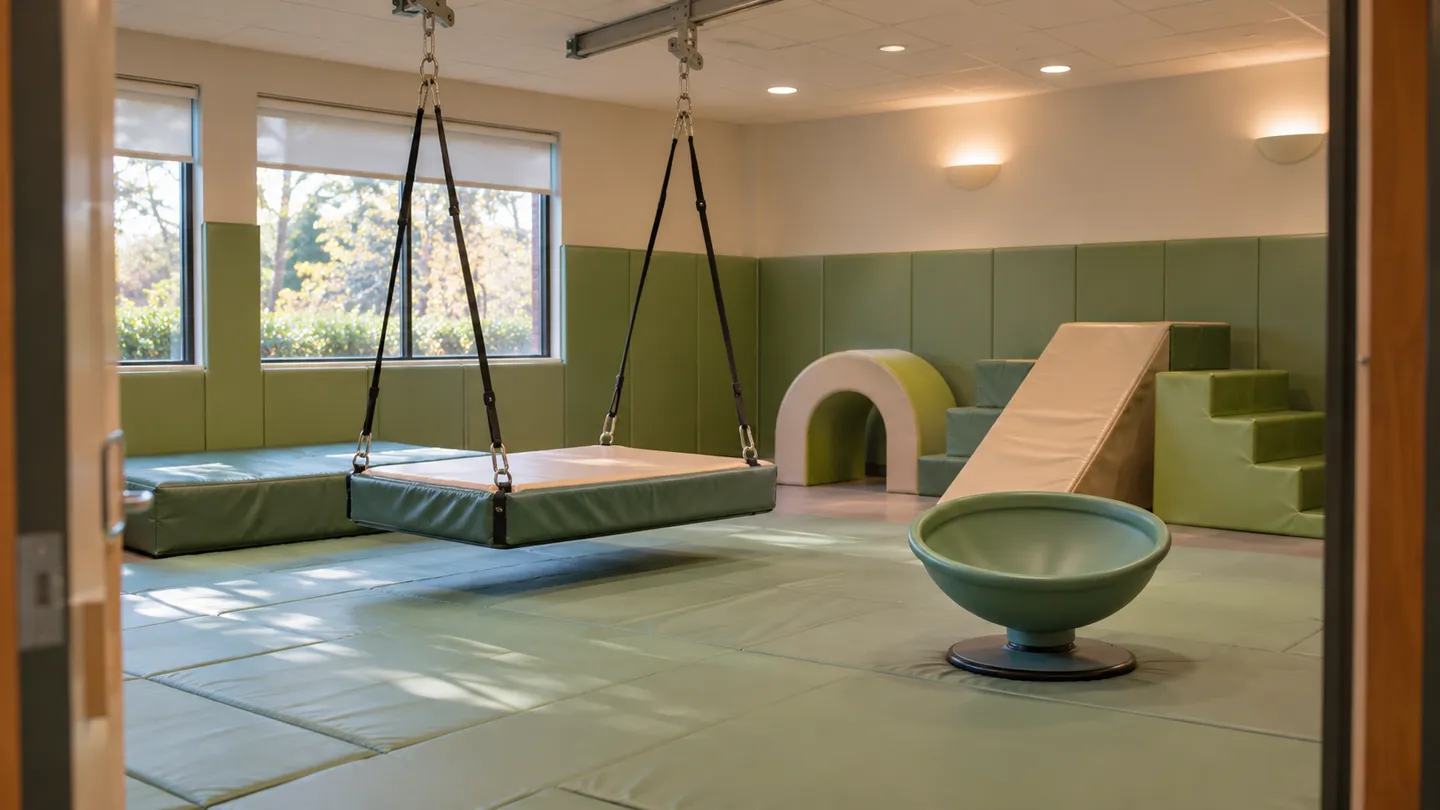
A step up in specificity sits the autism and sensory-processing community, including adults making their own fidgets. Here the failure mode is not safety but fit. Sensory-seeking children need strong input: spinning, deep pressure, jumping. Sensory-avoiding children need the opposite: predictable, gentle, escapable. A spinning seat that regulates a seeking child can overwhelm an avoiding one. No amount of household improvisation reliably delivers calibrated vestibular input like a proper swivel chair or a chewable tool rated for biting. Generic DIY covers touch and vision well because those channels are forgiving. It covers the movement channels poorly because those channels are not.
The classroom level: durability and hygiene fail
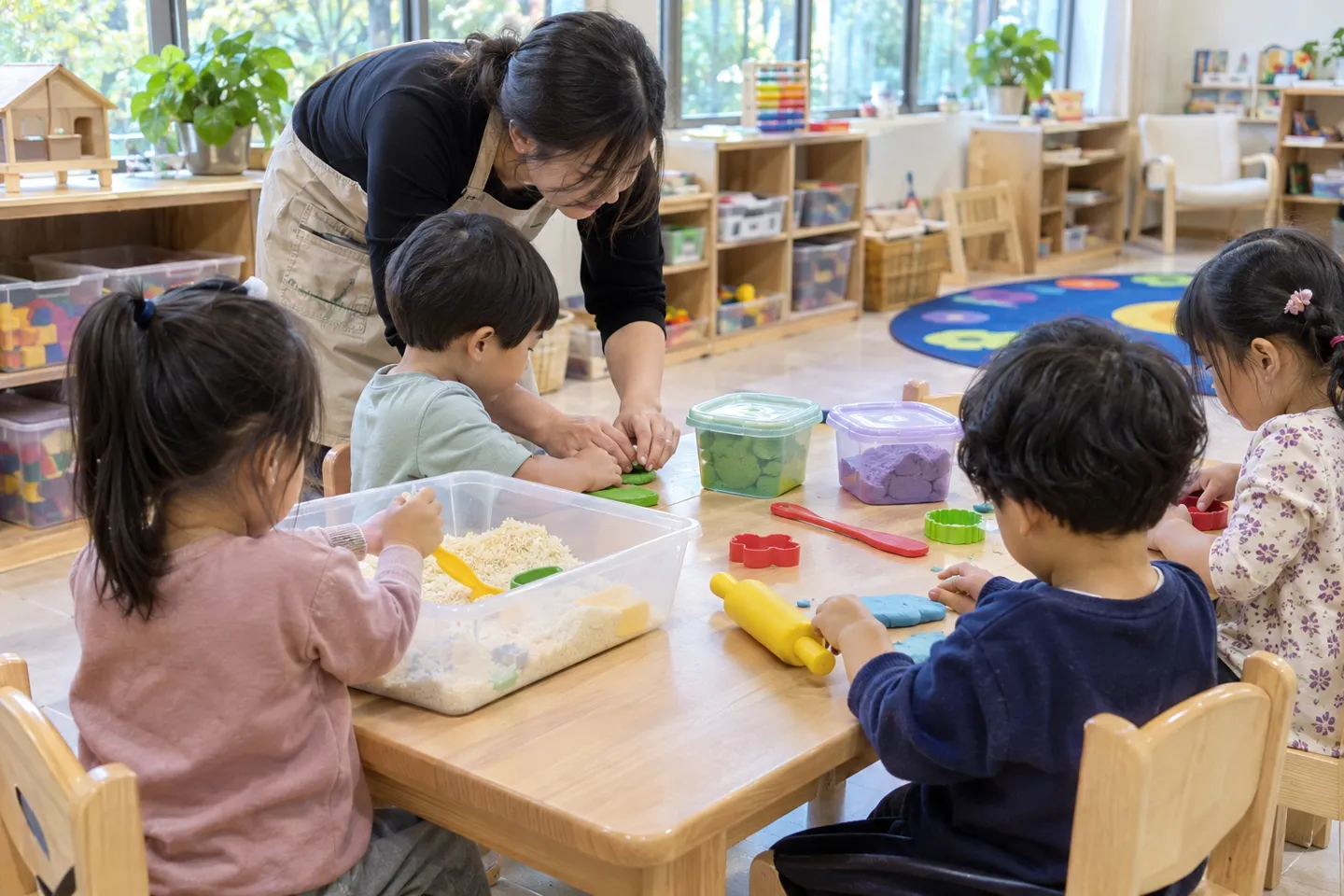
Put the same rice bin in a preschool room and a different set of limits appears. A class of a dozen children uses the material daily. Rice spills and draws pests, dough dries out or grows mold between cleanings, tape lines peel off a floor within a week, and glue-gun fidgets disassemble at the hands of the most determined four-year-old. Then there is the hygiene requirement that homes never face: group settings need materials that can be washed or disinfected on a schedule. Educators discuss this constantly. A single thread on water-bead hazards in an early-childhood professionals forum drew more than a hundred comments, most weighing classroom risk against play value (Reddit r/ECEProfessionals, 2024). The DIY answer survives in classrooms only in its washable, large-part, low-cost-loss forms: taste-safe dough remade weekly, water and fabric, large wooden or plastic objects. Everything fragile or edible-grade stays home.
The institution level: compliance fails last
The top of the ladder is any setting with a procurement process: kindergartens buying equipment, special-education programs outfitting sensory rooms, therapy centers answering to insurers and inspectors. Here the gate is paperwork. Equipment for institutional purchase in the US market arrives with a Children’s Product Certificate based on ASTM F963 testing. That standard contains the small-parts test, which sets the choking boundary at 36 months. European buyers expect EN71. A homemade sensory item cannot produce those documents, no matter how well made it is, so it cannot enter the room. This is the layer where DIY does not merely underperform. It is excluded by rule.
Across all four levels the pattern is the same, and it is the one idea worth remembering from this article. The activity did not stop working because the recipe was wrong. The setting demanded a higher grade of material, durability, hygiene and documentation than household supplies can carry. Use intensity is the variable, and every purchasing decision below follows from it.
Use intensity is the variable.
Where DIY Ends: The Boundary Matrix
The four levels compress into one decision table. Find your setting on the left, read across, and the honest answer about making versus buying is in the middle columns. The last column converts every “fails here” into something you can actually check before you commit, because a boundary that cannot be verified is just an opinion.
Where DIY sensory toys hold and where they fail
| Setting | Item | DIY holds? | Fails because | Check before you decide |
|---|---|---|---|---|
| Home | Discovery bottles | Yes | Nothing, while sealed | Bottle stays sealed; refills are an adult job |
| Home | Rice bin, playdough, tape balance line | Yes | Loose fillers near a mouthing baby | Under-3s get no small or loose parts; supervise |
| Classroom | Cooked playdough | Yes, as a weekly supplement | Dries out or molds between cleanings | A named adult remakes it weekly |
| Classroom | Rice, beans, water beads | Barely | Spills draw pests; swallowed beads keep expanding | Washable or disposable on a schedule; no water beads in groups |
| Classroom | Tape lines, glue-gun fidgets | No | Peel within a week; come apart in small hands | Survives daily use and weekly disinfection |
| Therapy room | Spinning seats, chewable tools | No | Calibrated vestibular input and bite ratings cannot be improvised | Input matches the seek-or-avoid profile; bite rating documented |
| Institution | Any purchase | No | No Children’s Product Certificate or EN71 file | CPC (ASTM F963) or EN71 report in hand before ordering |
Sources: educator communities; CPSC guidance; classroom practice.
Reading the table is easier with one habit: decide the setting’s demands first, then choose the material grade, never the reverse. A teacher who starts from a cute activity and then tries to stretch it to classroom durability will repaint that loop every semester. An operator who starts from “twelve children, daily use, weekly disinfection, inspection on file” arrives at certified equipment quickly, and rarely regrets it.
Where does that leave homemade sensory play? In its correct position: the home, plus light supplementary roles in group settings. Dough remade weekly by a committed teacher is a legitimate classroom material. Discovery bottles as calm-down corner tools work nearly everywhere because they are sealed. Loose fillers, structural items and anything a child will chew belong to the grade that can prove it. That is not a rule anyone enforces on parents. It is the line where the fun of making meets the accountability of operating.
When to Buy Instead: Three Checks Before You Order
Once a setting crosses into classroom scale or institutional purchase, buying wins, and the job becomes choosing well. Three checks, in order, cover it.
Check 1: size the demand before browsing. Answer three questions in writing: how many children use it, how often, and who is responsible for cleaning it. A spinner for one child at home and a spinner for a sensory room are different products with different price grades, and the room version is not overpriced nostalgia for the home version. It is built for the answers you just wrote down.
Check 2: ask for the test report, not the logo. For the US market, the Children’s Product Certificate exists as a document based on third-party testing against ASTM F963 (CPSC, 2026). The standard contains the small-parts cylinder, which defines the choking boundary for children under 3. For the EU, the equivalent is EN71. Any supplier selling into these markets can produce test reports from an accredited lab on request. If the answer to “show me the report” is a photo of a CE mark on the box, you have learned something important about the supplier, and it is not the certification status.
Check 3: price the total cost, not the sticker. Equipment price is the smallest number in the equation. Add cleaning labor per week, expected replacement cycles, and the cost of a single incident investigation in a licensed setting. Compare that total against the DIY alternative at the same intensity, which costs real hours of adult time every week and replaces itself constantly. At home intensity, DIY wins the arithmetic. At classroom intensity, bought equipment usually does. At institutional intensity, it always does, because the paperwork is the product.
Before ordering
- Written usage profile: how many children, how often, who cleans.
- Test report requested and received: CPC/ASTM F963 for the US, EN71 for the EU.
- Total cost computed: price + cleaning labor + replacement cycle + incident exposure.
If any item fails, pause the order.
What the DIY Wave Means for Toy Sellers and Distributors
For the sellers and distributors reading this far, the consumer-facing part of this article is also a market signal, and the translation is straightforward. The DIY wave is a funnel, not a competitor. Millions of parents making rice bins this year are building category awareness for sensory play. A portion of them will run headfirst into the classroom level or the therapy level, where household supplies stop working. That is precisely where equipment purchases begin.
The selection logic follows directly from the failure ladder. Skip what DIY replaces easily: loose fillers, plain dough kits, basic fidget parts. These are the categories where a consumer with a pantry beats a catalog price every time. Weight the assortment toward what DIY cannot produce: gross-motor equipment engineered for collective intensity, certified small-parts-safe items for the under-3 market, and vestibular equipment like sensory spinning seats that no kitchen can replicate. The category tailwind is real. One market analysis puts sensory toys at USD 2.46 billion in 2026, growing to a projected USD 6.16 billion by 2035 at an 11% CAGR (Business Research Insights, 2026). Amazon listings already borrow “DIY sensory toys” as sales copy for ready-made products. The listing language that matches the moment is the language the failure ladder produces: classroom-ready, certified, washable.
If you are building out a sensory line for classrooms or catalogs, STARTINAL’s sensory play equipment catalog is worth a look. As the factory, we run OEM and ODM on color, logo and packaging, and keep low MOQs on in-stock items. Everything ships with CE, CPC, ASTM F963 and EN71 documentation worldwide.
Source classroom-ready sensory equipment
OEM/ODM sensory play equipment direct from the factory: certified to CE, CPC, ASTM F963 and EN71, with low MOQs on in-stock lines.
Start an OEM/ODM inquiryReferences
- U.S. Consumer Product Safety Commission. “Water Beads Information Center.” 2026. cpsc.gov
- National Capital Poison Center. “Are Water Beads Dangerous?” 2026. poison.org
- r/ECEProfessionals. “Water Bead Hazards.” 2024. reddit.com
- U.S. Consumer Product Safety Commission. “Small Parts for Toys and Children’s Products.” 2026. cpsc.gov
- Business Research Insights. “Sensory Toys Market Size, Share and Trends, 2035.” 2026. businessresearchinsights.com