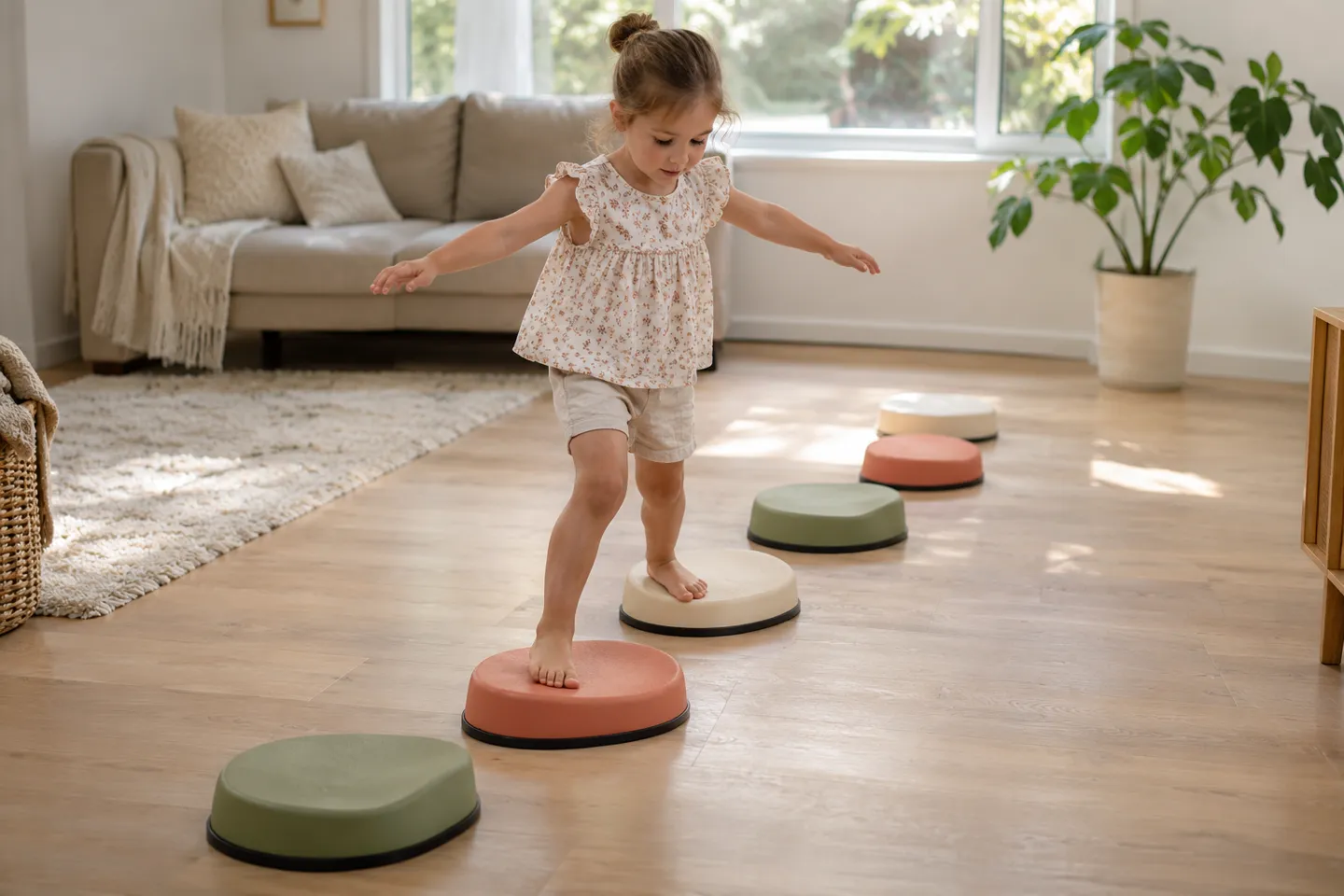
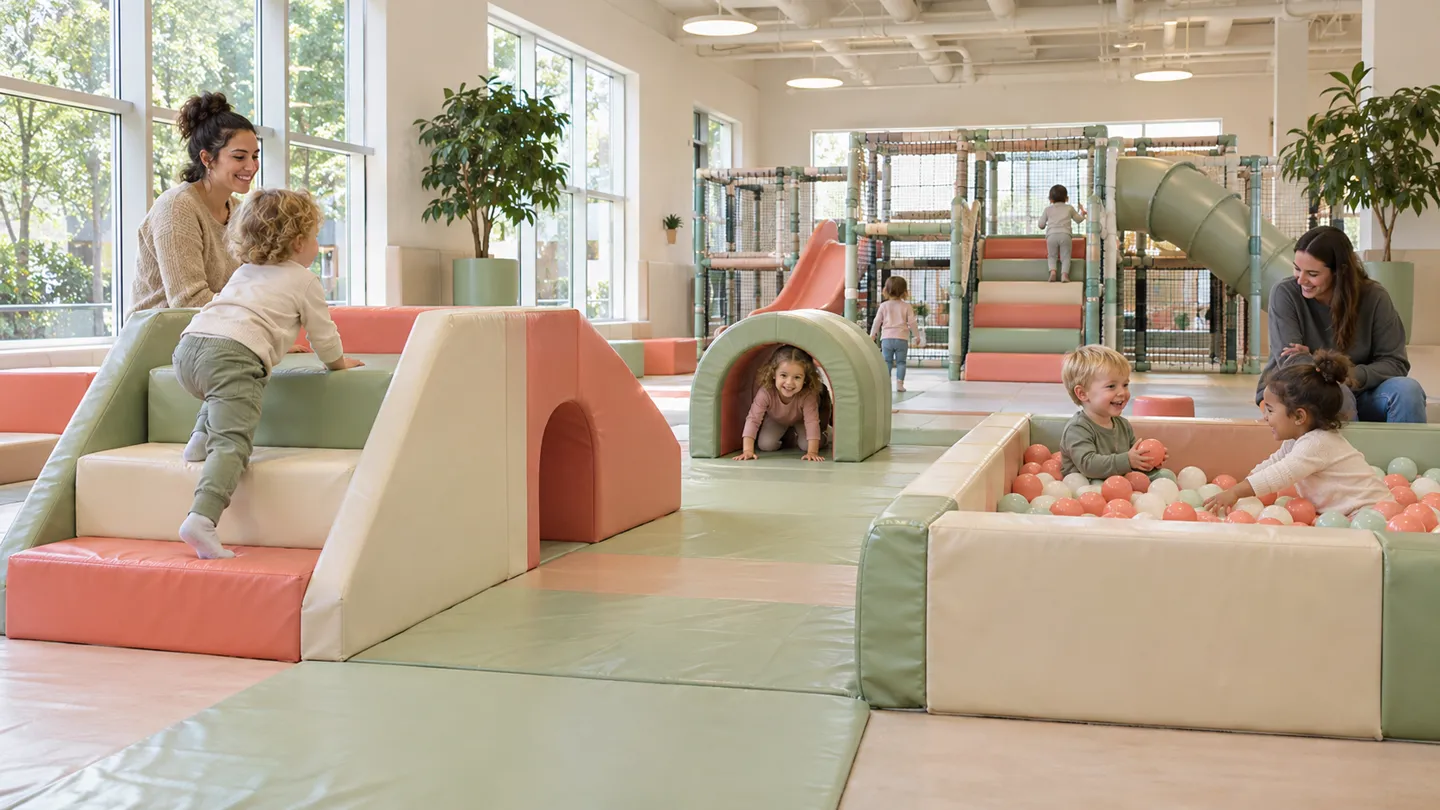
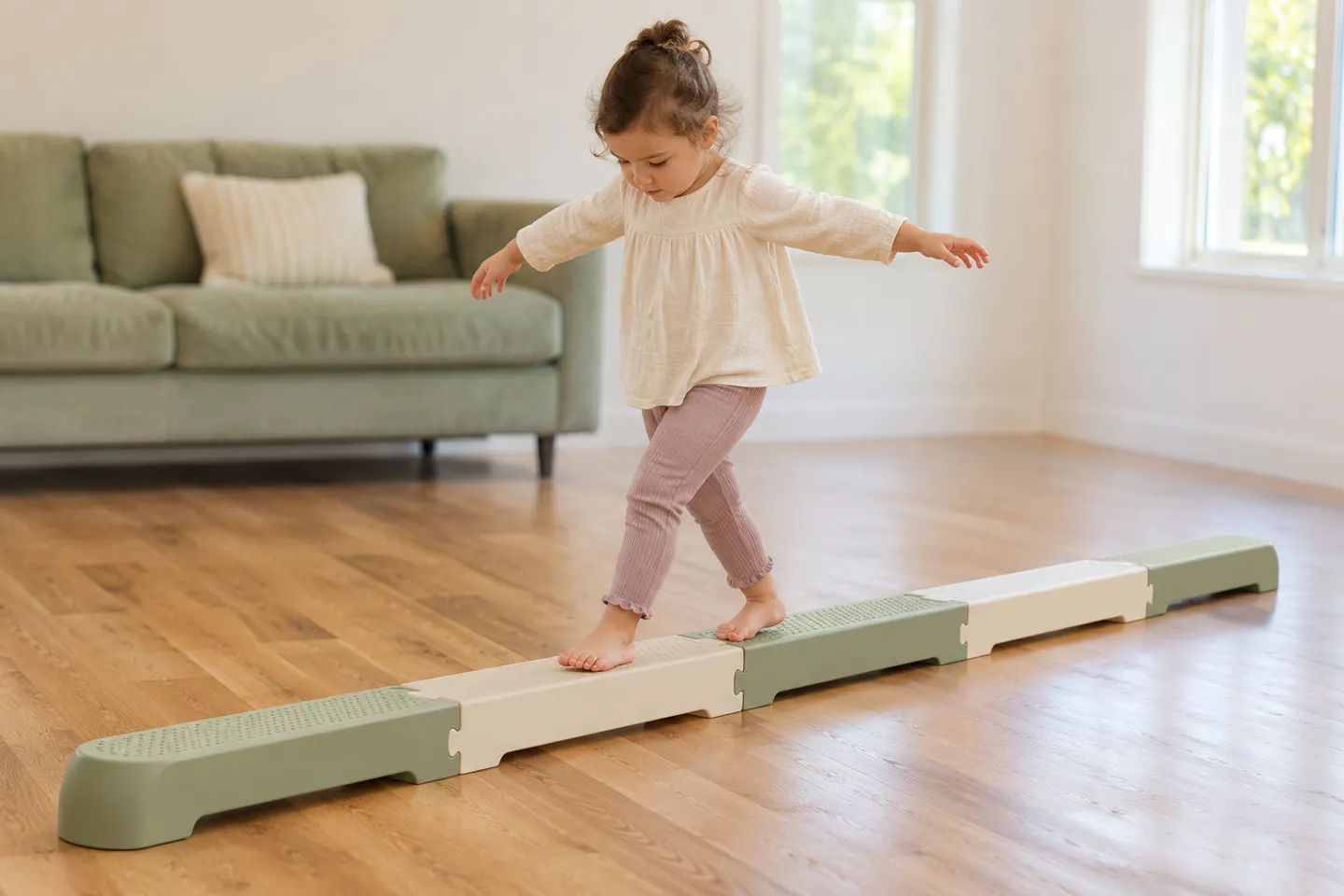
A preschool classroom runs on its materials. Stepping stones by the window, wooden blocks on the open shelf, a dress-up corner held together by mismatched hats. Every piece gets picked up, dropped, washed, and fought over by twenty children before lunch. Parents meet this world when they set up a play corner at home. Teachers meet it every morning. Directors meet it again when the year’s budget comes due.
The arguments in this world are rarely about whether materials matter. They are about which ones survive the year, which ones quietly become hazards, and which prices make sense. That is a different set of questions from a toy shopping list, and it deserves a different set of answers.
What Play Materials Fill a Preschool Classroom
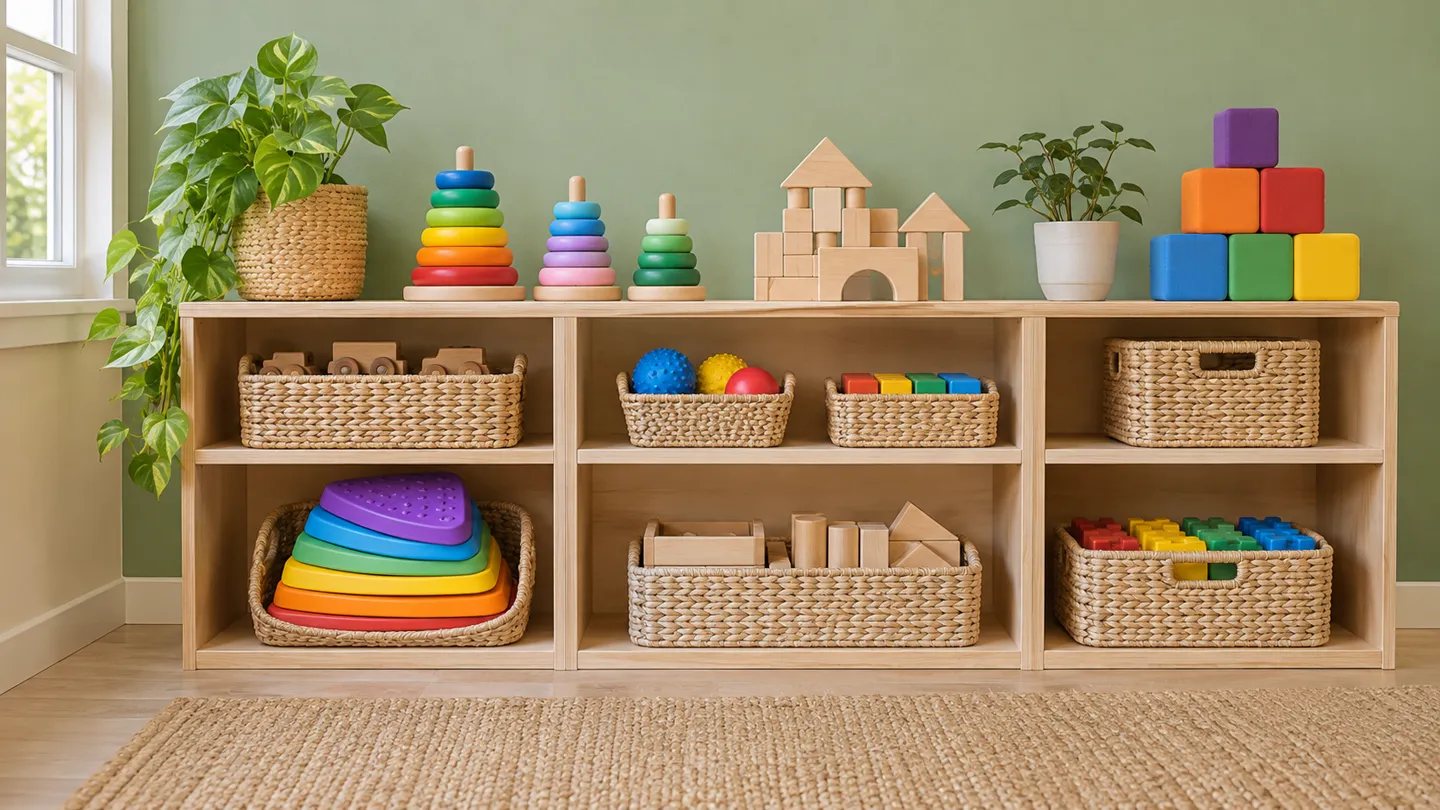
Preschool rooms are usually organized around play areas, and each area runs on a distinct family of materials. Teachers talk about “materials” rather than “toys” because the same shelf can hold a commercial balance beam, a basket of pinecones, and a stack of paper. All three are materials. Only one came from a catalog. Early learning organizations treat this variety as the point: a room that offers different play types gives children different ways to grow (Illinois Early Learning, 2026).
Here is the working map that most classrooms use.
The Preschool Materials Map
| Play area | Representative materials | What it builds |
|---|---|---|
| Gross motor and balance | stepping stones, balance beams, wobble boards, tunnels | whole-body control, coordination, confidence |
| Fine motor and hand-eye | peg boards, threading sets, tweezers and pom-poms, lacing | finger strength and precision |
| Construction | wooden blocks, magnetic tiles, interlocking gears | spatial reasoning and planning |
| Dramatic play | dress-up clothes, play kitchen, puppet sets, play food | language and social scripting |
| Sensory integration | tactile paths, texture stones, spinning chairs, sensory bins | body awareness and calming |
| Art and creativity | paper, crayons, paint, clay, collage trays | expression and fine control |
| Books and language | picture books, story props, felt boards | vocabulary and listening |
| Table games and puzzles | chunky puzzles, sorting sets, matching games | turn-taking and logic |
Two notes keep this map honest. Age labels matter because a three-year-old and a five-year-old fail different materials in different ways, so anything with small parts stays out of the younger room. The loose parts philosophy sits across all of it. Baskets of corks, fabric scraps, and shells cost almost nothing and invite open-ended building, which is why many teachers treat them as core equipment rather than clutter.
The map answers what a room needs. It does not answer which of these you should buy in which material, or what a fair price looks like. That is the next layer.
Plastics, Wood, Foam or Loose Parts
Every family of materials on the map comes in several body types, and the body type decides how the piece behaves in your room. Plastic (usually injection-molded PP), wood, foam and soft fabric, and natural loose parts each have a scene where they are the right answer and a scene where they fail. Choosing material is really choosing your room’s conditions: how often things get washed, whether the sun hits them, and how hard children land on them.
Material Bodies at a Glance
| Material | Best fit | How it fails | Cleaning |
|---|---|---|---|
| Injection-molded plastic (PP) | outdoor use, wet areas, heavy climbers | UV fading over years, cracking if wall is thin | hose off, mild soap |
| Wood | blocks, puzzles, tactile warmth indoors | swelling and splitting if soaked, chipped edges | wipe dry, occasional oil |
| Foam and soft fabric | infant zones, soft climbers, quiet corners | cover tears, foam compression | wipe-clean covers, removable zip covers |
| Natural loose parts | creative construction, math trays, calm play | scatter and loss, wear from mouthing | inspect and rotate, replace worn items |
A quick read of the table beats a long argument. Plastic earns its place wherever weather, water, or weight are involved, which is why commercial outdoor balance gear is almost always molded plastic with a rubber base. Wood earns its place indoors where touch and build quality matter, on one condition: it never gets soaked. Foam owns the under-three zone because it removes hard edges entirely. Loose parts cost the least and do the most for imagination, but they carry no load, so they never substitute for equipment.
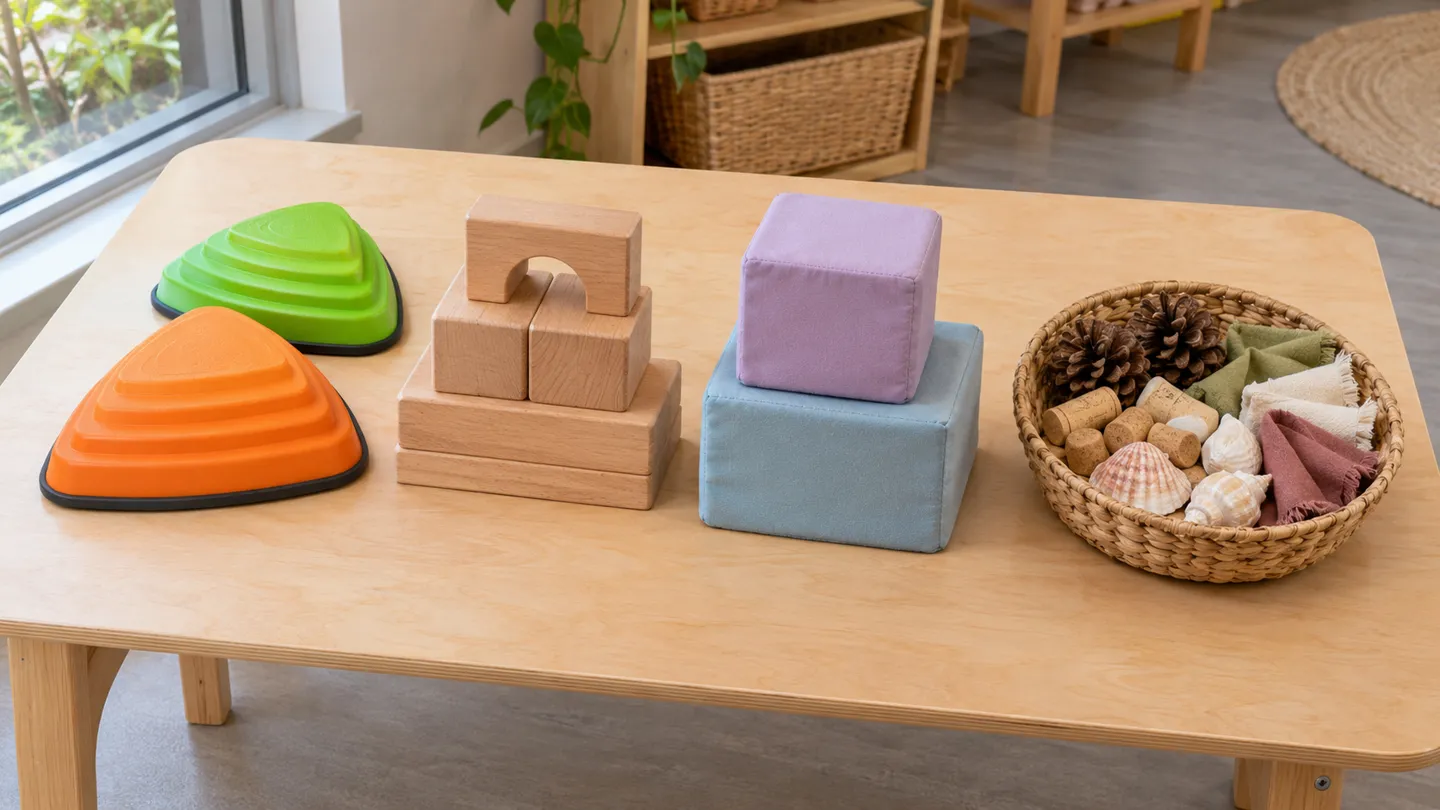
One boundary deserves an action, not a warning label. Before placing any plastic piece outdoors for a season, check whether the maker states UV-stable or fade-resistant pigment, and plan a shaded spot or indoor rotation if they do not.
Material type, though, is only the first half of the price story. Two stones can be the same material, the same color, and the same shape, and still differ in what they can take. The gap between them is where most budgets break.
Why the Same Toy Costs 10x
Browse any mass-market listing and you will find an eleven-piece stepping stone set for under fifty dollars. Walk through a classroom supplier catalog and the same category starts at $174.99 per item (Walmart, 2026; Really Good Stuff, 2026).
The same category of play material carries a price gap of roughly 10x per piece, and often more, once you move from mass-market sets to classroom-grade equipment.
The price gap, per piece
10x
from a mass-market set to classroom-grade equipment. Often more.
That sentence is not an accusation of overpricing. The gap is structural, and it maps to three levels of use.
Home Grade: An Hour Here and There
A home play corner runs at low intensity. One or two children, an hour at a time, an adult nearby, and soft floors. At this level, thin walls and light builds are acceptable, because the failure mode is disappointment rather than risk. A cracked foam petal or a scuffed stone is a cheap replacement from the same listing. This is the level most mass-market sets are engineered for, and at this level they are honestly priced.
Classroom Grade: Twenty Kids, Five Days a Week
A preschool room multiplies every load. Twenty children cycle through the same stones every day, and the equipment never gets a rest day. Grip layers wear down first. Plastic flexes at stress points, then whitens, then cracks at the injection point. Once a stone’s surface loses grip or its edge rounds into a lip, the piece graduates from boring to hazardous. At this level, wall thickness, rubber coverage, and pigment quality stop being nice-to-haves. The price difference mostly buys material: thicker walls, real rubber on the base, and pigments that keep their color after a hundred outdoor weeks.
Institutional Grade: Years of Heavy Rotation
Centers, kindergartens, and school districts buy on a different clock. Equipment is funded in cycles, sometimes by grant, and the buyer expects it to serve several cohorts of children. One elementary teacher’s public grant request put the constraint plainly: the budget was likely a one-time award, so the toys needed to last years of heavy use (r/BuyItForLife, 2026). Replacement means another approval cycle rather than a checkout click. When the buyer thinks in years rather than months, commercial-grade construction is the cheaper option on any honest timeline.
Grade level: home, classroom, institutional
Home grade: low intensity, soft floors, adult nearby; thin builds acceptable; failure costs one cheap replacement
Classroom grade: 20 children, daily cycles, hard floors; grip, wall thickness and pigment become load-bearing specs; failure creates a hazard, not just clutter
Institutional grade: multi-year service, multi-cohort, budget cycles; construction and paperwork must survive audits; failure blocks a whole activity area until re-approval
The grade logic also tells you where saving money is safe. Consumables are fair game for bargain hunting: paper, crayons, paint, collage trays, printable materials. They are designed to be used up, so price is the only real difference between versions. Equipment is the opposite. Anything that carries a child’s weight, climbs, spins, or supports standing balance has a failure cost that includes an injured child and a closed activity area. One published commercial spec makes the difference concrete. A classroom-grade stepping stone lists a maximum load of 220 pounds, roughly 100 kilograms, on its public product page. That is adult-rated capacity in a child’s toy.
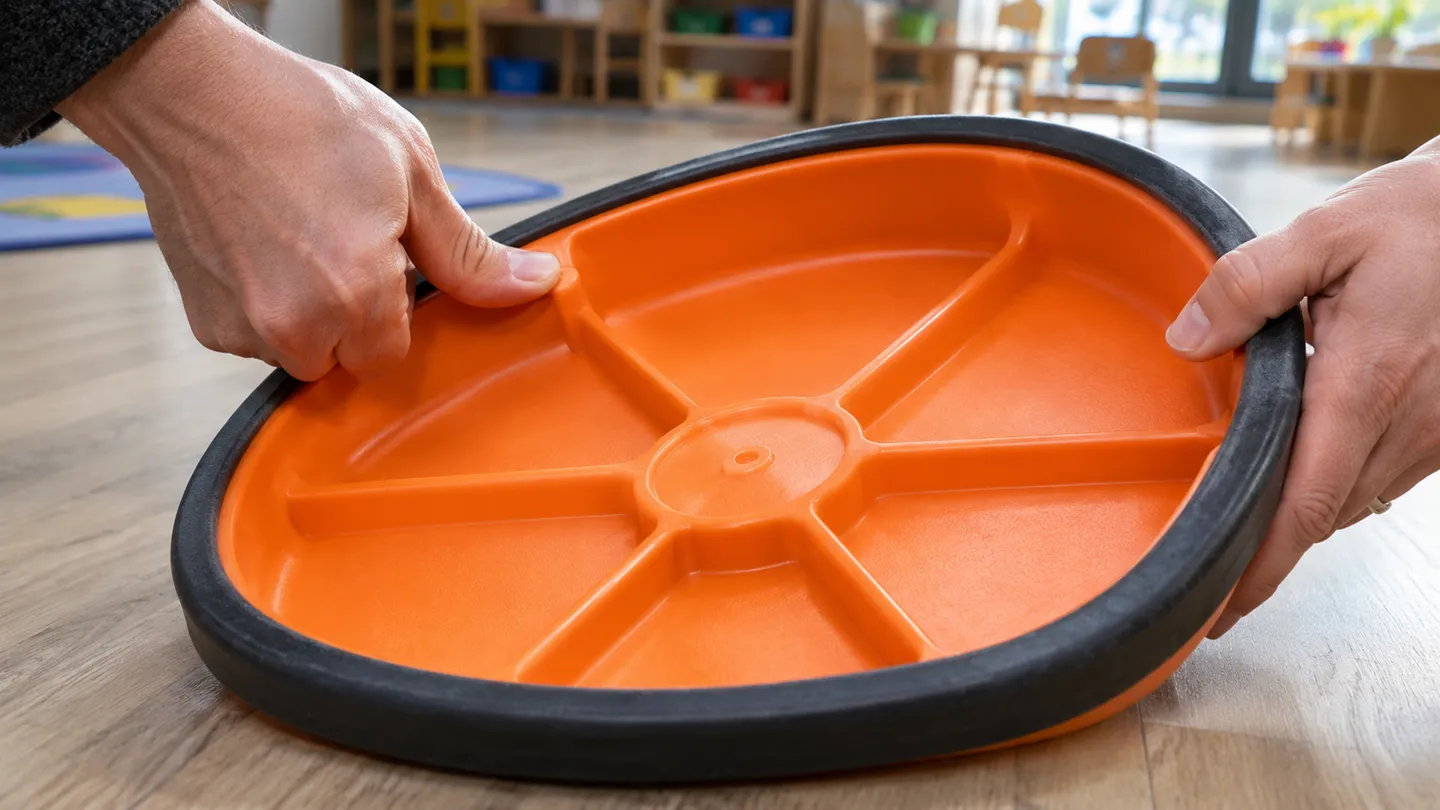
You can verify most of this grade gap yourself before spending anything. Flip the piece and look at the wall thickness around the injection point. Press a stone edge with your thumb and feel whether it flexes. Run a fingernail across the grip surface to see whether the texture is molded in or sprayed on.
Grades tell you which tier to buy in. Turning that decision into requirements a supplier must answer on paper is a separate skill, and it is where careful buyers stop being price-takers.
A factory-side read of your draft spec sheet costs nothing: send it over and the production team will mark up the load, grip, and certificate lines your supplier must answer in writing.
Request a spec reviewThe Purchase Spec Sheet
A buying decision holds up only if it can be written down. Suppliers respond to numbers and documents, not to adjectives. The job in this station is to translate “durable” and “safe” into a spec sheet you can attach to a purchase order. Four parameter families cover almost everything a preschool buyer needs.
Load and Structure
Start with what the piece must carry and how the body is built. Maximum load is the headline number, but it only means something with its context. Load rated for static standing is different from rated jumping, and a child-rated number differs from an adult-rated one. Ask what the stated load assumes. Structure questions follow. Ask whether the wall is uniformly thick plastic or thin with ribs. Ask where the injection points sit. Ask whether pieces nest for storage; nesting design keeps a class set from eating your storage room.
Material and Hygiene
Preschool materials live a wet life. Paint days, snack crumbs, teething, and the five-second rule that children do not respect. The material specification should state the base polymer and its grade, and whether it is rated for food contact, since mouth contact is a statistical certainty in a three-year-old room. Cleaning compatibility belongs in writing too: which disinfectants are safe for the surface, and whether covers or components can be removed and washed. If a supplier cannot state the polymer grade in a sentence, treat that as a finding, not a formality.
Grip, Edges and Stability
Falls are the predictable event in a balance-based room, so the surface system matters more than the shape. A full rubber rim that wraps the base holds the piece on tile, carpet, and grass; a few rubber dots do not. Molded-in texture on the standing surface keeps grip after washing, while sprayed or glued texture peels. Edges should be rounded by design, and the piece should not rock on a flat floor, because a stone that tips under a sideways step teaches the wrong lesson. Check these with hands, not with photos.
Color Aging and the Paper Trail
Color is not cosmetic in a classroom. Faded equipment reads as worn equipment to parents and inspectors, and pigment that breaks down outdoors usually signals a material that is aging in other ways too. Ask whether pigments are light-stable and rated for outdoor exposure.
The paper trail is the other half of aging. In the United States, toys fall under the CPSIA framework, and ASTM F963 is the toy safety standard federal law requires manufacturers to meet (ASTM International, 2026). The commission keeps that rule current through periodic updates (Federal Register, 2024). In the European Union, toys must satisfy the Toy Safety Directive 2009/48/EC and its harmonized EN 71 standards before entering the market (European Commission, 2026). On top of product-level certificates, institution buyers increasingly check factory-level systems such as a BSCI audit, which covers the social compliance of the plant itself. The request to send any supplier is specific: a children’s product certificate for the US pipeline, EN 71 test reports for Europe, and factory audit documentation. Insist that each document ties to real batch numbers rather than template PDFs.
This is also the point where the paperwork question can be settled in minutes. We publish our certification wall so buyers can verify the paperwork before any negotiation starts. It covers CE, CPC and ASTM F963 for the US pipeline, EN71 for Europe, plus the BSCI factory audit: see Startinal’s certification wall. Specs deserve the same transparency. Our commercial-grade stepping stones carry a published spec sheet. It states the 220-pound maximum load, the PP body with a full rubber rim, and the stackable nesting design: numbers you can copy straight into your acceptance checklist.
Once the parameter families are set, the matrix below turns them into a per-category cheat sheet for the seven material groups a preschool room actually buys.
Category Acceptance Matrix
| Category | Suits this intensity | First failure point | Acceptance parameters to demand |
|---|---|---|---|
| Balance stones and beams | classroom and institutional | grip layer wear, then edge chips | rated load in writing, full rubber base, molded texture, nesting design |
| Climbing and soft play | infant and toddler zones | cover seams, foam compression | zip-washable covers, foam density statement, no exposed hard frames |
| Sensory and tactile pieces | classroom and therapy rooms | texture wear, connector cracks | polymer grade, sealed surfaces, wash-safe statement |
| Construction blocks | home through institutional | corner rounding, fit looseness over time | wood species or polymer grade, tolerance statement, storage bin fit |
| Dramatic play props | classroom | costume seams, printed detail flaking | fabric weight, washability, no small detachable parts under 3 |
| Art consumables | any level | designed to deplete | non-toxic certification, bulk pricing only |
| Storage and furniture | institutional year-round | casters and hinges, UV on outdoor racks | steel gauge or resin grade, load per shelf, outdoor UV rating |
Before signing: run this list
- Load rating stated in writing with its use context
- Polymer and grade named, food contact where relevant
- Grip system described as molded, not sprayed
- Pigment light-stability stated for outdoor use
- Certificates matched to your market: CPC/ASTM F963, EN71
- Factory audit documentation available: BSCI or equivalent
- Spare parts and replacement policy quoted before order
A spec sheet and a matrix make your requirements portable. The next decision is where to take them.
Where to Buy: Retail, Dealer or Factory
The same spec sheet can run through three channels, and the right one is decided by volume and frequency, not by preference.
The channel decision in four steps
Measure your year
annual volume per category and reorder frequency
Match the channel
retail, dealer or factory-direct by volume
Run the channel’s check
returns, warranty owner, or the pre-negotiation pack
Trial before you commit
one sample set, one week of real use
First, measure your year. Estimate annual consumption per category and how often you reorder. A single top-up order and a recurring multi-room program are different businesses with different suppliers.
Second, match the channel to the volume. Retail and online marketplaces fit one-off purchases and urgent replacements: instant availability, no relationship required, consumer prices. Educational dealers and distributors fit mixed-category orders in the tens of units: one invoice across brands, local service, and returns that stay inside your country. Factory-direct sourcing fits programs with steady reorder volume, custom requirements, or a need for the spec sheet and factory audit to come from the source instead of a reseller.
Third, run the check that matches the channel. For retail, the check is return policy and review history. For a dealer, it is which factory actually manufactures the catalog items and who owns the warranty. For factory-direct, it is the pre-negotiation pack from the previous station: certificates, spec sheets, sample policy, and factory audit documentation, verified before prices are discussed.
Fourth, trial before you commit. Order a sample set, put it through one week of real classroom use, and score it against your acceptance parameters. A trial order turns every claim in the catalog into something you have personally watched twenty children fail to break.
The channel decision sets up the relationship. What usually decides whether it stays cheap is everything that happens after delivery.
What Breaks First, and What to Do About It
Commercial equipment fails in a predictable order, and knowing the order turns maintenance from guesswork into scheduling. Grip surfaces go first, because abrasive contact is constant. Appearance goes next: pigments fade and surfaces dull long before strength is affected, which is why inspectors who judge by color alone replace equipment years early. Connectors and moving parts come third: hinges, casters, and interlocks loosen with cycles. The structural body itself fails last.
Maintenance can stretch the early phases. Rotate high-touch pieces so no single set takes every cycle. Keep outdoor plastic in shade during the peak season, or on a written indoor-outdoor rotation. Schedule a monthly hands-on check rather than waiting for a teacher to notice something wrong.
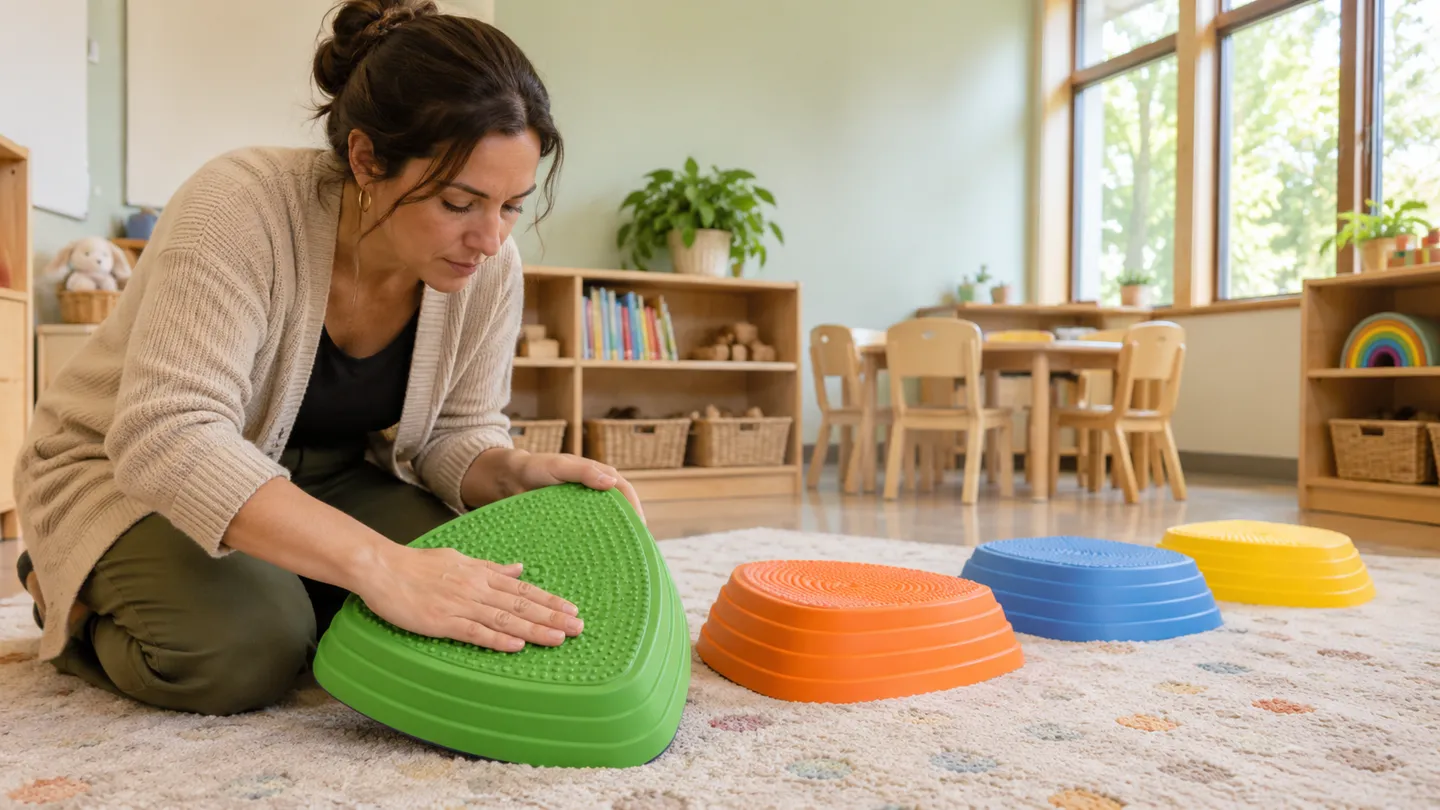
The repair-or-replace line is a three-case decision. Surface wear means maintain and monitor. Accessory loss, such as a missing cap or knob, means order spare parts and keep the piece in service. Structural cracks, delamination, or exposed foam mean remove the piece from the room the same day, because those failures do not give warning before they matter.
Stop-use red lines
Remove equipment from the room immediately if any of these appear. Structural crack in a load-bearing body. Grip layer peeling or missing on standing surfaces. Sharp edge or protrusion from a break. Foam exposed through a torn cover. A piece that rocks or tips under normal use.
One purchase-time clause pays for this whole station: the spare parts and replacement commitment. Suppliers differ widely here, and some manufacturers commit to dispatching replacement parts within days of a photo report. Whatever the number is, get it written into the order, because a replacement clause is worth more in year three than a discount was in week one.
Every clause and every rotation schedule, though, only manages the cost you already committed. The bigger lever is how the budget itself is split in the first place.
The Budget Logic: Spend Where Intensity Lives
Most centers distribute their materials budget roughly evenly across the shopping list. The failure order you just read explains why that habit guarantees an annual scramble.
Why an Even Split Fails Every Year
An even split gives consumables more than they need and equipment less than their grade requires. The arithmetic comes straight from earlier in this guide. The grade gap is roughly 10x per piece between mass-market and classroom-grade equipment. Equipment fails from the surface inward under daily load. And institutional equipment is bought in cycles, often once, as the grant example showed. Put those together: equipment bought one grade too low does not degrade gently. It exits service mid-cycle, and the replacement competes with next year’s list. The even split quietly converts a capital purchase into a recurring expense.
The Split That Holds
The structure that holds is intensity-based. Consumables keep retail logic: buy on price, buy often, buy small. Equipment gets classroom-grade or institutional-grade specifications, verified with the matrix from the purchase station, with the certificates and spare-part clauses negotiated before the order. When the quote arrives and the commercial-grade option looks expensive, price it per year of service instead of per piece. On any multi-year timeline, the grade premium usually loses to repeated replacement. Nothing in that sentence requires invented numbers, because the buyer’s own usage counts and local prices decide the arithmetic.
The demand side makes this a long game rather than a one-year fix. The global educational toys market was valued at USD 54.0 billion in 2023 and is projected to grow at a 12.0% CAGR through 2030 (Grand View Research, 2026). Institutional demand is a durable share of that curve, which means the suppliers, spec sheets, and channel relationships a center builds now compound across future cycles.
Educational toys market
USD 54.0B
2023 market value
12.0% CAGR
projected through 2030
Source: Grand View Research, 2024-2030 outlook
The one-line policy: split the list by intensity. Let consumables stay cheap. Pay for equipment at the grade your usage actually runs at, and make the supplier prove the grade on paper.
That is the whole method. Map the room. Choose bodies by scene. Buy equipment at the grade your days actually run at. Hold suppliers to published specs, and let the budget follow intensity instead of habit.
If you want to compare one factory’s numbers against the checklist above, Startinal publishes its full classroom range at startinal.com. Stock items ship in 7 working days, samples arrive in 3-5 days, and light custom work runs 15-25 days.
Buy at the Grade Your Rooms Run At
Factory-direct classroom play materials with published specs and certificates: send your list and price real numbers against it.
Request a factory quoteReferences
- ASTM International. “Safer Children’s Toys: ASTM F963 Toy Safety Standard Required by U.S. Law.” Accessed November 5, 2026. astm.org
- Federal Register. “Safety Standard Mandating ASTM F963 for Toys.” 2024. federalregister.gov
- European Commission. “Toy Safety: Directive 2009/48/EC and Harmonized EN 71 Standards.” Accessed November 5, 2026. ec.europa.eu
- Grand View Research. “Educational Toys Market Size and Share Report, 2024–2030.” Accessed November 5, 2026. grandviewresearch.com
- Illinois Early Learning. “Children’s Play: More than Fun and Games.” Accessed November 5, 2026. illinoisearlylearning.org
- Walmart. “Stepping Stones Kids Toys.” Consumer price listings, $21–$60 per set. Accessed November 5, 2026. walmart.com
- r/BuyItForLife. “Please Help a Teacher Out? Durable Toys.” Teacher grant application discussion, 2026. reddit.com