The six-year-old at the dinner table rocks the chair onto two legs, slides off it, and circles the kitchen twice before the food goes cold. Nothing is wrong with the chair, and nothing is wrong with the child. Sitting still is a full-body job, and for many autistic children and adults the body is asking for something the seat is not giving it.
A sensory chair is a seat built to deliver that something while the person stays seated, and it works through two channels. One is the vestibular system, housed in the inner ear, which registers movement and head position. A chair that rocks, tilts, or spins feeds it directly. The other is the proprioceptive system, which registers pressure and body position through the muscles and joints. A chair that hugs, squeezes, or supports a slumping frame feeds that one. Every product sold under the sensory seating label traces back to one or both of these inputs.
That division sorts the whole category into two families. Movement chairs deliver vestibular input: spinning seats, rocking chairs, tilting stools, bouncing ball chairs. Pressure chairs deliver proprioceptive input: bean bags, peapods, compression seats, enclosed pods. A few hybrids do both, and a wobble cushion can turn any ordinary chair into a light-tilt movement seat.
One boundary belongs up front. Vibrating and sound-based therapy chairs, the kind built into multi-sensory rooms as audio-furniture, sit in a neighboring category and are not covered here. Everything below concerns seating the user powers with their own body.
The behavior at the dinner table is the signal. Rocking, sliding off the seat, slumping onto the table, squeezing behind the couch cushion: occupational therapists read these as the body requesting input, not as misbehavior. What each behavior asks for, and which chair answers it, is the actual selection problem.
Eight Chair Types, Sorted by Input Instead of Look
Retail listings sort this category by shape: bowls, discs, pods, stools. Sorting by input is more useful, because the shape is the shell and the input is the engine. A spinning seat can be a molded bowl, a flat disc, or a low swivel stool. What stays constant is the rotary input underneath. That input decides who the chair helps, how long a session should run, and how much structural stress the base takes.
The eight types by the input they deliver
| Type | Input delivered | Alerting or calming | Best fit | One-line watch-out |
|---|---|---|---|---|
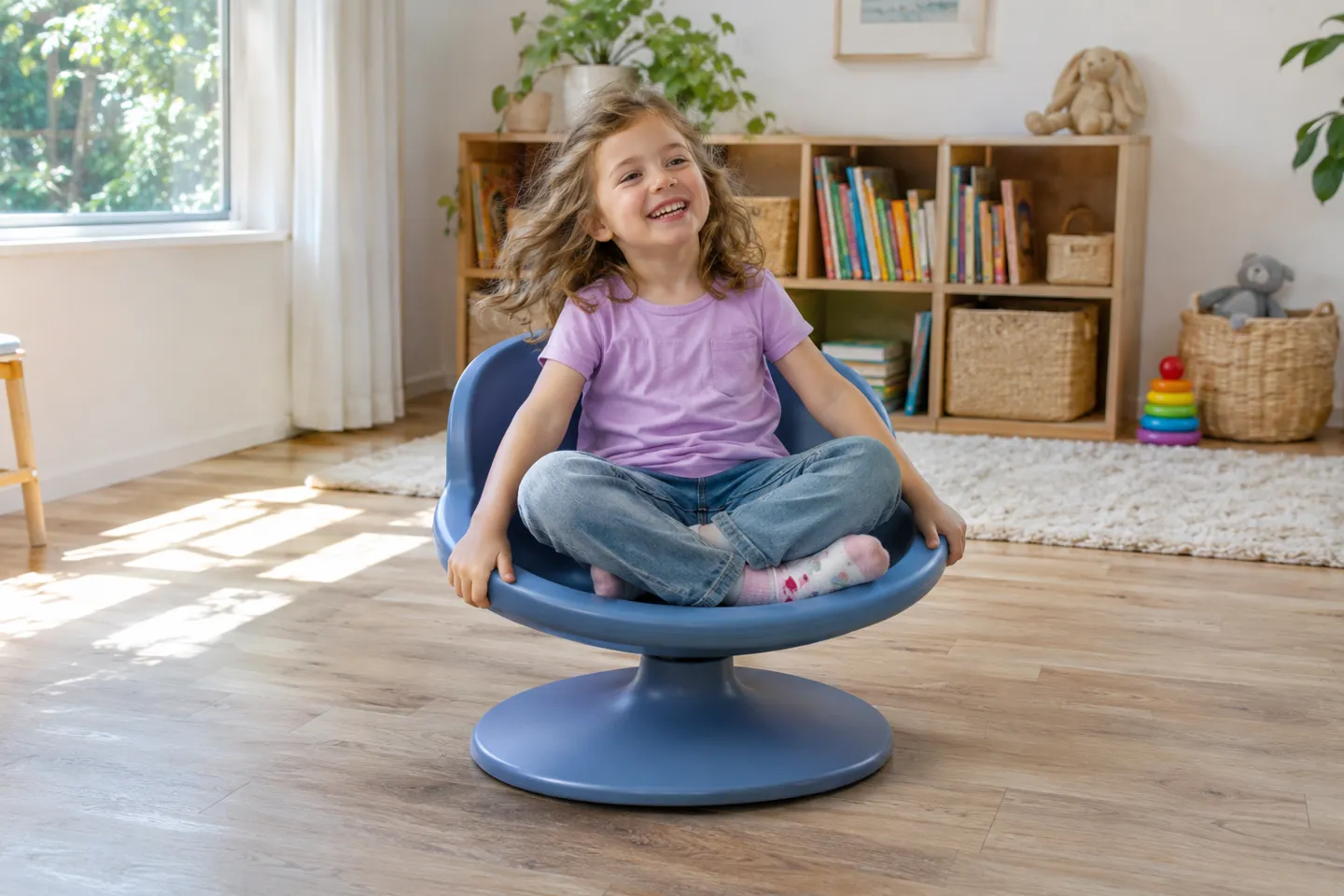
| Spinning chair | Rotary vestibular | Alerting | Strong movement seekers, short focused sessions | Base fatigue under hard daily spinning |
| Therapy ball or peanut chair | Bounce plus pressure | Alerting | Seekers who bounce and wriggle | Needs a stability base; poor fit for low muscle tone |
| Rocking chair | Linear rhythmic vestibular | Calming | Settling routines, seekers and avoiders alike | Wide stable base, sized to the child |
| Wobble stool | Tilt vestibular | Mildly alerting | Older kids and teens at a desk | No backrest, so no postural support |
| Wobble cushion | Micro-tilt | Mildly alerting | Desk work on an ordinary chair | Mixed classroom evidence; treat as a cheap trial |
| Bean bag | Deep even pressure | Calming | Avoiders, slumpers, low-tone sitters | Zipper must be locked; useless at a desk |
| Peapod or hug chair | Deep all-around pressure | Calming | Children who seek squeezes or a retreat | Inflatables need leak checks and supervision |
| Hammock or swing chair | Enclosed linear swing | Calming | Sensory corners and calm-down spots | Rated hardware and professional installation |
Sensory seekers and sensory avoiders pick their own chairs if you let them. A seeker’s body wants more input, so the seat that moves fits: rocking, bouncing, spinning. An avoider’s body already registers plenty, so the calm, snug seat fits: bean bag, peapod, enclosed rocker. Most children run a mix, which is why many families keep one of each family and let the day decide. That day-level mixing is also the pattern institutions copy: a movement corner and a calm corner, not one chair expected to do both jobs.
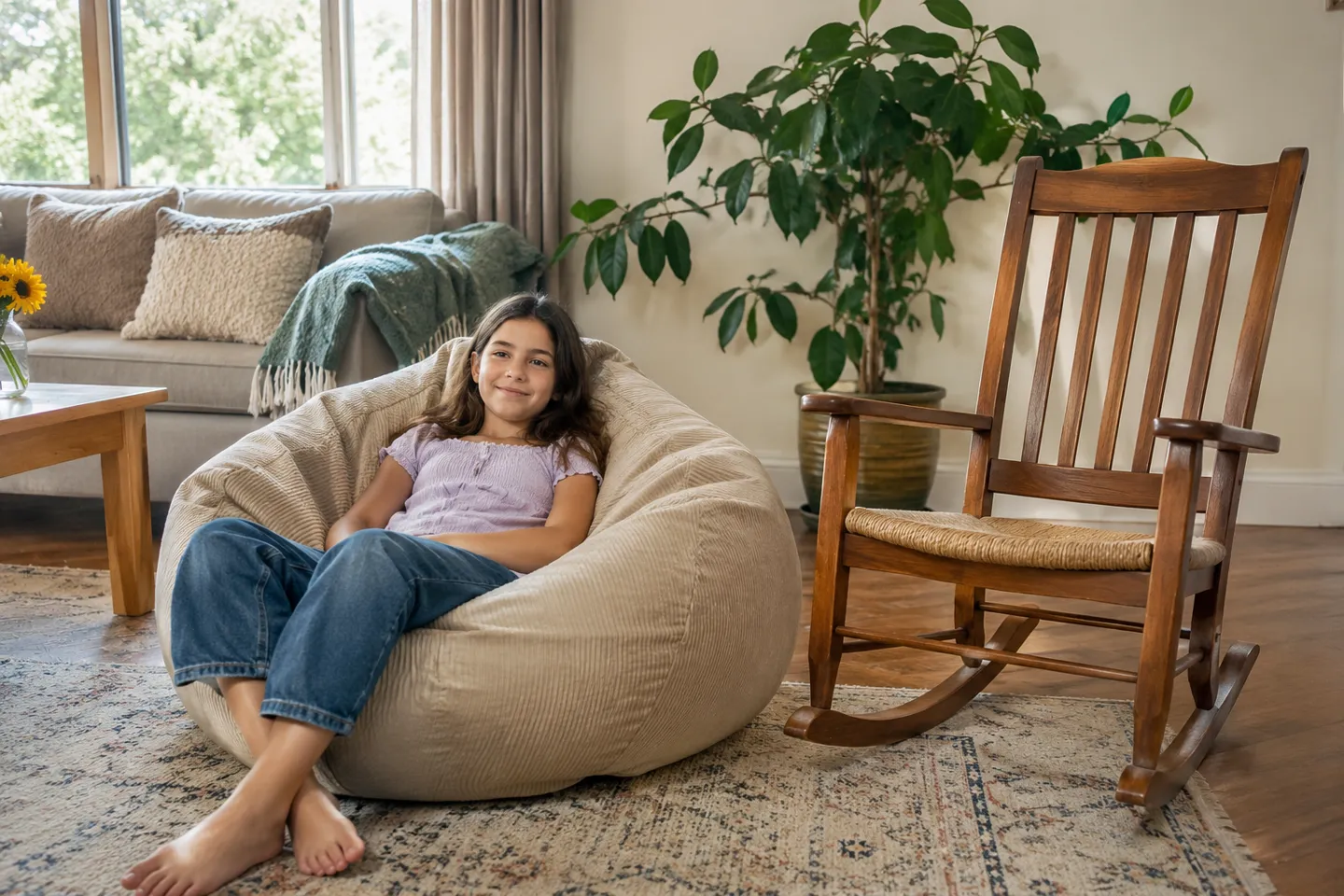
Setting changes the shortlist as much as the child does. Classrooms favor portable options that move between rooms and do not single anyone out, cushions and kick bands rather than floor gear. Home tolerates bigger hardware. Sensory rooms run both families at once, which is where durability questions start to outweigh preference questions.
Matching the Input to the Person: Four Checks Before You Buy
Type knowledge becomes a purchase through four checks, run in order. Skipping the order is how a well-reviewed chair ends up ignored in a corner two weeks after delivery.
Check 1: Read the Behavior Before You Shop
The child’s existing behavior is the specification sheet. A child who spins on office chairs, twirls until flopping, and crashes into cushions is asking for movement input, most intensely the rotary kind. A child who wedges into gaps, asks for tight blankets, or melts into bean bags is asking for pressure. A child who slumps through every seated task may be asking for support and feedback rather than stimulation, which is a pressure problem wearing a focus problem’s clothes. Watch a full week across settings, meals, homework, and play, and write down what you saw rather than what you assumed. The list of observed behaviors, not a product ranking, is what the next three checks test against.
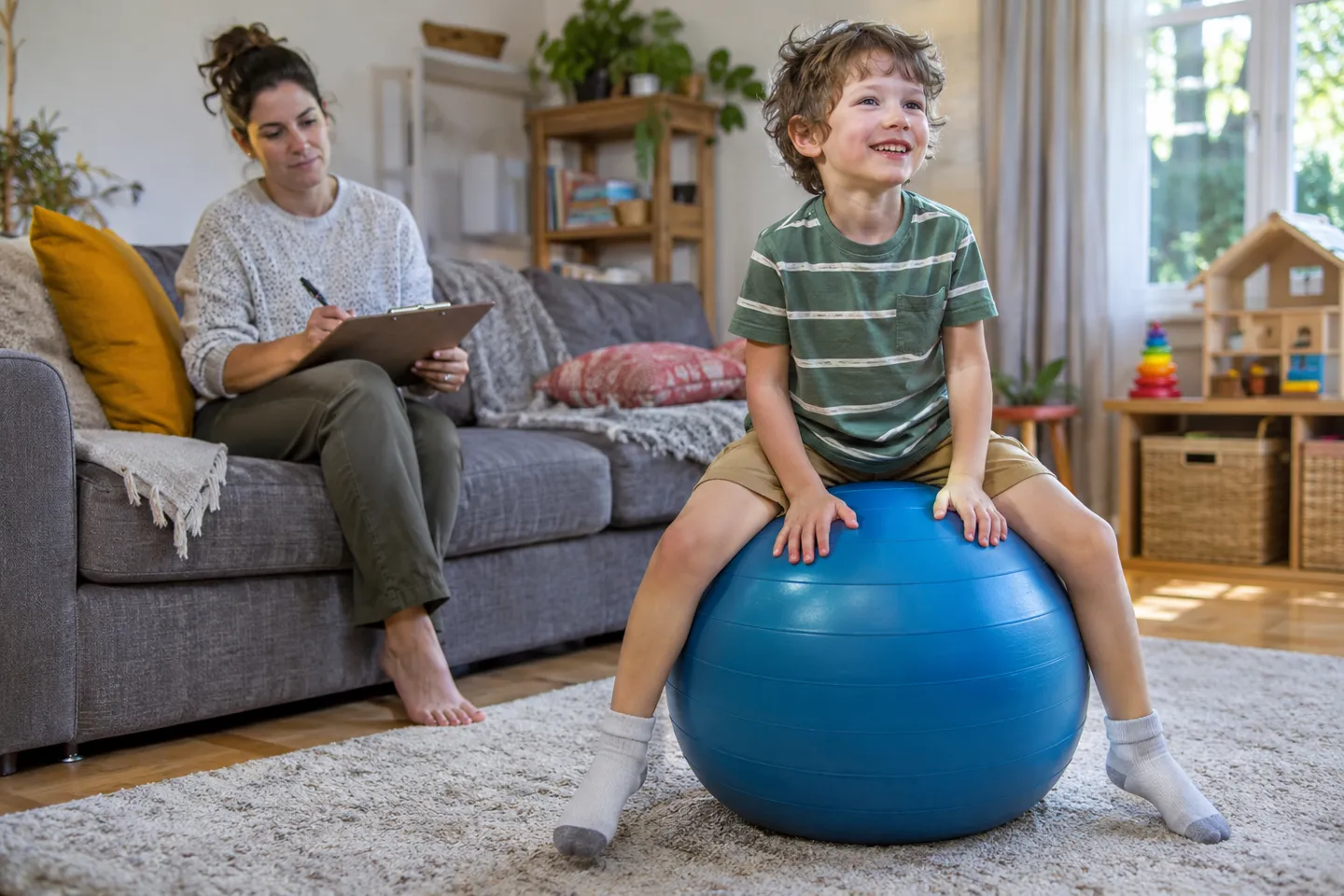
Check 2: Size by Age and Weight, Then Look Past the Label
Age picks the form factor; weight and strength pick the build grade. Toddlers need low seats, wide bases, and no small parts. School-age children can handle the full portable range, and discreet options matter to this group in classrooms. Teens and adults need adult-scaled ratings and something that does not look like a toddler toy in a teenager’s room.
The demand curve here is shifting upward in age, and the market has noticed before most guides have. Search engines log heavy query volume for teen and adult variants of this exact keyword. Retail listings advertise ratings “for teens and adults” up to 220 pounds. One widely stocked swivel spin chair publishes that rating alongside a $62.99 price (Sensory Therapy Place, 2025). And the loudest durability complaint in parent communities comes not from a toddler but from an eleven-year-old. Most published guidance still photographs preschoolers. The underserved band is the ten-and-up crowd: heavier, stronger, and harder on hardware. Any buyer shopping for it should treat the weight label as a starting question rather than an answer.
Check 3: Screen the Contraindications First
Some conditions change or cancel the choice. Low muscle tone and significant balance difficulties make ball chairs and backless stools fall risks rather than input tools; supported seating with foot bands serves better. Children with seizure histories, vestibular disorders, or active ear infections should not use spinning equipment without pediatric OT or medical sign-off. Clinical sellers state that restriction on their own product pages (Sensory Therapy Place, 2025). Motion-sickness patterns predict a poor rotary experience; shorten sessions or skip the spin family. Inflatable seats demand supervision for younger children regardless of diagnosis. None of these rules make the category off-limits; they move the child from one input family to another, which is exactly what the four-check order is for.
Check 4: Run a Two-Week Trial Before You Commit
A chair earns its place through observation, not spec sheets. Run the trial at the same time each day, at the same task, dinner or homework. Note three things afterward: minutes stayed seated, state on getting up, and anything that interfered. Paper on the fridge is fine. After two weeks the pattern either shows or it does not, and an ineffective chair goes back or gets repurposed rather than defended. The cost of a mismatch is a returned box and some wasted money, not a safety hazard, which is worth saying plainly: buyers hesitate over the trial because it feels unscientific, but it is the same trial-and-keep logic occupational therapists apply with better instruments.
The four checks, condensed
- Watch one week of behavior and name the input being requested
- Match age to form and weight to build grade, and treat labels as questions at ten-plus
- Screen contraindications before preference, low tone, seizures, vestibular issues, motion sickness
- Trial two weeks at a fixed time and task, keep what shows a pattern
Alerting or Calming: Direction, Dose, and Sequence
Selecting the right input family does not finish the job, because the same chair produces opposite effects depending on how it is used. This is the part of the topic where parent folklore and clinical language genuinely disagree, so it deserves the details.
Direction is the switch. Linear movement, one slow rhythm in one plane, the rocking chair, the front-to-back swing, tends to settle the nervous system. Rotary movement, spinning, tends to alert it. Clinical sellers state the distinction flatly: rotary input is alerting, not calming, and belongs before focus tasks rather than before sleep (Sensory Therapy Place, 2025). An NHS sensory service handbook agrees that spinning organizes seekers but warns it can over-alert. It tells caregivers to follow any spin with pressure input, pushing, carrying, squeezing, to help the body settle again (Humber Sensory Processing Service, 2024). Parent communities report the opposite feeling: spinning visibly calms their child. Both camps are describing real nervous systems, and the practical resolution is observation with a schedule attached, not allegiance to either camp.
Direction decides the outcome
| Linear input, rocking and swinging | Rotary input, spinning | |
|---|---|---|
| Typical effect | Calms and organizes | Alerts and energizes |
| Best timing | Wind-down, transitions, bedtime routines | Before focus tasks, homework, seated work |
| Session shape | Long sessions tolerated | Start at 30 seconds, build toward 2-5 minutes |
| Dose ceiling | Watch for drowsiness | Keep well under the 10-minute maximum clinicians warn about |
| After-session | None needed | Follow with heavy work, pushing, carrying, climbing |
| Stop when | Child falls asleep | Pallor, nausea, dizziness, or wired agitation |
The dose rules above trace to clinical and therapy-published sources: thirty-second starts, a two-to-five-minute window before focused work, alternating spin directions, and a ten-minute ceiling with warnings that reactions can arrive hours late (The OT Toolbox, n.d.). They are starting points, not physics. Which leaves the honesty section: how strong is the evidence under this whole category. A 2004 single-subject study published in the Journal of Autism and Developmental Disorders found substantial improvements in engagement and in-seat behavior when young children swapped standard seats for therapy balls (Schilling and Schwartz, PubMed, 2004). A 2017 classroom study of fifteen autistic students found therapy ball chairs significantly increased in-seat behavior for thirteen of them and on-task behavior for eight (Matin Sadr et al., PMC, 2017). Inflatable air cushions produced no significant change. Read those numbers as they are written. Thirteen of fifteen is encouraging. Eight of fifteen is half. The cheap option everyone recommends failed its own trial. The category works for many children, works variably, and proves itself per child. That is exactly what the two-week trial in the previous section is for.
What Breaks First, and What to Check Before It Does
One parent on r/Autism_Parenting reports that her partner’s eleven-year-old, an enthusiastic spinner, has cracked the base of three spinning chairs (r/Autism_Parenting, 2025). One after another, she writes, and she asks the community for anything built to survive him. Failures in this category are patterned, not random. Every pattern has a check that catches it before purchase.
What breaks first
3
Spinning chair bases, cracked by one eleven-year-old
Weight labels answer static sitting. Spinning loads the base in a way sitting never does. Source: r/Autism_Parenting, 2025.
Some failures are heavier than broken plastic. Two children died after opening the zippers of bean bag chairs and suffocating on the foam filling. The CPSC reannounced that recall in 2015 because the hazard pattern kept recurring (U.S. CPSC, 2015). Hanging chairs fail at their anchors when hardware is unrated or mounts are improvised. Inflatables fail at valves, slowly, in ways nobody photographs. A chair can also be structurally perfect and still fail on a carpet, where a non-slip base becomes a slide. One occupational-therapy forum thread describes a two-year-old frightened by fast spins on hardwood, a reminder that the room is part of the equipment.
Where the Failures Cluster
The five failure patterns map cleanly onto chair types, and each one converts into a check a buyer can run in minutes.
Failure matrix: what breaks, under what use, and the check that catches it
| Type | Input intensity | Fails first at | Acceptance check |
|---|---|---|---|
| Spinning chair | Highest, rotary torque | Base plate and rotating hub, fatigue under hard spinning | Confirm load rating wording and ask what the rotating mechanism is; reject flexible bases |
| Therapy ball chair | High, dynamic bounce | Stability, rolls when the user stands | Stability base or legs present; user’s feet reach flat |
| Wobble stool | Medium | Tip at tilt range, backrest absence | Weighted base, height fits the desk, postural support exists elsewhere |
| Bean bag | Low, static pressure | Zipper access and filling escape | Zipper locked or permanently closed; filling meets small-parts rules |
| Peapod and inflatables | Low, static | Valves and seams, slow leaks | Valve construction inspected; patch kit or spare parts available |
| Hammock and swing chair | Medium, dynamic | Anchor hardware and mounting point | Weight-rated hardware, professional install, soft floor below |
| Wobble cushion | Low | Puncture and efficacy mismatch | Thickness verified; accept that trial data in classrooms is mixed |
The Acceptance Checklist
Institutional buyers, a parent equipping a sensory corner, a school furnishing a room, a reseller stocking a line, can compress the matrix above into one acceptance sheet. Confirm the load rating in writing. For shared or older users, specify the 220-pound class rather than the child-tier rating. Check the base: non-slip material, low center of gravity, no visible flex when pressed. For multi-user settings, confirm the seating surface wipes clean and disinfects without degrading. On inflatables, inspect valve construction and confirm spare parts exist before the first leak, not after. On bean bags, verify the zipper locks or is permanently closed, matching the standard CPSC recalls cite. Confirm stackability or nesting if storage turnover matters, because a chair that cannot store quietly gets abandoned. Ask for the certification set that matches your market: Children’s Product Certificate and ASTM F963 for the United States, CE and EN71 for Europe. Then ask what happens after the sale: spare parts availability, replacement terms, and how fast the supplier answers a claim. Six written answers turn a listing into a spec. The buyer who holds the spec holds the power in the transaction.
Safety Checks That Are Not Optional
Three checks sit above the commercial ones. Every bean bag passes the zipper test before a child touches it, because the CPSC death record, not a caution label, is what that test exists for. Spinning sessions run on flat, non-carpeted floors, child-led in speed, with an adult within reach, and they stop at pallor, nausea, or distress. Anything that hangs gets rated hardware and a professional install, and nothing that hangs gets improvised mounting. These three are not grade decisions; they are pass-or-fail gates that cost nothing to run.
Startinal runs this acceptance sheet on every chair line before shipment, and sends written specs for any seat you are sourcing.
Ask for written specsReading the Same Facts as a Buyer
Everything above is written for a household choosing one chair. Read the same facts from the other side of the counter and they become a sourcing strategy, which is the concern of the school furnishing a sensory room, the distributor building a product line, and the e-commerce seller picking a category to enter.
Stock and Specify by Input Line, Not by Shape
Viewed as a catalog, the two-family map from the opening splits into three commercial lines, each with its own demand driver and its own failure exposure.
The three input lines as a sourcing view
| Line | Demand driver | Acceptance focus | Dominant failure risk |
|---|---|---|---|
| Spinning line | Rotary seekers, short intense sessions, a proven social-video draw | Highest structural grade: load wording, base construction, certification documents | Base fatigue, the broken-base pattern |
| Wobble and rocking line | Classroom portable seating, quiet desk-time input, price-sensitive volume | Consistency at low unit cost, puncture resistance, quiet operation | Efficacy mismatch, air-cushion trial data ran null |
| Deep pressure line | Avoiders, calm corners, bedroom and therapy-room use | Zipper compliance, fill safety, cleanable covers | Filling access and slow leaks |
Spinning sells the hardest and punishes the hardest. It draws the most social-video attention, and it returns the angriest reviews when a base fails under a strong ten-year-old. That combination means volume is only worth taking at the highest structural grade. The wobble and rocking line wins classrooms on price and portability. But the 2017 trial data says sell it as a low-cost trial, not as a promised outcome, or it generates returns of a different kind. Deep pressure carries the margin and the differentiation. Its compliance burden, the zipper standard, is a legal gate in the United States, not a quality preference. A line built this way survives contact with its own reviews.
Certification and Acceptance Thresholds
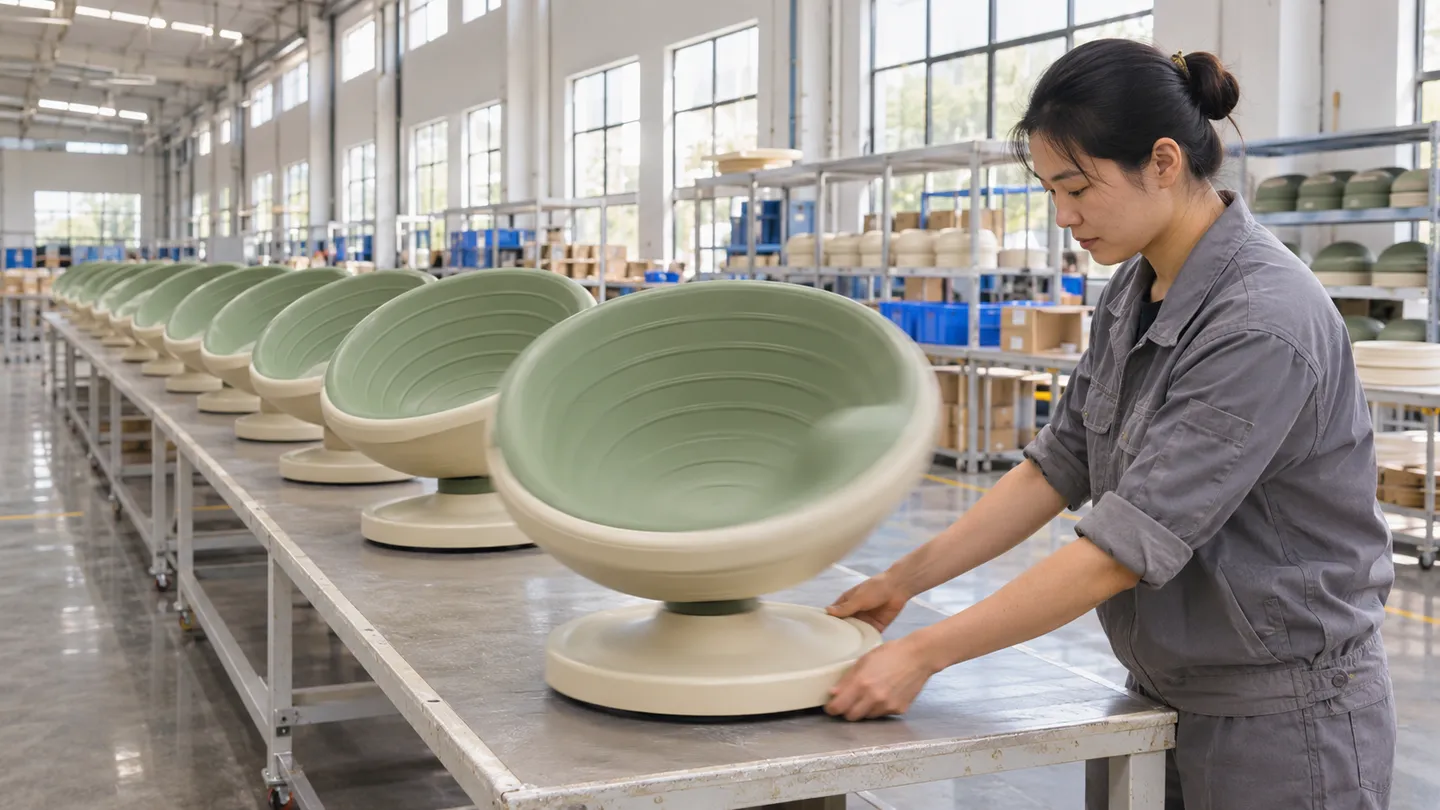
Certification is a market-access border, not a marketing badge, and it maps by destination: Children’s Product Certificate and ASTM F963 for United States-bound goods, CE marking and EN71 for Europe. Request certificate copies against the shipment, not against the product launch. Factories substitute material sources, and a three-year-old PDF proves nothing about this container. The acceptance sheet from the previous section, load wording, base construction, zipper compliance, valve and patch parts, becomes the inspection brief. Run it in-house or through a third-party inspector. Tender-driven buyers add one more constraint: full-category coverage and exact match to tender line items. That constraint rewards suppliers who hold a wide consistent catalog over suppliers who hold one hero SKU. One practical note saves weeks. Most factory listings render their parameter tables as images, which makes side-by-side comparison impossible. Ask for written spec sheets as the first filter, and treat any supplier who cannot produce one as a signal.
That is the same category, read twice: households buy an input that fits a child, and buyers assemble a line that survives institutions. The overlap between the two readings is the acceptance checklist, and it travels well in both directions, which is worth remembering the next time a listing shows a cheerful bowl chair and nothing else in writing.
When we supply sensory seating through wholesale programs at Startinal, the acceptance sheet above is the same one our inspectors run before shipment. Our spinning chair range with EN71, CE and ASTM F963 compliance is documented line by line, and our certificate library carries the CE, CPC and BSCI records for the wider catalog. Buyers building a line for schools, clinics, or retail shelves can ask us for written specs against any check in this article before committing to a sample order.
Get written specs and a sample quote for your sensory seating line
EN71, CE and ASTM F963 documented line by line, backed by a certificate library covering the full catalog.
Request a sample-order quoteReferences
- Matin Sadr, N., et al. “The Impact of Dynamic Seating on Classroom Behavior of Students with Autism Spectrum Disorder.” Iranian Journal of Child Neurology, 2017. pmc.ncbi.nlm.nih.gov
- Schilling, D. L., and Schwartz, I. S. “Alternative Seating for Young Children with Autism Spectrum Disorder: Effects on Classroom Behavior.” Journal of Autism and Developmental Disorders, 2004. pubmed.ncbi.nlm.nih.gov
- Humber Sensory Processing Service, NHS. “Spinning.” 2024. connect.humber.nhs.uk
- The OT Toolbox. “Vestibular Activities to Move and Develop.” n.d. theottoolbox.com
- U.S. Consumer Product Safety Commission. “Ace Bayou Reannounces Recall of Bean Bag Chairs.” 2015. cpsc.gov
- r/Autism_Parenting. “Spinning Chair—We’ve Broken 3, Help!” 2025. reddit.com
- Autism 360. “The Best Sensory Chairs for Autism.” 2026. autism360.com