.png)
Soft Play Ideas — Creative Inspiration for Every Age, Theme, and Space
What Makes a Great Soft Play Space — The Core Principles
You have a room, a budget, and a child who needs to climb, jump, and tumble without hurting themselves — or your furniture. Before you start shopping for foam blocks and ball pits, it helps to know what actually makes a soft play space work, rather than just look the part.
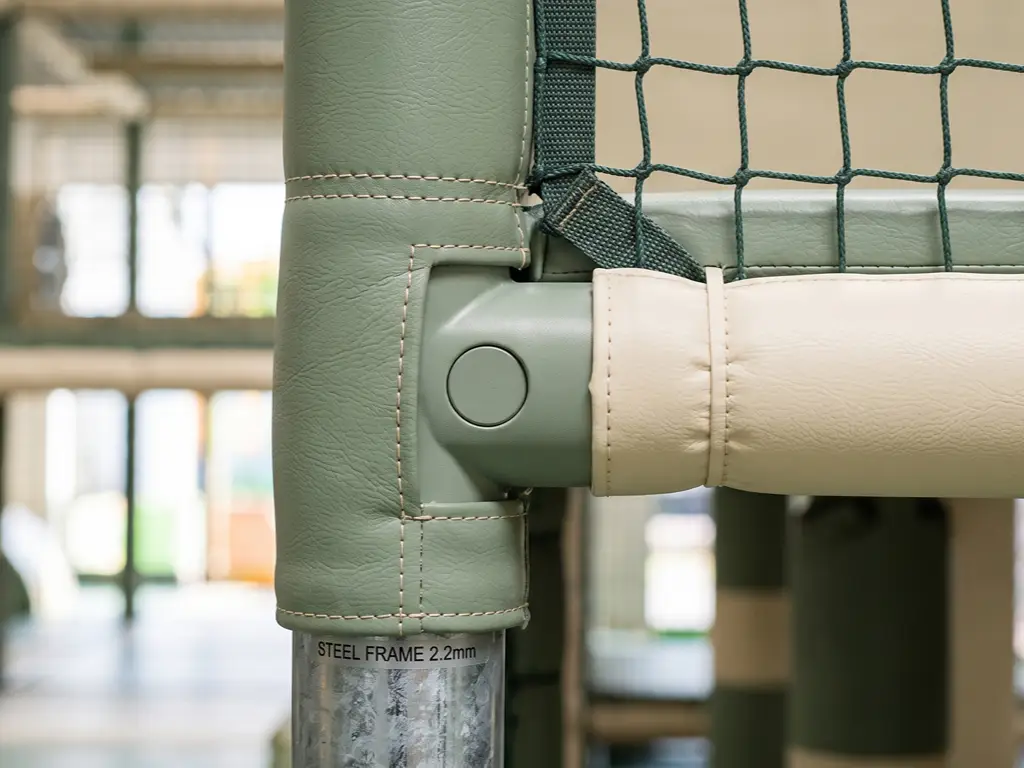
Soft play refers to indoor play environments built primarily from foam-based, padded materials designed to absorb impact and minimize injury risk during climbing, sliding, jumping, and tumbling. Unlike traditional playgrounds with metal and hard plastic, soft play structures use high-density polyurethane foam wrapped in durable, cleanable PVC or fabric covers. The foam density matters: quality play equipment uses foam rated at 25 kg/m³ or higher for general surfaces, and 45 kg/m³ or above for load-bearing components like climbing steps and structural blocks. That difference is what separates a foam block that springs back after impact from a sofa cushion that collapses under a jumping three-year-old.
Three principles define every successful soft play space, regardless of size or budget:
Safety first. This means more than “nothing sharp.” It means impact-absorbing flooring across the entire active zone, rounded edges on every piece of equipment, secure attachment points that survive repeated climbing, and materials free from phthalates and other chemicals small children inevitably ingest through mouthing. In commercial settings, equipment should comply with ASTM F1918 (the U.S. standard for soft contained play equipment) or EN 1176 (the European playground equipment standard). In a home setting, the same principles apply even if formal certification isn’t practical — ask suppliers about foam density ratings and phthalate-free certifications before purchasing.
Age-appropriate challenge. A soft play area designed for a crawling infant should look and function differently from one built for a climbing, jumping five-year-old. The golden rule: every piece of equipment should offer a challenge that sits just slightly above the child’s current ability. Too easy, and they lose interest in minutes. Too hard, and frustration — or worse, injury — follows. The age-group breakdown in the next section builds on this principle.
Sensory variety. Children engage with the world through multiple senses simultaneously. The most captivating soft play spaces combine physical movement (climbing, sliding, jumping) with tactile variety (smooth foam, textured mats, soft fabric), visual interest (varied colors, mirrors, gentle lighting), and occasionally sound (built-in percussion elements or discovery bells). A ball pit surrounded by identical foam blocks offers less developmental value than the same ball pit next to a textured sensory wall and a mirrored corner — even if the equipment budget is identical.
With these principles in mind, let’s explore concrete ideas organized by the dimension that matters most: the age of the children who will use the space.
Soft Play Ideas by Age Group — From Crawling to Climbing
Choosing age-appropriate soft play equipment is less about finding “baby equipment” versus “big kid equipment” and more about understanding what developmental window each child is in. The framework below organizes ideas around three distinct stages, each with its own physical and cognitive priorities.
Babies and Toddlers (0–2 Years) — Safe Exploration
At this stage, children are building the foundational motor skills — head control, rolling, crawling, pulling to stand, and those first wobbly steps. The soft play environment should prioritize safety and sensory richness over physical challenge.
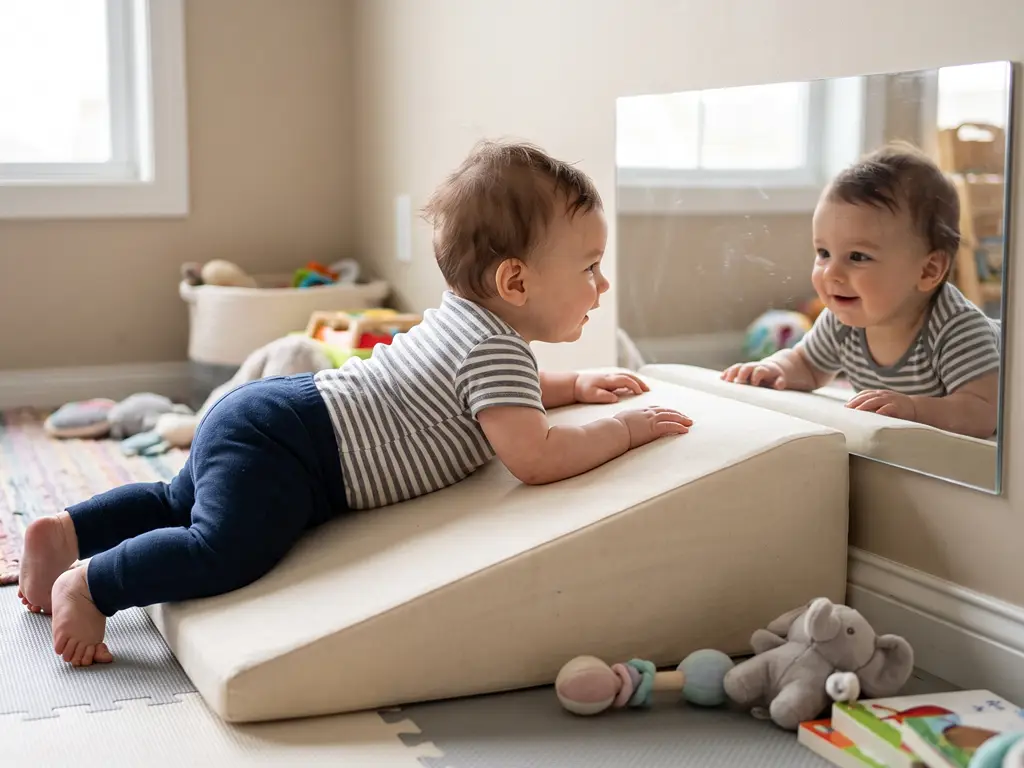
Foam climbing ramp with a mirror wall. A gently inclined foam wedge (no steeper than 15–20°) covered in textured fabric gives crawling babies a manageable climbing challenge. Position an unbreakable acrylic mirror panel at the top — babies are naturally motivated to lift their heads and push toward their own reflection, strengthening neck and shoulder muscles essential for later crawling. Ensure the mirror is shatter-proof acrylic, not glass, and mounted flush to the wall with no exposed edges.
Mini ball pit with shallow depth. A small ball pit — no deeper than 25 cm of balls for this age group — provides rich tactile and visual stimulation. At this depth, a seated infant can reach, grasp, and mouth balls safely while remaining visible to a supervising adult at all times. Look for pits with padded rims so early pull-to-stand attempts have a soft landing zone. Avoid deep pits where a toddler could become submerged or trapped beneath the ball layer.
Textured sensory mat zone. Lay down a patchwork of foam mats with different surface textures — smooth, ridged, bumpy, soft fabric — for tummy-time exploration. As babies press their hands and bare feet into each surface, they build tactile discrimination and core strength simultaneously. The mats should interlock securely so they don’t separate and create gaps during active movement. Choose phthalate-free, easy-to-wipe materials since everything at this age goes in the mouth.
For all infant setups, maintain at least 60 cm of clear space around any elevated surface, and never leave a climbing infant unattended — even on a foam ramp.
Preschoolers (2–5 Years) — Active Discovery
This is the motor explosion phase. Two-to-five-year-olds run, climb, jump, slide, and test their bodies constantly. The soft play environment should feed this hunger with graduated physical challenges while building confidence.
Combination climbing unit. A single integrated piece combining foam steps, a low platform, a small slide (slope no steeper than 30° for this age), and a crawl-through tunnel gives preschoolers multiple movement pathways in one footprint. The variety keeps them engaged longer than a standalone slide or a standalone tunnel would. Platforms should be no higher than 60 cm off the ground for two-to-three-year-olds, rising to 90 cm for four-to-five-year-olds — and every elevated surface needs a surrounding fall zone of at least 1.8 meters of impact-absorbing flooring.
Balance beam path. Arrange a series of low foam balance beams, stepping stones, or wobble cushions in a curving path across the room. Walking heel-to-toe along a narrow surface, stepping between uneven heights, and adjusting to wobbly surfaces all build the vestibular and proprioceptive systems that underpin later athletic skills. Make the path changeable — rearrange the pieces every few weeks so the challenge stays fresh.
Jumping station. Create a designated jumping zone with foam blocks of graduated heights (15 cm, 20 cm, 25 cm) that children can leap from onto a thick landing mat (minimum 5 cm of high-density foam). Two-footed jumping from an elevated surface is a milestone skill at this age, and having a dedicated safe space to practice it channels that natural urge away from the sofa and coffee table.
Role-play corner with soft furnishings. Combine a few soft-play building blocks with simple props — a miniature play kitchen, a small market stand, a doctor’s kit — to create a hybrid active-play and pretend-play zone. The foam blocks become oven counters, examination tables, or shop displays. This mix of physical and imaginative engagement tends to produce the longest sustained play sessions.
School-Age Kids (5+ Years) — Complex Challenges
By age five, children need more than a slide and a ball pit. They seek challenges that test their planning, coordination, and social negotiation skills. The soft play environment should introduce variability and peer interaction.
Modular obstacle course. A set of rearrangeable foam components — tunnels, hurdles, balance beams, stepping pods, and crawl nets — that can be reconfigured into a new course each session. Time trials and friendly competition add motivation. The modularity is the key feature: a fixed obstacle course is mastered in a week; a changeable one stays challenging for years.
Climbing wall with soft landing. A low-angle traversing wall (not a vertical climb — keep the surface at 15–20° from vertical, or 70–75° from horizontal) with large, easy-grip holds mounted on a padded backing, positioned above a thick crash mat (minimum 30 cm of high-density foam). Traversing sideways rather than climbing upward keeps the fall height low while still demanding upper-body strength and route-planning. This is often the single most-used piece of equipment for the 5-to-8-year-old crowd.
Interactive game integration. Motion-activated projection games that project onto the floor or a soft wall — children stomp on virtual bugs, kick digital soccer balls, or trace glowing paths — blend physical exertion with the game-reward loops that school-age children find irresistible. These systems are more commonly seen in commercial play centers, but compact home versions are becoming available. The physical activity is real; the digital layer simply adds the scoreboard and special effects that keep them coming back.
Theme-Based Soft Play Ideas — From Sensory Wonderland to Modern Minimalist
Themes transform a collection of foam equipment into an immersive world. But choosing a theme can feel overwhelming. Start by answering three questions: What fascinates your child right now — animals, vehicles, princesses, space? How much floor area do you have to work with? And what atmosphere do you want — energetic and stimulating, or calm and cocooning? Your answers point directly to one of the three directions below.
Sensory Wonderland — Texture, Light, and Sound
This theme prioritizes rich sensory input and works especially well for younger toddlers, children with sensory processing differences, or any space where calm, focused exploration is the goal.
Start with a warm, muted color palette — cream, soft coral, sage green — rather than primary brights, which can overstimulate. Lay a tactile pathway across the floor using interlocking mats with different textures: faux fur, cork-grain, silicone dots, low-pile carpet. Children walking barefoot experience constant subtle sensory feedback. Add a fiber-optic light curtain along one wall (the strands are cool to touch and safe to handle) and position an acrylic mirror panel at toddler height. A wall-mounted wooden xylophone or soft mallet percussion board adds an auditory dimension without electronic noise.
The beauty of this theme is that it works at any scale — a single sensory corner in a living room delivers much of the same benefit as a dedicated sensory room. Professional multi-sensory environments can cost five figures; a home version built around a few thoughtfully chosen elements typically lands in the $400–$800 range.
Jungle Adventure — Climb, Slide, Explore
The most popular soft play theme for good reason: jungles naturally contain everything children want to do — climb (trees and vines), slide (waterfalls and riverbanks), hide (caves and foliage), and discover (hidden animals and secret paths).
Build the color story around layered greens — from pale sage to deep forest — anchored by warm wood tones and occasional animal-print accents. The centerpiece is a multi-level climbing structure: foam “tree trunk” cylinders to scale, a rope-net bridge (mesh openings no larger than 10 cm to prevent head entrapment) connecting two platforms, and a curved tunnel slide representing a waterfall. Scatter animal-shaped foam cushions — elephants, crocodiles, monkeys — as both seating and imaginative play prompts. Hang soft fabric “vines” (fleece strips) from a ceiling-mounted hoop; attach them with hook-and-loop fasteners so they release instantly if pulled hard rather than creating a strangulation hazard.
The jungle theme scales particularly well. In a small room, a single climbing arch with greenery decals and a few animal cushions captures the spirit. In a dedicated playroom or commercial space, the full multi-level structure with hidden nooks at every turn keeps children exploring for hours.
Modern Minimalist — Clean Lines, Calm Play
For parents who want a play space that doesn’t look like a play space — or rather, one that harmonizes with adult living areas rather than clashing against them — this theme proves that “beautiful” and “fun” are not opposites.
The palette is restrained: oatmeal, fog grey, pale wood, with a single muted accent color (sage green or dusty blue). Choose equipment with geometric, architectural silhouettes — a half-circle climbing arch, cubic foam blocks in graduated sizes, a triangular slide with clean edges — rather than cartoon-themed or character-printed pieces. The materials matter here: look for fabric covers in natural cotton-linen blends (removable and machine-washable), wooden structural frames where safe, and matte rather than glossy finishes. Montessori-inspired design principles apply: every piece earns its place by serving a clear developmental purpose, and the visual calm reduces overstimulation.
Storage is integral to this look — foam blocks that stack into a neat cube, mats that roll and secure with leather straps, a low-open shelf where every item has a designated spot. The goal is a space that feels curated, not cluttered, and that a child can learn to tidy independently. Expect to invest more per piece than a brightly colored equivalent — the premium comes from higher-grade fabrics, better stitching, and the design itself — but the pieces tend to last longer because they don’t visually “age out” as the child grows.
Space-Smart Layout Ideas — From Cozy Corner to Commercial Scale
The most common barrier between an idea and a finished soft play space is the room itself. But the same design principle applies at every scale: divide the space into three functional zones — active play, quiet retreat, and transition/storage — and allocate floor area accordingly. What changes with size is how each zone materializes.
The Cozy Corner — Soft Play in Under 5 Square Meters
A corner of a living room, a section of a bedroom, or an under-stairs nook can become a surprisingly functional soft play micro-zone if you prioritize vertical versatility.
The key is choosing pieces that serve multiple functions or collapse for storage. A triangular foam climber that flips over to become a slide doubles the play value in the same footprint. Stackable foam blocks build into a climbing tower during play and compress into a 60 cm cube for storage against the wall. Wall-mounted elements do heavy lifting: a fold-down sensory board (textured fabrics, a baby-safe mirror, a spinning disk) that swings up flat against the wall when playtime ends, held by magnetic catches.
A 2 m × 2.5 m corner arrangement might place the fold-down wall panel on the back wall, a small foam climber-slide combo in the center, and a roll-up padded mat on the floor. Total equipment volume when stored: under 0.3 cubic meters — which fits in a standard closet. The wall panel must anchor into solid wall or masonry, not drywall alone, to safely support the pulling and leaning it will receive.
The Dedicated Playroom — Full Zone Development
With a standard 12 m² room (roughly 3 m × 4 m), the three-zone model can be fully realized. Place the active zone — climber, slide, ball pit, balance path — in the 50% of floor area nearest the window for natural light and ventilation. Position the quiet zone — floor cushions, low bookshelf, sensory board, dimmable lamp — in the 30% along the quietest wall. The remaining 20% near the door becomes the transition zone: a low bench for shoe removal, wall hooks for dress-up clothes, and open shelving for quick toy rotation.
The flow matters. A child entering the room should naturally move through the transition zone (shoes off, pick an activity), toward either the active or quiet zone, with clear sight lines between them so a supervising adult can see the entire room from one chair. Leave at least 45 cm of clearance between each piece of equipment and the nearest wall — this is both a safety buffer and a cleaning access path. Choose modular equipment that can reconfigure as children grow: low ramps for the infant year, steeper climbing blocks added at age two, obstacle-course elements introduced at age four.
Commercial and Multi-Child Spaces — Scaling Up Safely
Daycares, preschools, and indoor play centers face challenges home setups don’t: multiple children of different ages using the same equipment simultaneously, peak-usage surges, and regulatory compliance.
The non-negotiable starting point is physical age separation. A toddler zone (0–2 years) must be physically separated — a low padded barrier or dedicated enclosed area — from the active children’s zone (3+ years). This isn’t just about equipment sizing; it’s about preventing a running five-year-old from colliding with a crawling infant. Commercial spaces should budget at least 2.5 m² of activity area per child to prevent crowding-related accidents.
Design at least two independent climbing pathways through the main play structure so children can move simultaneously without queuing — a single path creates bottlenecks that trigger pushing and frustration. Position adult sight lines so that every zone, nook, and slide exit is visible from a standing position at the perimeter. Blind corners behind tall structures are the most common location for incidents that go unnoticed.
Equipment selection shifts from consumer-grade to commercial-certified at this scale. Look for equipment compliant with ASTM F1918 (U.S.) or EN 1176 (EU), with documented weight ratings and maximum simultaneous-user counts. Impact-attenuating flooring in commercial spaces should meet ASTM F1292 (U.S.) or EN 1177 (EU) standards — typically requiring a minimum 5 cm thickness of poured-in-place rubber or equivalent interlocking rubber tiles. Fire corridors must remain at least 1.2 m wide and unobstructed, and all fabric components should carry fire-retardant certification.
Your Soft Play Equipment Checklist — What to Look For and Where to Start
You have the ideas. You have the layout plan. Now comes the question every reader arrives at: where do you actually get this equipment, and how do you separate quality pieces from safety hazards disguised as bargains?
The table below covers the seven core equipment categories, what to look for in each, and the key questions to ask any supplier before committing.
Beyond the table, one principle matters more than any other when evaluating suppliers: third-party testing is non-negotiable. A manufacturer who cannot produce an SGS, TÜV, or Intertek test report for their products — covering the relevant ASTM or EN standards for your market — is a risk no price discount justifies. Some manufacturers, such as Startinal, include ASTM, CE, and CPC compliance documentation as a standard part of their quotation package, so the buyer does not need to arrange independent lab testing for every order (compliance documentation and safety certifications). When requesting quotes, make third-party test reports a condition of consideration from the first email — suppliers who take safety seriously will have these documents ready to share within 24 hours.
Bringing Your Soft Play Vision to Life — Next Steps
An article full of ideas is only useful if it translates into action. Here is the five-step launch sequence that moves you from inspiration to installation:
Step 1 — Measure and photograph your space. Take exact dimensions (length × width × ceiling height), note the position of every door, window, radiator, and power outlet. Photograph the space from each corner. Suppliers will ask for these before giving you a quote — having them ready accelerates everything.
Step 2 — Lock in your age group and theme direction. Refer back to the age-group breakdown and theme sections above. Circle the pieces that match your children’s current developmental stage — and ideally, choose modular equipment that adapts as they grow so you are not replacing everything in 18 months.
Step 3 — Build your equipment checklist. Use the table above as a starting point. Check off the pieces that fit your space and budget. Prioritize safety flooring first — it is the foundation everything else sits on — then add one or two anchor pieces (a climber-slide combo or a ball pit), and fill in with smaller sensory and balance items.
Step 4 — Set a realistic budget. For a home soft play corner, expect to invest $300–$800 for a basic setup (mat, a few foam blocks, a small slide) and $1,500–$2,500 for a fully themed dedicated playroom with multiple large pieces. For commercial spaces, budgets typically start around $5,000 for a small daycare soft-play zone and range to $30,000+ for a full indoor play center installation. These figures are for equipment only — shipping, installation, and any required floor preparation are additional.
Step 5 — Contact suppliers with a clear brief. Send your floor plan, age group, theme preference, and equipment checklist to two or three manufacturers for comparison quotes. Ask each for: a 3D layout rendering, a compliance documentation package, a production timeline, and a total landed cost (if importing). The supplier who responds with the most complete package — not necessarily the lowest price — is usually the safest long-term partner.
One final thought: the best soft play space is not the most expensive one, or the largest one, or the most Instagram-famous one. It is the one your child runs toward — again and again — because it gives them exactly the right challenge at exactly the right moment, in a space that feels like theirs.
References
- ASTM International. “ASTM F1918-21: Standard Safety Performance Specification for Soft Contained Play Equipment.” 2021. astm.org/f1918-21.html
- European Committee for Standardization. “EN 1176-1:2017+A1:2023: Playground Equipment and Surfacing.” 2023. en-standard.eu
- European Committee for Standardization. “EN 1177: Impact Attenuating Playground Surfacing.” standards.iteh.ai
- U.S. Consumer Product Safety Commission. “Public Playground Safety Handbook.” cpsc.gov
- Startinal. “Why Startinal — Compliance Documentation and Safety Certifications.” startinal.com/why-startinal
- Startinal. startinal.com