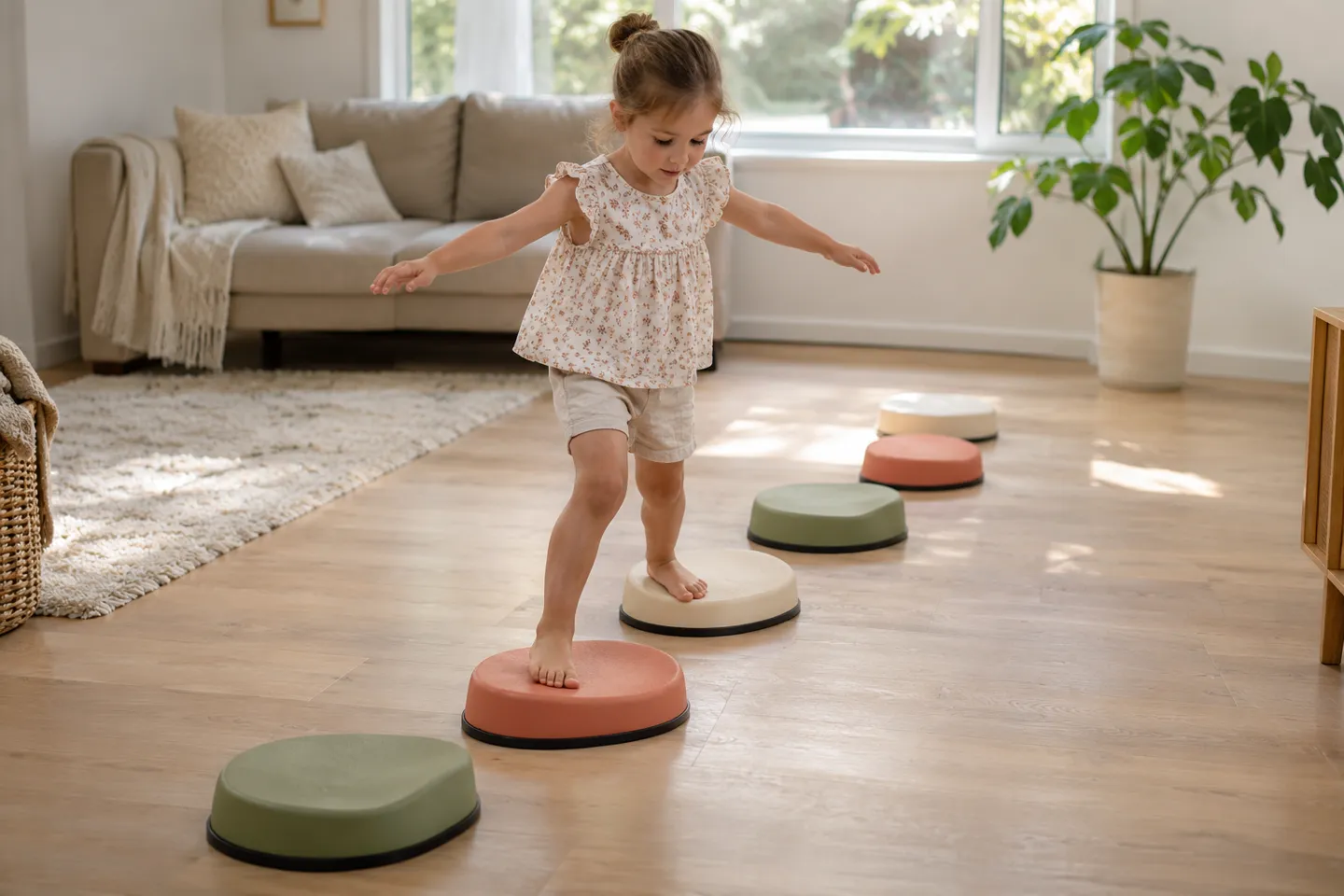
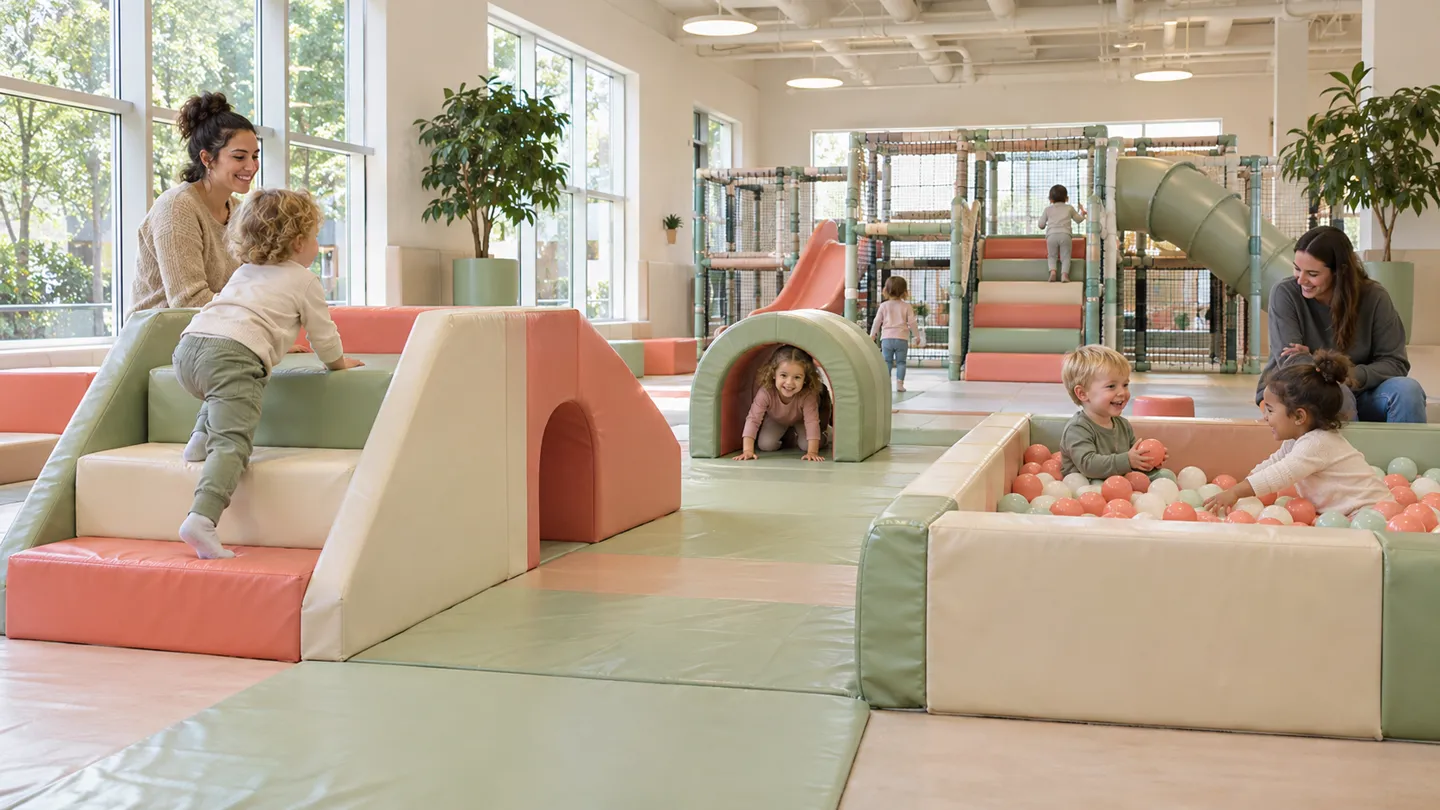
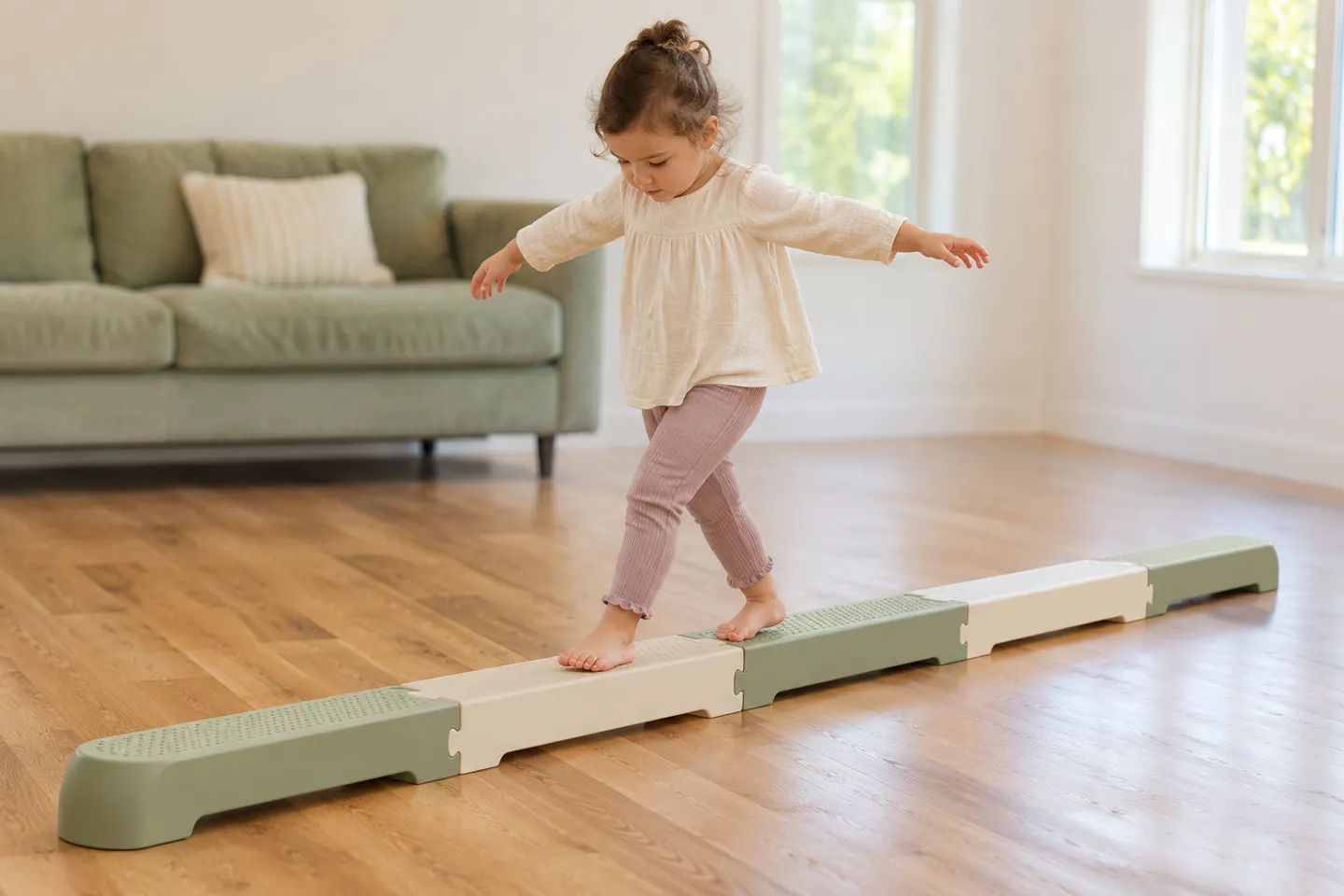
The balance stones that survived one child in a living room face a different test in a classroom. Eight toddlers use the same set before lunch. Every surface gets wiped on a schedule, and the schedule repeats all year. A toy that was fine at home can come apart in that environment within a term.
Three things change when a toy moves from a playroom to a daycare room. More children share each item, so usage multiplies. Cleaning happens daily and follows a public health schedule, not an occasional wipe. And the room uses each toy for hours every working day. Each factor raises the bar on materials, construction, and surface finish.
The safety floor itself is defined by rules. In the United States, toys intended for children under 3 may not contain small parts that fit the CPSC test cylinder, because those parts pose a choking, aspiration, or ingestion hazard (U.S. CPSC, n.d.). Paint needs to be nontoxic and lead-free, edges need to be smooth, and parts need to stay attached through normal use (NAEYC, n.d.). Certification names then tell you which rulebook a toy was tested against. ASTM F963 is the toy safety standard used in the United States, and a Children’s Product Certificate (CPC) documents that testing for products meant for children 12 and under (U.S. CPSC, n.d.; U.S. CPSC, n.d.). EN71 is the equivalent standard inside the European Union.
Toys sit on a spectrum from home-grade to classroom-grade to compliance-grade, and “best” depends on which environment the toy has to survive. A delicate wooden keepsake is a fine home toy and a poor group-care toy. Nothing in this article says otherwise. One boundary matters before buying across markets: certificates follow markets. A toy certified for the EU under EN71 is not automatically compliant for sale in the US, and the reverse is also true.
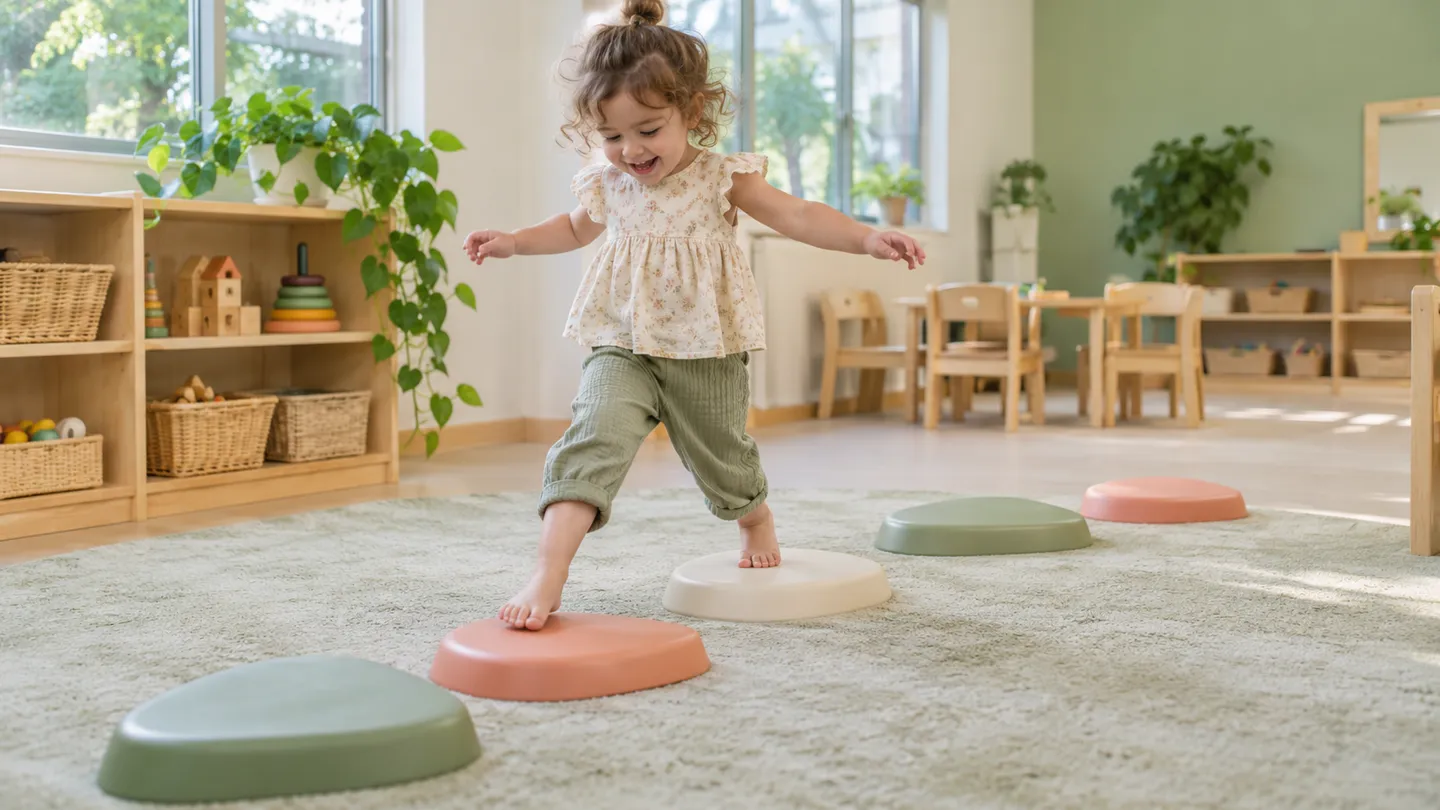
The Age-by-Age Category Map for Your Room
Programs organize toys by age because the abilities behind each toy change fast in early childhood. The same sorting behavior that occupies a toddler with stacking cups becomes a counting game for a four-year-old. The table below condenses age-stage guidance from NAEYC into the five categories most rooms buy against.
Age-by-Age Daycare Toy Map
| Age band | Large motor | Fine motor & sensory | Pretend & social | Building & problem solving |
|---|---|---|---|---|
| Infants 0-1 | Reach-and-grasp items, low soft things to crawl over, large balls | Textured balls, nesting toys, things to drop and take out | Soft dolls, puppets, water toys | Large soft blocks, wooden cubes |
| Toddlers 1-2 | Tunnels, low climbers, ride-on toys, balls to kick | Peg puzzles, things with dials and switches, large snap blocks | Dress-up clothes, toy phones, dolls with accessories | Blocks 2-4 inches, shape sorters |
| Preschool 3-5 | Taller climbers, tricycles, wagons, bats and targets | Puzzles with 12 to 20+ pieces, sorting collections | Play kitchens, puppet theaters, sand and water play | Construction sets, collections for counting and comparing |
Two habits make this table work harder. First, abilities upgrade with age inside the same category. NAEYC notes that ride-on equipment suits toddlers, but tricycles mostly belong to children 3 and up (NAEYC, n.d.). Second, mixed-age rooms default to the younger group’s limits, because the small-parts rule that protects infants protects the whole room. A set with small detachable pieces either stays out of a mixed room or gets a sealed, supervised shelf.
One boundary on the table itself: age bands are a proxy for ability, not a guarantee. NAEYC points out that children develop at individual paces, and a safe item from one list can suit children above or below the suggested range (NAEYC, n.d.). Check your actual room, not just the age label.
Surviving Group Use: How Daycare Toys Fail
A toy can pass every safety test on day one and still fail in a classroom by October. Failure in group care follows predictable mechanics, and once you can name the forces, you can buy against them.
The Three Forces That Wear a Toy Down
The first force is shared intensity. One toy serves eight or more children, and each of them plays harder than a solo child at home. Providers running home-based programs phrase the buying requirement plainly: purchases need to be strong enough to handle rough play from a group of six boys (r/ECEProfessionals, 2023).
The second force is cleaning chemistry. National guidance adapted from Caring for Our Children sets the schedule. Toys that children mouth get cleaned and sanitized before and after each use; general classroom toys get cleaned weekly; washable cloth toys run through a machine wash weekly (Head Start OHS, 2023). That cycle is a material test as much as a hygiene rule. Surface finishes, printed decorations, and seams all take repeated contact with cleaners, and fill materials fail the same way: sensory table fillings left in over a weekend turn foul by Monday, a failure teachers document with jokes they learned the hard way (r/ECEProfessionals, 2023).
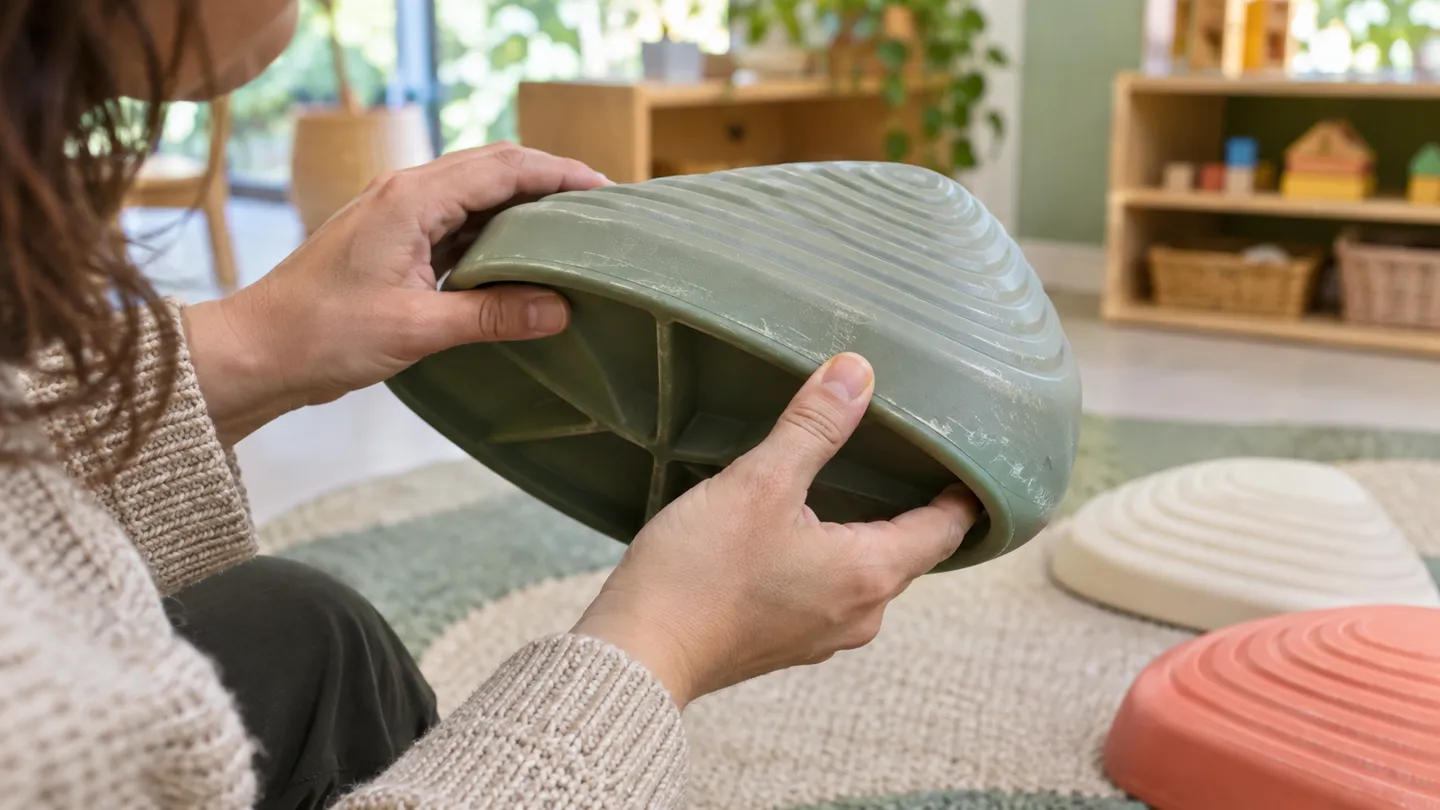
The third force is wear itself. NAEYC’s guidance states the mechanism directly: typical wear and tear can turn a once safe toy into a hazardous one (NAEYC, n.d.). That is why adults are told to check toys frequently and watch official recall lists. A room that never re-inspects its stock is running on the assumption that day-one condition lasts forever. It does not.
Material by Material: How Each One Holds Up
Materials fail differently, so the daily check differs by material too. Injection-molded plastic takes wipe-downs and weather without complaint, which is why large-motor staples like stepping stones and balance beams cluster there. The failure mode is cracks and chipped edges at stress points. Soft foam pieces buy a quiet room and wipeable surfaces, and they fail at seams and covers first. Wood lasts years and feels substantial, but it can crack or splinter under hard impact, and national schedules tell staff to follow label directions when cleaning wooden toys (Head Start OHS, 2023). Fabric and plush items need machine-washable construction from the start, since weekly washing is part of the schedule, and flame-retardant fabric is part of the safety baseline (NAEYC, n.d.).
How Common Daycare Toy Materials Age
| Material / category | Holds up against | Typical failure mode | Daily check action |
|---|---|---|---|
| Injection plastic (stones, beams, riders) | Daily wiping, outdoor weather, repeated impact | Cracks and chips at stress points | Run fingers along edges and load points for sharp or loose parts |
| Soft foam (blocks, tunnels, mats) | Quiet play, wipeable surfaces, gentle impacts | Torn seams, compressed corners, cover splits | Check seams, zippers, and cover integrity by eye and hand |
| Wood (blocks, puzzles) | Years of shelf life, solid feel | Splinters and cracks under hard impact | Inspect surfaces for splinters and loose glued parts |
| Fabric and plush (dress-up, dolls) | Weekly machine wash cycle | Split seams, faded coatings, lingering odor | Machine wash on schedule and pull anything with open seams |
| Magnetic building tiles | High engagement, easy reshaping | Broken housings exposing small magnets | Check tiles daily; remove any with cracked casings immediately |
The last row deserves its own warning.
Magnetic tiles: loved by classrooms, dangerous when broken. A cracked tile exposes magnets small enough to swallow. Many rooms keep tiles out of under-3 spaces entirely, and the teachers who keep them check every tile every day. One cracked casing pulls the whole set off the shelf.
The caution comes from practice rather than paperwork. Teachers name magnetic tiles among the most-loved materials in their rooms, and in the same discussions describe classrooms that keep tiles away from children under 3 entirely (r/ECEProfessionals, 2023). The ingestion mechanism behind that caution is the same one the CPSC small-parts rule targets, so the practice matches the rulebook even where no rule mandates it.
The Two-Minute Daily Check
A daily check does not need a clipboard and twenty minutes. Five questions cover most failures before they reach a child: cracks or splinters, missing parts, exposed magnets or battery compartments, split seams, chipped coating on mouthed surfaces. Damaged items leave the rotation immediately, not at the next budget cycle. The check borrows its logic from the same wear-and-tear guidance that tells programs to inspect frequently (NAEYC, n.d.). The cost asymmetry justifies the habit: two minutes of inspection protects both children and a shelf of equipment worth hundreds of dollars.
The cheapest durability test is a real sample: wipe it, load it, and wash it the way your room will.
Request Free SamplesMeeting Licensing and Quality Standards Without Guesswork
A bare classroom gets stocked two ways: by guessing at what inspectors want, or by counting what the rules actually count. Licensed programs answer to rules that convert “enough toys” into specific quantities, and quality rating systems add an observably scored layer on top. Both reward the same habit: count first, buy second.
What Licensing Inspections Count
Licensing rules are written per child. North Carolina’s rules, for example, tie licensed capacity to 25 square feet of indoor space per child and 75 square feet of outdoor space per child (NC DCDEE, 2025). Materials follow the same per-child logic. Rules and the quality systems built on them set quantity floors for categories such as books, blocks, and large motor equipment, all relative to the number of children enrolled. Teachers document the practice themselves. One lead teacher facing a bare toddler room was advised to inventory everything and match it against her state’s published standards, because licensing standards set minimum materials per enrolled child (r/ECEProfessionals, 2023). The gap list goes to the director.
Compliance is counted, not judged. A room passes inspection the way it passes an audit: by hitting quantity floors per child, category by category.
Turn the Rating Scale Into Your Checklist
The instrument behind most quality ratings is the Environment Rating Scales family. ITERS-3 covers group programs from birth to 3 across 33 observed items, and ECERS-3 covers ages 3 through 5 across 35 items (Environment Rating Scales Institute, n.d.). Both assess the space, schedule, and materials a room offers through direct observation. That structure converts directly into a shopping list: walk the relevant scale’s materials indicators, write the quantity floors into a spreadsheet, and subtract what the room already owns. The remainder is the buy list. Teachers use the same scales as budget evidence when they need a director to approve purchases (r/ECEProfessionals, 2023).
Room setup self-check
List enrolled children per room.
Walk your scale’s materials indicators and note quantity floors per category.
Inventory what you own per category.
Subtract: the gap is the buy list.
Re-run the inventory each term, since wear removes items from compliance too.
Rotation and Storage as Compliance Tools
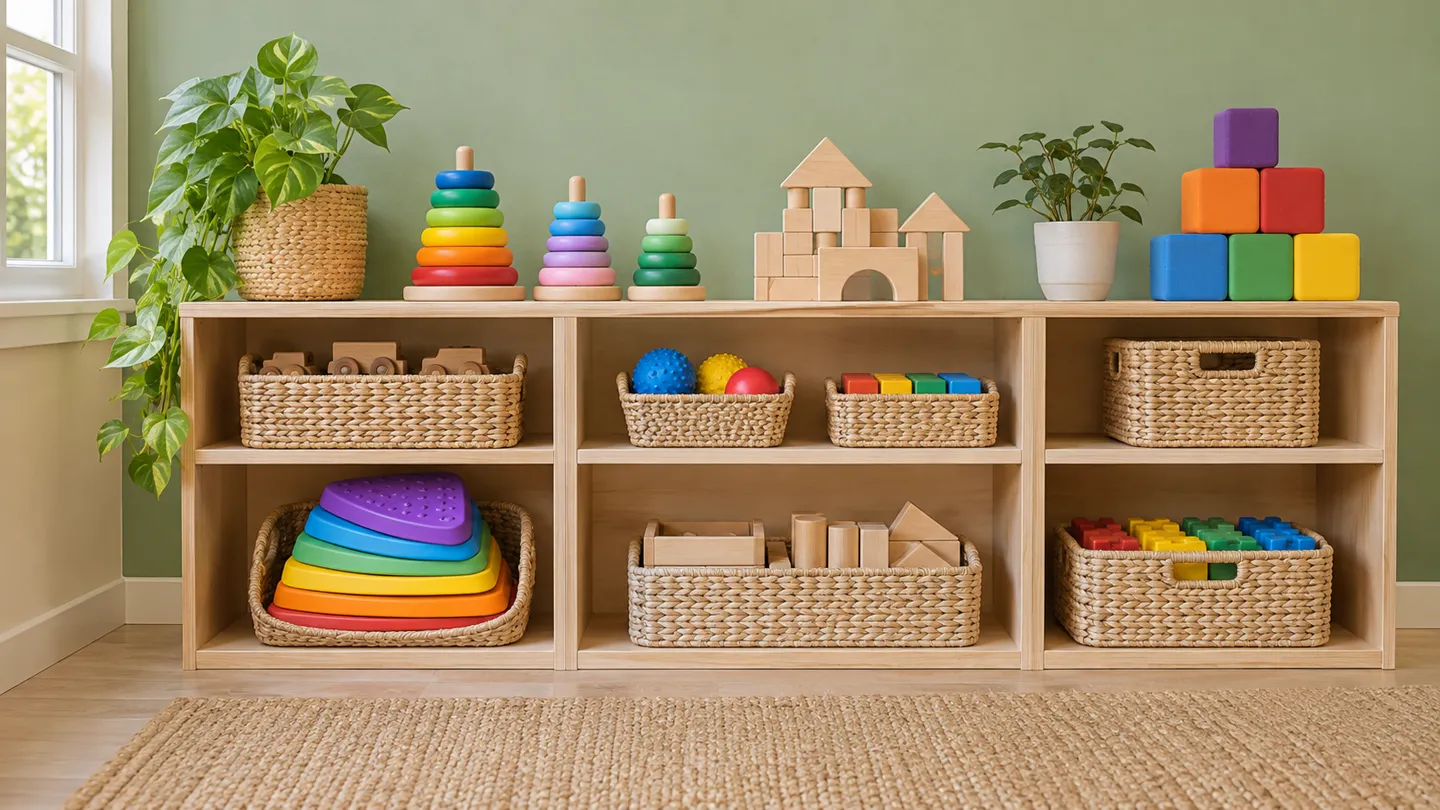
Rotation looks like an engagement trick, but it serves the rulebook twice. Moving a third of the stock off the floor at a time keeps the weekly cleaning schedule realistic; fewer items out means the weekly classroom-toy cleaning actually happens (Head Start OHS, 2023). Storage shows up in inspections too. Open, low shelving makes materials countable at a glance, and labeled bins let children rebuild order without staff time. A room that rotates and stores well stays compliant between inspections instead of scrambling before them.
One boundary applies to every number in this section: rules differ by state, and rating systems differ by program. The counts above illustrate the logic with citable examples, not a national standard. Look up your own state’s child care rules and your program’s rating system before you treat any figure as a requirement.
Licensing counts toys, not impressions.
Space: square feet per child, indoors and out. North Carolina example: 25 indoor, 75 outdoor.
Materials: quantity floors per child, category by category.
Inspection: what sits countable on open shelves.
From Wish List to Purchase Order: Buying for a Center
Once the gap list exists, purchasing becomes a four-step flow. The steps matter in that order because each one removes a risk the next step would otherwise inherit.
Screening suppliers is mostly a document check. Ask for certification files that match your market: a CPC with ASTM F963 test reports for US-bound goods, EN71 compliance for the EU. Ask for material specifications in writing: food-grade PP on mouthing surfaces, foam density ratings on soft play, flame-retardant and washable construction on fabric items. A supplier that answers document requests slowly will answer quality complaints the same way.
The Four-Step Buying Flow
Set quantities
from your checklist
Screen documents
certificates and specs
Test samples
strength, cleaning, files
Scale by pilot
small run, then bulk
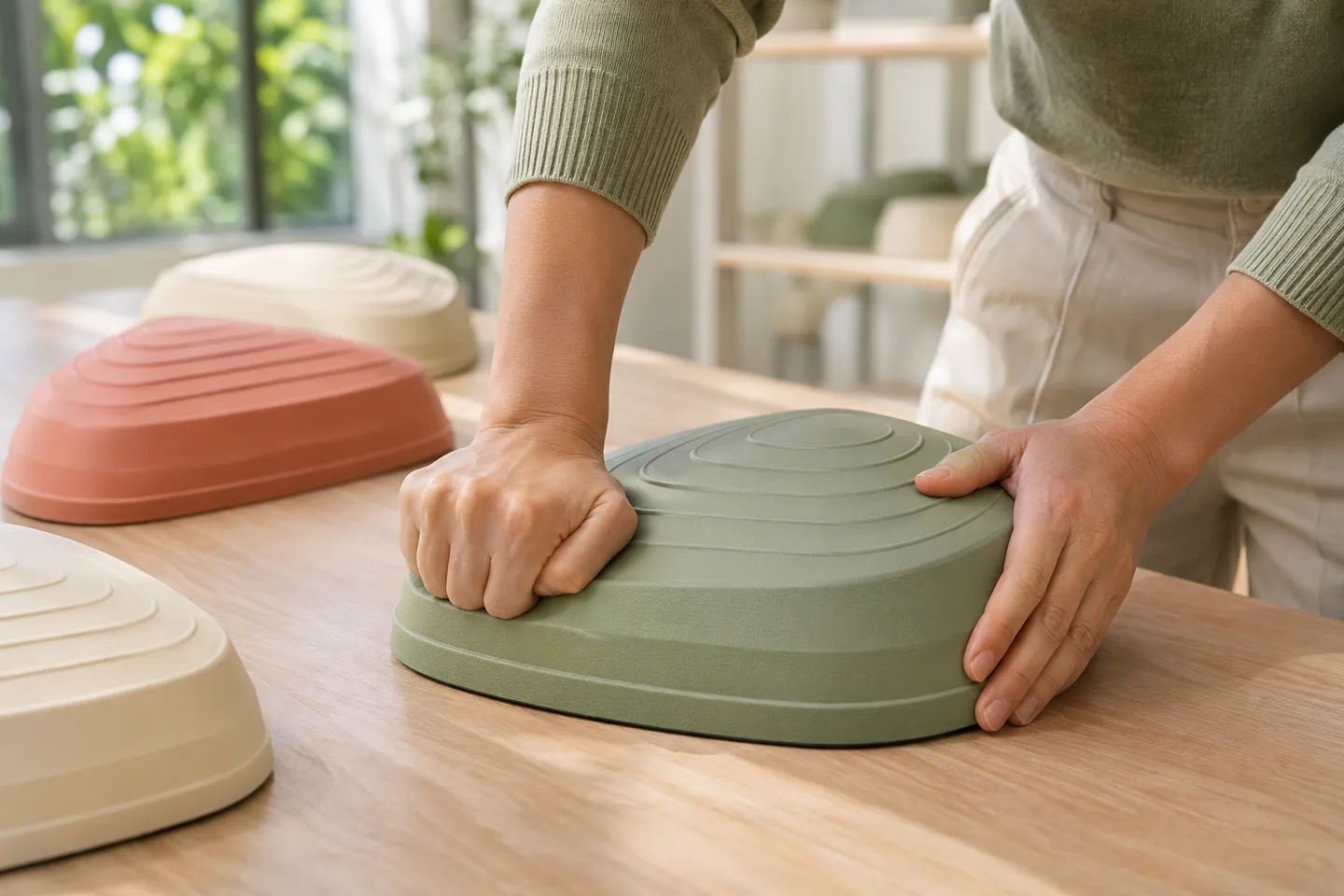
Verification runs on samples. Some manufacturers ship samples free in about 3 to 5 working days with freight on the buyer, which makes a physical test cheap. Load the balance beam, wipe the foam, wash the fabric, and line the sample up against the spec sheet. Scale comes after verification, and lead times tell you what a supplier keeps in stock. In-stock programs typically ship within about a week (1 to 7 days), while light customization such as Pantone colors, logos, or packaging runs roughly 15 to 25 days. Standard items often carry no minimum order, and custom runs set minimums by item, so mixed programs can fill gaps without over-committing.
Cost per year is the number that settles durability debates. A unit price only measures day one; annualized cost divides price by years of service and adds replacement frequency plus cleaning labor. The calculation explains why institutions pay more for equipment that survives: the spendy-but-durable option wins the second year, and every year after. Buyers running this math tend to buy in sets aligned to their checklist instead of chasing single-item bargains.
Supplier verification checklist
Certification files matching your market (CPC + ASTM F963, or EN71).
Written material specs (food-grade PP, foam density, washable flame-retardant fabric).
Sample policy with timelines.
Pre-shipment inspection rights.
In-stock and custom lead times in writing.
Replacement-parts terms.
One boundary protects buyers here: factory-direct pricing moves the quality duty onto the buyer. Institutional catalog suppliers absorb inspection and standardization work into their price. Direct import skips that margin and skips that work too, so centers without the capacity for factory audits or pre-shipment inspection should stay with channels that perform those steps. Certificates also never cross markets: verify the file matches the country of sale every time.
What This Market Rewards
Put the three forces together and the daycare channel reads as a spec market. Counted requirements decide what a room must contain, cleaning schedules decide what survives daily maintenance, and wear liability decides what stays safe over years. In that market, proof beats price. A toy with documents, durable specifications, and a supplier who welcomes inspection is worth more to a center than a cheaper unit that answers none of those questions.
Group by Checklist, Not by Bestseller
The counting logic changes how a catalog should be built. A room filling out its scale-based checklist needs quantities across large motor, sensory and fine motor, building, and storage categories. A supply line organized around those four checklist categories matches how centers actually buy. A line organized around one bestselling item competes for shelf space that inspections never require.
That reading also separates the offers that win. Certificates ready in the right market, written material specifications, sample programs, and pre-shipment inspection rights are the features centers can verify, which makes them the features that defend a quote. Stock tilted toward home-grade bulk items faces all three forces at once. It fails the counting requirements that demand specific categories, fails the cleaning cycles that punish fragile finishes, and fails the wear liability that turns thin construction into a hazard.
This is the standard we build for. STARTINAL’s balance and gross motor range and sensory therapy line are made for exactly these requirements. Certification files cover CE, CPC, ASTM F963, EN71, and CPSC, and production runs in a BSCI-audited factory. Pantone sampling comes with free samples in about 3 to 5 days, pre-shipment inspection rights are part of every order, and standard items carry no minimum order. We keep warehouses stocked so in-stock programs ship within about a week, and we customize colors, logos, and packaging in roughly 15 to 25 days for buyers building a checklist-driven line.
Build Your Daycare Line on Certified Proof
Certification files for CE, CPC, ASTM F963, EN71 and CPSC, free samples in about 3 to 5 days, pre-shipment inspection rights, and no minimum order on standard items.
Start a Sample RequestReferences
- U.S. Consumer Product Safety Commission. “Small Parts for Toys and Children’s Products: Business Guidance.” n.d. cpsc.gov
- U.S. Consumer Product Safety Commission. “Toy Safety Business Guidance.” n.d. cpsc.gov
- U.S. Consumer Product Safety Commission. “Children’s Product Certificate.” n.d. cpsc.gov
- National Association for the Education of Young Children. “Good Toys for Young Children by Age and Stage.” n.d. naeyc.org
- Head Start Office of Head Start, Administration for Children and Families. “Schedule for Cleaning, Sanitizing, and Disinfecting.” 2023. headstart.gov
- Centers for Disease Control and Prevention. “How to Clean and Disinfect Early Care and Education Settings.” 2024. cdc.gov
- Environment Rating Scales Institute. “Environment Rating Scales: ITERS-3 and ECERS-3.” n.d. ers.fpg.unc.edu
- North Carolina Division of Child Development and Early Education. “Chapter 9: Child Care Rules.” Effective July 1, 2025. ncchildcare.ncdhhs.gov