.png)
What Are Sensory Toys? A Complete Guide to How They Work, What They Do, and How to Choose the Right One
What Is a Sensory Toy? (And What Makes It Different from a Regular Toy)
A sensory toy isn’t defined by what it looks like — it’s defined by what it does to the nervous system. Once you understand that distinction, the entire category stops feeling like a marketing label and starts making practical sense.
A Clear Definition — What “Sensory Toy” Actually Means
A sensory toy is any object specifically designed to provide controlled, predictable sensory input to one or more of the body’s sensory systems. That last part is important, because we’re not just talking about the five senses you learned in elementary school. Occupational therapists and developmental specialists work with seven sensory systems, and the two that most people have never heard of — the vestibular system (balance and movement) and the proprioceptive system (body awareness) — are often the most important for understanding why sensory toys work.
Here’s a quick map of all seven systems and what kinds of toys target each one:
| Sensory System | What It Does | Example Sensory Toys |
|---|---|---|
| Tactile (Touch) | Processes texture, temperature, pressure through skin | Kinetic sand, sensory bins, textured balls, putty |
| Vestibular (Balance) | Senses head position, movement, and gravity via the inner ear | Swings, balance boards, wobble cushions, spinning chairs |
| Proprioceptive (Body Awareness) | Tells the brain where muscles and joints are in space | Weighted blankets, crash pads, resistance tunnels, body socks |
| Auditory (Sound) | Processes sound frequency, volume, and pattern | Rainmakers, noise-cancelling headphones, musical instruments |
| Visual (Sight) | Processes light, color, motion, and contrast | Lava lamps, sensory bottles, fiber optic lights, liquid motion timers |
| Olfactory (Smell) | Processes airborne chemical signals | Scented play dough, aromatherapy diffusers, scratch-and-sniff stickers |
| Oral (Taste/Mouth) | Processes taste, texture, and pressure through the mouth | Chewable jewelry, textured teethers, oral-motor tools |
The key word in the definition is “controlled.” A flashing toy at a carnival provides sensory input, but it’s random, unpredictable, and overwhelming. A sensory toy provides the same type of input in a way the child can predict, control, and gradually get comfortable with. That difference is everything.
Sensory Toys vs. Regular Toys — Is There Really a Difference?
If you’ve spent any time in parenting forums, you’ve seen the question: “Aren’t all toys sensory? Isn’t this just a fancy word to charge more?” It’s a fair question — and the answer comes down to design intent, not marketing language.
| Design Dimension | Regular Toy | Sensory Toy |
|---|---|---|
| Primary goal | Entertainment, imaginative play, skill-building | Nervous system regulation, sensory integration |
| Sensory feedback | Open-ended, often random | Controlled, predictable, adjustable |
| Selection criteria | Age, interest, educational value | Sensory profile (seeker vs. avoider), specific sensory system target |
| Materials | Varies widely | Often textured, weighted, resistance-based, or specifically chosen for tactile/visual/auditory properties |
| How you know it’s “working” | Child is engaged and having fun | Child shows improved regulation, focus, or calm — even if the play looks simple |
Think of it this way: eating potato chips gives you sensory input (crunch, salt, texture), but you’re not eating them for nutritional purposes. Eating a protein bar also gives you sensory input, but the input is targeted — it’s designed to deliver something specific your body needs. Regular toys are the chips of the play world. Sensory toys are the targeted nutrition for the nervous system.
None of this means regular toys are bad. It means they serve a different purpose. A set of wooden blocks builds creativity and fine motor skills. A weighted lap pad helps a child’s nervous system register “I’m safe, I know where my body is, I can focus now.” Both are valuable. But if your child is struggling to sit still long enough to play with the blocks in the first place, the lap pad might be the more important investment.
Who Are Sensory Toys For? (Spoiler: More Kids Than You Think)
The most common assumption is that sensory toys are “for kids with autism.” That’s not wrong — they absolutely are — but it’s only part of the picture.
Children with diagnosed conditions are the most visible audience. According to the CDC’s most recent data, approximately 1 in 31 children in the United States is identified with autism spectrum disorder, and sensory processing differences are present in an estimated 90–95% of autistic individuals. Children with ADHD also frequently experience sensory challenges: research suggests roughly 40% have co-occurring sensory processing issues (CDC ADDM Network, 2025).
Children with subclinical sensory needs are a much larger group hiding in plain sight. The STAR Institute for Sensory Processing estimates that 5% to 16% of school-age children experience sensory processing difficulties significant enough to affect daily functioning, even though they may not have a formal diagnosis (STAR Institute, research by Miller et al.). These are the kids who can’t tolerate clothing tags, who crash into furniture on purpose, who cover their ears at the vacuum cleaner, or who seem to need constant movement just to stay regulated. Their parents often don’t have a name for what’s going on. They just know something feels harder than it should be.
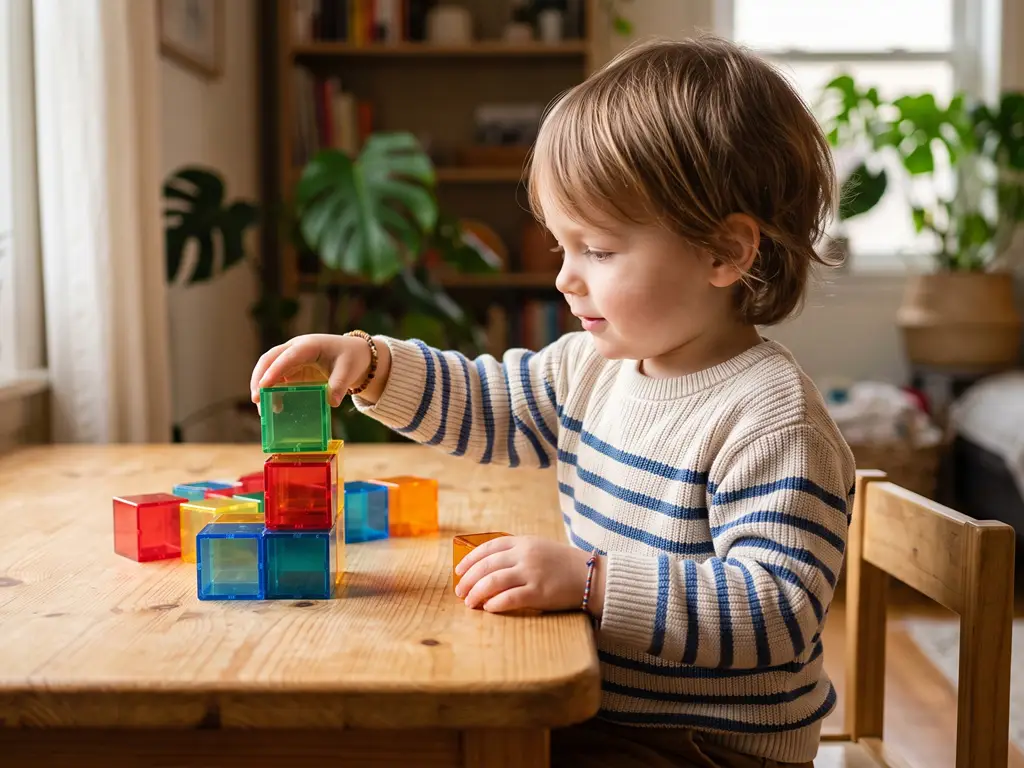
All children benefit from sensory play, whether or not they have identifiable sensory needs. Sensory exploration is how babies and toddlers build neural pathways. It’s how preschoolers learn cause and effect. It’s how school-age kids develop body awareness and motor planning. Sensory play isn’t a therapy reserved for children with diagnoses. It’s a fundamental part of healthy development that supports every child’s growing brain.
Sensory needs exist on a spectrum, just like height or weight. There isn’t a clean line between “needs sensory support” and “doesn’t.” The right question isn’t “does my child qualify?” It’s “what kind of sensory input does my child respond to, and would having the right tools make our days easier?”
The Science of Sensory Play — How These Toys Actually Work
Most articles about sensory toys will tell you they “help with regulation” or “support development.” Very few explain how. Here’s how.
Sensory processing follows a three-step loop: Input → Integration → Response. Sensory toys work by providing controlled, predictable input at the first stage. This helps the nervous system practice and improve at the second stage, which leads to more adaptive responses at the third.
Sensory Processing 101 — The Input-Integration-Response Loop
Imagine a child at a playground, running their hands through a sand table. Here’s what’s actually happening:
Step 1: Input. Sensory receptors in the child’s skin detect the texture, temperature, and pressure of the sand. At the same time, receptors in their muscles and joints register the position of their hands and the effort required to scoop and pour. Their inner ear tracks the slight shifts in head position as they lean over the table.
Step 2: Integration. The brain receives all these signals and has to organize them into a coherent picture. For a child with smooth sensory processing, this happens automatically: the brain says “sand feels interesting, this is fun.” For a child with sensory processing challenges, the brain might say “this feels overwhelming, I need to get away from this” or “I can barely feel this, I need MORE.”
Step 3: Response. The child acts based on what their brain concluded. The regulated child stays engaged, explores, and maybe invites a friend to join. The overwhelmed child pulls away, cries, or shuts down. The under-responsive child might start throwing sand or seeking more intense input elsewhere.
This is where sensory toys become powerful. They let you intervene at Step 1, controlling the type, intensity, and duration of sensory input. The brain gets practice at Step 2 without being overwhelmed, and Step 3 becomes more adaptive over time.
Two concepts from occupational therapy are worth knowing here. Sensory modulation is about the volume of sensory input: some children’s “volume knobs” are stuck too high (hypersensitive), others too low (hyposensitive). Sensory discrimination is about telling different sensations apart, like knowing the difference between a light touch and firm pressure, or between one sound and another. Sensory toys primarily target modulation, helping children learn to turn their own volume knobs up or down as situations demand.
How Different Sensory Inputs Affect the Nervous System
Not all sensory input does the same thing to the brain. Understanding these differences is what separates effective sensory toy choices from random purchases.
Tactile input (touch) activates the parasympathetic nervous system, the body’s “rest and digest” mode. When a child squeezes a stress ball, kneads kinetic sand, or runs their fingers through a sensory bin, the rhythmic tactile feedback triggers a physiological calming response. Research suggests this is why fidget tools can lower cortisol levels and reduce anxiety during stressful situations. It’s not just “keeping hands busy.” It’s actively signaling the nervous system to downshift.
Proprioceptive input (deep pressure and heavy work) is arguably the most reliably organizing form of sensory input available. When a child pushes, pulls, lifts, or receives firm pressure against their muscles and joints, the body releases serotonin and dopamine. These neurotransmitters are associated with calm, focus, and well-being. This is why weighted blankets, crash pads, and heavy work activities are so effective for children with ADHD and anxiety. Proprioceptive input almost always calms and organizes. It’s the safest starting point for any sensory toolkit (RCOT, 2023 guidance on weighted products).
Vestibular input (movement and balance) is the most complex and the easiest to get wrong. The vestibular system, located in the inner ear, is the brain’s gyroscope — it tells the body where it is in space and how it’s moving. But the type of movement determines the effect: linear movement (back-and-forth swinging, gentle bouncing) tends to be calming and organizing; rotational movement (spinning, rolling, turning) tends to be alerting and can overstimulate. A child in a pod swing gently rocking is getting a very different neurological experience than a child on a sit-and-spin. Knowing this distinction is critical. Giving a vestibular-seeking child the wrong type of movement can accidentally escalate rather than regulate.
What the Research Says — Evidence, Not Hype
Do sensory toys actually work, or is this just wellness-industry marketing?
The foundation of sensory toy use rests on Ayres Sensory Integration (ASI), a theoretical framework developed by occupational therapist and neuroscientist A. Jean Ayres in the 1970s. ASI is not fringe theory. It’s a well-established approach taught in OT programs worldwide and practiced in pediatric clinics every day.
Research on sensory integration interventions for children with autism shows moderate positive effects on challenging behaviors and sensory reactivity, as measured across multiple systematic reviews. The evidence is strong enough that sensory-based approaches are standard practice in pediatric occupational therapy. But it’s also nuanced enough that no credible professional would call sensory toys a “cure” for anything.
For children with ADHD, the evidence around fidget tools and attention is more mixed but directionally positive. Some studies show measurable improvements in on-task behavior when children have access to appropriate fidget tools; others show no effect or even distraction when the tool becomes a toy. The consistent finding across studies is that the right tool matched to the right child’s sensory profile is what makes the difference — not the tool itself.
An honest bottom line: sensory toys are not medical devices. They don’t replace occupational therapy evaluation or a personalized sensory diet designed by a professional. But as home-based complementary tools that provide controlled sensory input, they have a reasonable evidence base, strong clinical consensus among pediatric OTs, and — perhaps most importantly — thousands of parent reports of meaningful, practical improvement in daily life.
Think of them like exercise equipment for the nervous system. A treadmill doesn’t cure anything, but used correctly, it builds real capacity. Sensory toys work the same way.
A Tour of Sensory Toys — Organized by Sensory System
Now that you understand the theory, let’s get concrete. The table in the first section gave you a bird’s-eye view of all seven systems. Here, we’ll go deep on the two systems that are most powerful but least understood: proprioceptive and vestibular. These are where the biggest “aha” moments happen for parents.
Proprioceptive Toys — Deep Pressure and Heavy Work
Proprioception is your body’s internal GPS. Receptors in your muscles and joints constantly send signals to your brain about where each body part is, how much force you’re using, and whether you’re moving or still. When this system works well, you can close your eyes and touch your nose. When it doesn’t, a child might press too hard with a pencil, crash into walls deliberately, or seem to have no sense of their own strength.
The reason proprioceptive input is so reliably calming is that deep pressure signals to the brainstem: “You are safe. You know where your body ends. You can relax now.” It’s the neurological equivalent of a firm hug.
Here are the core proprioceptive tools and when to use them:
- Weighted blankets (5–10% of body weight is the standard safety guideline; never exceed 10%) — Use during quiet time, before bed, or during meltdown recovery. Not recommended for overnight sleep without OT guidance.
- Weighted lap pads — Ideal for homework, meals, or any seated activity where the child struggles to stay focused. Small, portable, and less intimidating than a full blanket.
- Crash pads and body socks — For children who seem to need intense physical input. Crashing into a soft, padded surface delivers full-body proprioceptive feedback that can discharge built-up tension in seconds.
- Resistance tunnels and climbing equipment — Structured heavy work that builds strength while organizing the nervous system. Pushing, pulling, and climbing against resistance engages large muscle groups for maximum proprioceptive payoff.
- Scooter boards — Upper-body heavy work combined with vestibular input. Lying on a scooter board and pulling themselves forward with their arms gives children intense proprioceptive feedback to shoulders, arms, and core.
A practical tip: proprioceptive input is the safest category to experiment with. Unlike vestibular input, which can be overstimulating, deep pressure almost always organizes and calms across all sensory profiles.
Vestibular Toys — Movement, Balance, and the Brain’s Gyroscope
The vestibular system is the most complex sensory system to navigate as a parent. A swing that calms one child into a blissful trance might send another into overdrive. The difference comes down to the type of movement, not the child’s personality.
Here’s the framework that makes vestibular choices manageable:
| Movement Type | Effect on Nervous System | Examples |
|---|---|---|
| Linear (back-and-forth, up-and-down) | Calming, organizing | Pod swings, platform swings, gentle bouncing on a therapy ball |
| Rotational (spinning, turning, rolling) | Alerting, can overstimulate | Sit-and-spin, spinning chairs, somersaults |
| Combined linear + proprioceptive | Organizing with grounding | Mini trampolines, scooter boards, balance beams |
Linear vestibular tools are your go-to for calming:
- Sensory swings (pod, hammock, or platform style) — The rhythmic back-and-forth motion activates the parasympathetic nervous system. Many parents report these are the single most impactful sensory purchase they’ve made.
- Wobble cushions and balance boards — Provide micro-movements that help children stay regulated during seated activities. A child who can’t sit still on a regular chair may focus beautifully on a wobble cushion because their vestibular system is getting the low-level input it craves.
Rotational vestibular tools are for alerting and releasing energy:
- Sit-and-spin and spinning chairs — Provide intense rotational input that can wake up an under-responsive system. Use in short bursts and watch for signs of overstimulation (nausea, dizziness, irritability).
- Mini trampolines — Combine linear vestibular input with heavy proprioceptive work through the legs. The bouncing motion provides repetitive, predictable vestibular input while the landing delivers proprioceptive grounding. It’s a powerful combination for children who need both regulation and energy release.
Important safety note: Vestibular input can cause nausea, dizziness, or overstimulation, especially rotational movement. Start with short sessions (2–5 minutes), observe your child’s response, and adjust. Never force vestibular activities on a reluctant child. The goal is to provide input the child’s system can integrate, not to push through resistance.
The right sensory tool, matched to the right sensory need, can turn a difficult moment into a manageable one.
See Sensory Tools Built for Real UseFinding the Right Fit — How to Match Sensory Toys to Your Child
You now know what sensory toys are, how they work, and what types exist. The natural next question — and one of the most-searched follow-ups to “what is a sensory toy” — is “which one is right for my child?”
You don’t need a professional sensory evaluation to start making better choices. You just need to observe your child through the right lens. Here are four questions that work as a lightweight sensory profile:
This framework isn’t a substitute for a professional occupational therapy evaluation. But for the parent who’s just starting to connect the dots between their child’s behavior and their sensory needs, it’s a practical, observation-based starting point that doesn’t require a diagnosis or a specialist appointment. The STAR Institute Sensory Processing Checklist provides a more comprehensive parent-report tool if you want to go deeper.
What to Look for in Quality Sensory Toys — Safety, Durability, and Smart Choices
Once you know which type of sensory toy to buy, the next question is: which specific one? The sensory toy market ranges from carefully engineered therapeutic tools to cheap knockoffs that fall apart in a week. Here’s what separates quality from garbage.
Safety certifications are non-negotiable. In the United States, legitimate children’s products carry ASTM F963 certification (the official U.S. toy safety standard, covering mechanical, flammability, and chemical safety). Products for children 12 and under require a CPC (Children’s Product Certificate) confirming compliance. In Europe, look for CE marking and EN71 (the European toy safety standard, spanning 13 parts from mechanical safety to chemical migration limits). These aren’t optional stickers. They’re legal requirements for compliant products. If a manufacturer doesn’t list their certifications publicly, ask why.
Material quality matters more for sensory toys than for regular toys because of how they’re used. Sensory toys go in mouths, against skin, and through repeated high-intensity handling. Food-grade silicone, non-toxic plastics, and materials that don’t off-gas chemical odors are the baseline — not premium features. A well-made sensory toy should have no chemical smell straight out of the package.
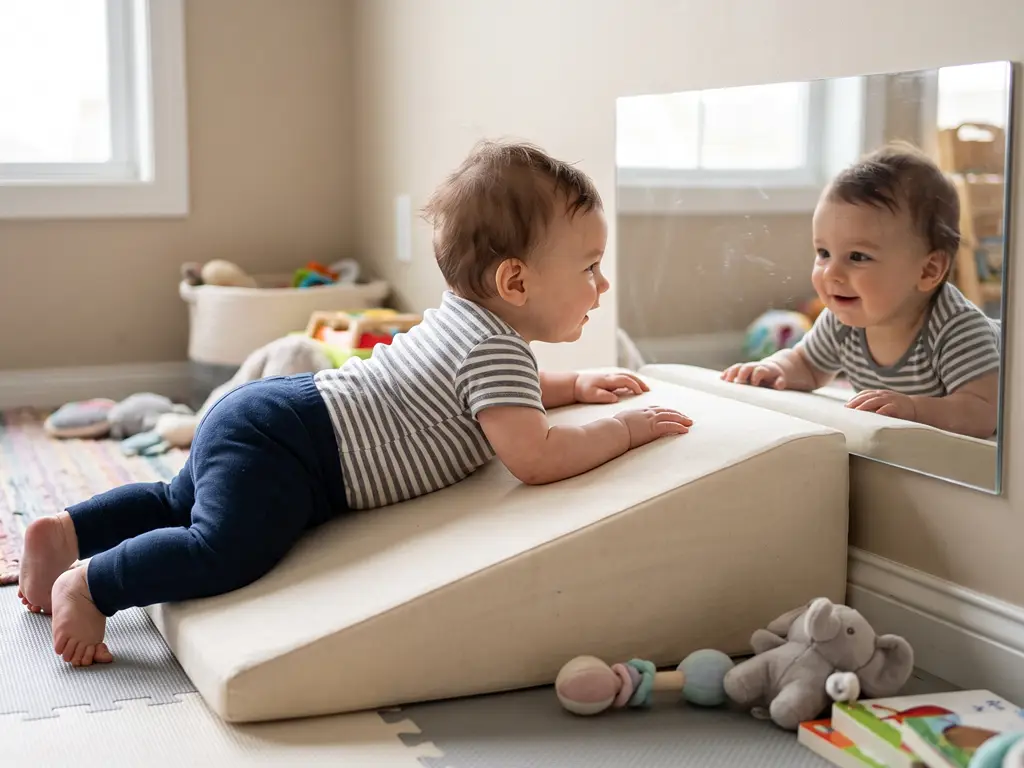
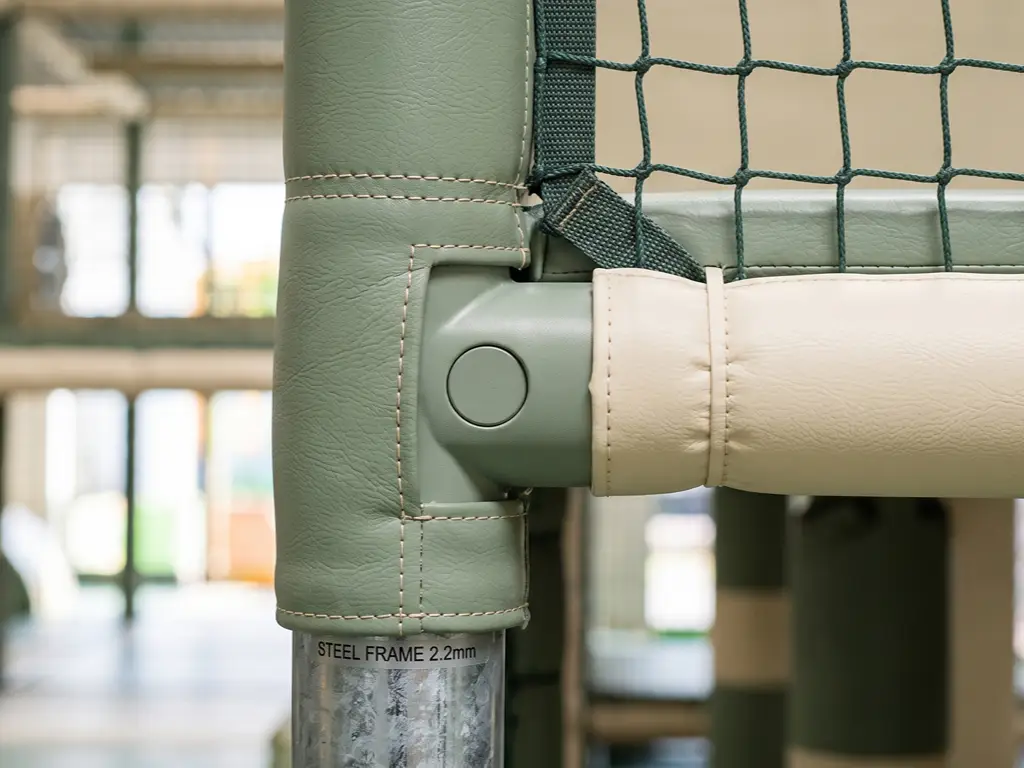
Design for real use means looking at the details. Anti-slip rubber bases on balance equipment prevent injuries. Rounded edges on wooden components prevent splinters and bruises. Shatter-proof mirrors and tear-resistant textiles extend product life from months to years. Easy-to-clean surfaces matter enormously in classroom and clinic settings where multiple children share tools. These aren’t cosmetic details. They’re what determines whether a sensory toy gets used daily or ends up in a closet.
Age-appropriate design isn’t just about safety. It’s about developmental fit. A sensory toy designed for a three-year-old’s hand size and attention span won’t engage a ten-year-old. Conversely, a tool designed for older children may be physically or cognitively inappropriate for a toddler. Look for products that specify an age range and explain why that range matters.
When choosing sensory toys for your child or classroom, working with manufacturers who openly list their compliance certifications — such as Startinal, whose sensory and therapy product line carries BSCI, CPC, CE, and ASTM certifications backed by a decade-long zero-accident safety record — gives you one less thing to research and one more reason to feel confident in your choices.
References
- CDC Autism and Developmental Disabilities Monitoring (ADDM) Network. “Autism Prevalence Data.” 2025. https://www.cdc.gov/ncbddd/autism/data.html
- STAR Institute for Sensory Processing. “Sensory Processing Disorder Research.” https://sensoryhealth.org/
- Royal College of Occupational Therapists (RCOT). “Weighted Blankets for Children and Adults — A Guide for Occupational Therapists.” 2023. https://www.rcot.co.uk/
- Ayres, A. Jean. “Sensory Integration and the Child.” Western Psychological Services, 1979.
- Somerset NHS Foundation Trust. “Guidance on the Use of Weighted Blankets.” https://www.somersetft.nhs.uk/
- Startinal. “Sensory & Therapy Products.” https://www.startinal.com/product-category/sensory-therapy/
- Startinal. Official Website. https://www.startinal.com/
- Startinal. “Contact Us.” https://www.startinal.com/contact-us/