A parent opens Amazon’s best-seller toy list looking for a birthday gift. A seller opens the same list looking for a product. Almost every article about this list serves the parent. This one is for the seller: what the best-seller list actually shows, how to read it as market data instead of a shopping shortcut, where a smaller player can still get in, and what quietly kills toy sellers before their first reorder.
What Amazon’s Best-Seller Toy List Actually Shows
Amazon’s Toys & Games best-seller list is a rolling top-100 snapshot. It reorders constantly, and it rewards what is moving right now, not what has sold well for years. In one detailed analysis of the list, published in February 2025, 78 different brands shared the 100 slots (Actowiz Solutions, 2025).
That same snapshot breaks down by category like this:
What Fills the Top 100 (one Feb 2025 snapshot)
| Category | Products in Top 100 |
|---|---|
| Dedicated deck card games | 10 |
| Building sets | 8 |
| Dolls & accessories | 7 |
| Action figures | 6 |
| Educational toys | 5 |
| Board games | 4 |
The brand picture is even more concentrated at the top. Hasbro held about nine slots, LEGO roughly five to six, Mattel and Funko several more. Together, a handful of companies own about a quarter of the list. The depth of their lead shows in review counts: the MEGA BLOKS First Builders set carried roughly 124,000 reviews, an assorted Pokémon card lot about 72,600, and ThinkFun’s Gravity Maze over 32,700 in the same analysis.
Price is the quiet headline. The average price across the top 100 was $19.04. Twenty-five products sold under $10, forty sat between $10 and $20, thirty between $20 and $50, and only five cost more than $50, with the priciest at $99.99. Shoppers on this list buy small-ticket, and mostly in the $10–20 band.
Price gravity of the Top 100
$19.04
Average price across the list
40
Of 100 slots sit in the $10–20 band
5
Products cost more than $50
Age still segments everything around the list. Related searches split hard by “toys for girls,” “toys for boys,” and “toys by age,” and Amazon feeds this with its own seasonal “Toys We Love” edits. The list you see in October is not the one from March.
One caution before going further: this is a snapshot, not a verdict. Different capture dates even disagree about which category leads. That disagreement is not noise. It is the first signal a seller should know how to read.
Reading the Best-Selling Toys List Like a Seller
The parent reads the list and asks “which one should I buy?” The seller should ask three different questions: which numbers matter, whose goods fill the slots, and where the gaps are. AI can list the top toys for you in one line. What it will not do is turn that list into a sourcing decision. That is the work of this section and the next.
The Three Numbers Worth Reading
Pair rank with review velocity first. A best-sellers rank says a product is moving today. Review growth says it has been moving for months. A high rank on a product with 300 reviews behaves differently from the same rank on a product with 30,000. The first can be a short-lived spike; the second is an installed demand base. Before treating any slot as an opportunity, check how fast its reviews accumulated, not just where it sits this week.
Treat any single snapshot as one frame of video. One analysis put card games first among categories; general market commentary usually leads with LEGO and building sets (Actowiz Solutions, 2025). Both can be true, each for its capture date. Read the list across several weeks before you believe any trend. Seasonal edits and Q4 gifting will reshuffle categories that look stable in spring.
Read concentration before you read rankings. Seventy-eight brands sharing 100 slots sounds fragmented, but the fragmentation lives in the tail: after the big four, most brands hold a single slot each. The head of the list is brand territory; the tail is where ownership blurs. That shape, a concentrated head with a long fragmented tail, is what tells you where an unknown label can physically appear.
Four Kinds of Goods Fill This List
Every slot on the list belongs to one of four kinds of goods, and each kind runs by different rules.
Four Kinds of Goods on the List
| Kind of Goods | Who Plays | Real Entry Bar |
|---|---|---|
| Established brand goods | Hasbro, LEGO, Mattel — retail-scale brands | Brand moat, retail distribution, patents; you cannot out-LEGO LEGO |
| Licensed IP goods | Movie, game and cartoon merchandise | License fees and rights holders; entry is a contract, not a product |
| Resale / arbitrage goods | Clearance and retail-arbitrage flippers | No product development, but capital turns fast and margins vanish in price wars |
| White-label goods | Unbranded products a seller customizes | Open to new sellers; the work moves to compliance and sourcing |
The first three gates are effectively closed to a new seller. You will not outspend Hasbro on brand, outbid a studio for a license, or win a clearance war against full-time arbitrage flippers with deeper capital. The fourth gate is white-label goods: products manufactured generically and sold under your label. It is the one that actually opens. It is also the one where the list tells you the least, because those products rarely dominate rankings; they live in the tail and in adjacent searches.
Which raises the real question: inside that open gate, which niches are winnable at all?
Where a Small Seller Can Actually Get In
“White-label” is not a niche. It is a permission slip. Four filters turn it into a product decision, and every filter exists because skipping it has a known cost.
Four Filters for a Winnable Toy Niche
No IP dependency. If the product only sells because of a character, you do not own the reason it sells. The rights holder can end your listing with one notice. A winnable white-label niche sells on function, meaning balance, coordination, and tactile play, not on a face.
No electronics. Sound, light, and batteries mean extra safety testing, more defect paths, battery-shipment rules, and returns that arrive dead. The toy stays simpler and the file chain stays shorter without a circuit board inside.
Light and small. Remember the price data: the list’s gravity sits at $19.04 average, in the $10–20 band (Actowiz Solutions, 2025). Fulfillment fees scale with size and weight. A bulky toy at a $15 price point is a fee problem wearing a toy costume. Light, small, stackable products keep the fee curve on your side.
Repeat or multi-context demand. One-and-done novelties die after Q4. Products used across contexts, such as home, kindergarten, and therapy sessions, get reordered by parents and bought in sets by schools. Repeat demand is what makes a niche a business instead of a season.
The four filters, as a checklist
- No IP dependency — it sells on function, not on a face.
- No electronics — no batteries, no extra test scope, no returns that arrive dead.
- Light and small — the $10–20 band punishes bulk.
- Repeat or multi-context demand — home, kindergarten, therapy; reordered, bought in sets.
Sensory and balance toys pass all four: stepping stones, balance boards, wobble boards, tactile paths. No character on the box, no circuit in the body, small enough to ship in a parcel, and bought again as children grow or classrooms expand. And the demand behind this family of products is not a fad pulled from one list snapshot:
Segment forecast 2026–2031
≈ 8.5% a year
Educational-toys market: USD 78.5 billion in 2026, reaching USD 118 billion by 2031.
Source: Mordor Intelligence industry forecast, 2026.
The educational-toys segment behind these niches is forecast to grow from about USD 78.5 billion in 2026 to USD 118 billion by 2031, roughly 8.5% a year (Mordor Intelligence, 2026). List rankings wobble week to week; that curve is the sturdier thing to build against.
The four filters, applied honestly:
Niche Direction × Can You Enter × Boundary to Confirm First
| Niche Direction | Enter? | Boundary — Confirm Before Committing |
|---|---|---|
| IP-derivative toys | No | Rights-holder takedown risk; entry requires a license contract you will not get |
| Electronic / sound-light toys | Hardly | Extra safety testing and battery rules; confirm the full test scope and defect budget first |
| Bulky soft play / furniture-size items | Not via small-parcel FBA | Fees scale with size; confirm dimensional-weight economics against a $10–20 price point |
| Sensory & balance, light small items | Yes | Confirm the factory can issue CPC test reports with report numbers before talking price |
The Compliance Gate: CPC, EN71, and What Testing Really Requires
Passing the filters gets you a candidate. The compliance gate decides whether it can be listed at all.
In the US, children’s products need a Children’s Product Certificate (CPC), a written certificate based on testing at a CPSC-accepted laboratory. Amazon enforces this per toy. Submitted documents must be authentic, unmodified, and not computer-generated, and product images must match what was tested (Amazon Seller Central). Documents from a suspended testing lab are rejected outright.
In the EU, EN71 is the wall. Sellers report that once Amazon flags a listing under EN71 in the UK or EU marketplaces, there is no workaround inside Seller Central: the file either exists or the listing does not. And before any of this, the toys category itself is gated. Sellers describe approval cycles that reject applications over lab documents, image details, or invoice gaps, again and again (r/FulfillmentByAmazon, 2021).
The compliance file chain, in one look
United States: a Children’s Product Certificate from a CPSC-accepted lab, per toy — documents authentic and unmodified, images matching what was tested. European Union: EN71 — once a listing is flagged, the file either exists or the listing does not.
Two practical consequences follow. First, compliance cost belongs in your unit economics from day one: testing is a per-product, per-market expense, not a fine you might dodge. Sellers entering the category now describe the certification and documentation load as the deciding barrier, not competition (LinkedIn, 2026). Second, your supplier choice decides whether this gate is passable. That is why the failure list below and the factory checklist after it matter more than the niche you pick.
Timing: The Q4 Clock Runs Backwards
Toy demand is not flat across the year; it detonates in Q4 and goes quiet in Q1. Resellers build their whole calendar around it: sourcing during Black Friday discounts to catch the holiday surge (Full-Time FBA, 2022). A private-label seller has to run the same clock backwards from the selling season.
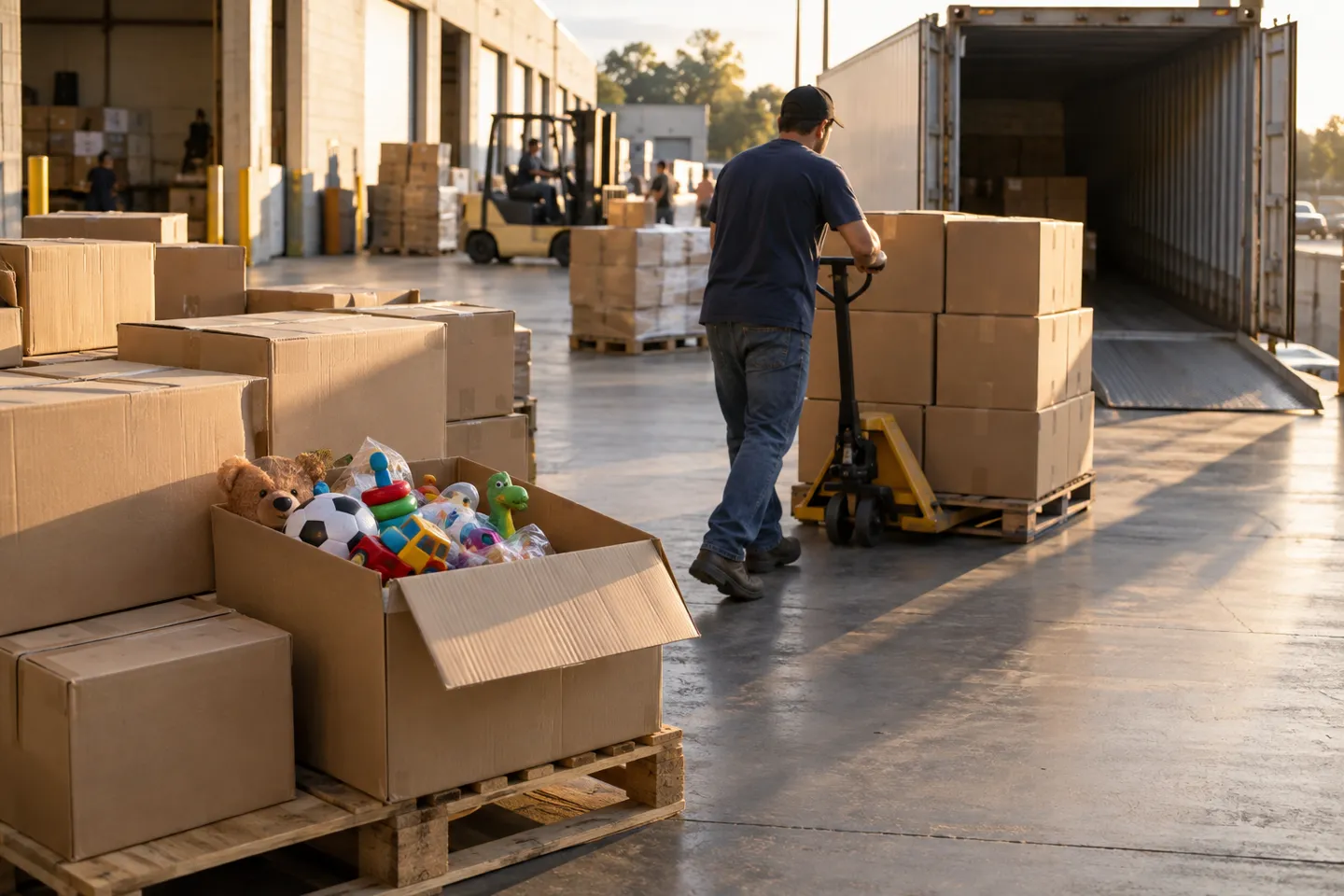
Work it in reverse. Your listing needs reviews and sales history before the season, which means inventory live in early Q4. Inventory live in early Q4 means production finished and checked by late summer, which means the purchase order placed in early-to-mid summer, and customs and Amazon’s inbound cutoffs, announced ahead of each holiday season, already on the calendar. Miss one link and your stock lands in January, the dead zone, where storage fees eat margins on goods nobody is buying until the next year.
So the Q4 decision is not made in Q4. It is made the moment you pick the product, which is exactly why the way sellers actually fail deserves a hard look first.
If your niche passes the four filters, the next check is the factory behind it — Startinal builds sensory and balance toys OEM/ODM and ships the compliance file with the first sample.
Ask Startinal About Your NicheHow Toy Sellers Fail—and the Checks That Prevent It
None of the common ways toy sellers fail is “picked the wrong toy.” All of them are checks that were skipped before money moved. Four account for most of the wreckage.
The first is the compliance takedown. A listing sells for months, then Amazon removes it for a product-safety documentation gap. Sellers describe reopening case after case with the account’s money frozen behind the ASIN (r/FulfillmentByAmazon, 2024). The check: obtain the full compliance file before the purchase order, not after the first warning. The file means the CPC with report numbers, and test scope matched to your destination market.
The second is the standard that cannot be negotiated. A seller shipping to the UK and EU found a listing flagged under EN71 and discovered there is no workaround inside Seller Central for a toy that misses the standard (r/AmazonFBA, 2026). The check: confirm in writing which standards your product was tested against, and for which markets, before you order. EN71 for Europe and CPC for the US are different file sets.

The third is approval purgatory and its silent cost. Sellers spend months in category-approval cycles, rejected over lab documents and image details (r/FulfillmentByAmazon, 2021). The testing and paperwork load alone filters out underprepared newcomers (LinkedIn, 2026). The check: treat certification as a line in unit economics, and choose suppliers who can hand over a complete file with the first sample.
The fourth hurts even sellers who did everything right: trust contagion. After safety incidents, parent communities openly warn each other off third-party toys on Amazon entirely (r/moderatelygranolamoms, 2026). One bad batch from one unknown factory taxes every seller in the category. The check: require batch traceability from your supplier, so one quality question can be answered with records instead of refunds.
Compliance takedown
Check the full CPC/test file before the PO
Standard failure
Match standards to market in writing (EN71 vs CPC)
Approval purgatory
Budget certification as COGS; supplier must supply the file with first sample
Trust contagion
Require batch traceability records from the factory
Every failure above traces to the same root: the factory behind the product was chosen on price and catalog, not on whether it could pass these checks. That makes the supplier decision the first real decision in this business, so it deserves its own standard.
Choosing the Factory Behind Your Product
A factory that can clear the compliance gate turns every risk in the last section into a checkbox. Five standards separate those from the rest, and each one comes with something specific to confirm.
Certificates you can verify, not slogans you can quote. “We have CE” means nothing; a test report with a number, a named laboratory, and your exact product model means everything. Confirm: ask for the report tied to the sample in your hand, and check the lab is accepted by the relevant authority.
Audit cooperation. A factory that welcomes a third-party inspection or a social audit like BSCI is showing you its records; one that resists is showing you something too. Confirm: ask whether the factory has passed a social-compliance audit, and whether it accepts your third-party inspection before shipment.
A clean intellectual-property boundary. Ask who owns the design and the mold. Some factories develop original products with patents and will not resell your customized version to someone else; others will sell your “exclusive” to the next buyer next quarter. Confirm: mold ownership in writing, and whether customized configurations are exclusivity-bound.
MOQ and light-customization flexibility. Stock items should carry no minimum order. Light customization (color, logo, packaging, accessories) carries a workable threshold, with pricing that floats with quantity. Confirm: the exact MOQ for customized units, and what changes at your target quantity.
A timeline structure you can hold. Sampling, stock shipping, and customized production are three different clocks. As a benchmark of what to demand: samples in 3–5 days, stock shipped within about a week, light-customized production in 15–25 days. Confirm each number before you commit; a factory that cannot state them will not hit them.
Factory Checklist: Standard × What to Confirm × Red Flag
| Standard | Confirm This | Red Flag |
|---|---|---|
| Certificates | Report number, lab name, exact model | “We have CE” with no per-model report |
| Audit cooperation | Social audit passed; third-party inspection accepted | Refuses inspections before shipment |
| IP boundary | Mold ownership and exclusivity in writing | Won’t state whether your custom version is sold to others |
| MOQ & customization | MOQ per configuration; price curve by quantity | One flat MOQ, no customization pricing |
| Timeline | Sample / stock / custom-production days stated | “It depends” without numbers |
One boundary matters here. If you want an exclusive, patented design rather than a customized stock item, you are buying a different relationship: mold development, longer timelines, and shared sales-forecast risk. Ask about mold ownership first; it changes everything downstream.
The Business, Reread
Put the whole picture back together and the business reads differently than the search results suggest.
The head of the best-seller list belongs to a few brands and license holders. A handful of companies own about a quarter of the slots, and every one of those gates is closed to you. The open gate is white-label, and inside it the winnable ground is exactly what the four filters describe: no IP, no electronics, light and small, wanted more than once. Sensory and balance toys sit on that ground, and the segment behind them is growing at roughly 8.5% a year whether or not any single product is on this week’s list.

What decides whether you survive there is not the niche. It is the sequence of checks: a compliance file that exists before the purchase order, a Q4 clock scheduled backwards from summer, and a factory that answers five standards with numbers instead of slogans.
So reverse the usual order. Most sellers pick a product, then discover the gate. The sellers who last qualify the gate first. They put the compliance file, the audit answer, the mold question, the MOQ and the three timelines in front of the factory before they talk price, and only then choose what to sell. The list told you where demand lives. The factory decides whether you are allowed to go get it.
Every factory claims it can do this. Startinal puts it in writing: we build our OEM/ODM process around exactly these five checks, from Pantone color card to approved sample to mass production, quoting custom color, logo, packaging and accessory options against your quantity, with light customization running 15–25 days. Compare any factory against the standards above with our sensory and therapy toy line as the test case, including us.
From Best-Seller List to Your Own Label
Send Startinal your niche, target market, and quantity — get back a sampling plan, CPC-ready documentation, and a quote.
Request a Sample and a QuoteReferences
- Actowiz Solutions. “Top-Selling Toys—Amazon’s 100 Best-Selling Picks.” 2025. actowizsolutions.com
- Mordor Intelligence. “Educational Toys Market Size, Share & 2031 Trends Report.” 2026. mordorintelligence.com
- Amazon Seller Central. “Children’s Toys—Compliance Requirements.” sellercentral.amazon.com
- Reddit, r/FulfillmentByAmazon. “Product Taken Down Due to Product Safety and Compliance.” 2024. reddit.com
- Reddit, r/AmazonFBA. “Amazon New Compliance Issue in UK—EU Marketplace.” 2026. reddit.com
- Reddit, r/FulfillmentByAmazon. “Trying to Sell in the Toys Category and I Sent Everything They Asked For.” 2021. reddit.com
- Reddit, r/moderatelygranolamoms. “This Is Your Reminder That Buying Toys from Third-Party Sellers on Amazon Is Not Safe.” 2026. reddit.com
- Wickham, Noah. “Should You Sell Toys on Amazon—High Compliance Costs and Risk.” LinkedIn, 2026. linkedin.com
- Full-Time FBA. “The Top Five Toys to Resell on Amazon Every Q4.” Podcast episode 161, 2022. fulltimefba.com