.png)
$900 buys a foam obstacle set, the kind that disappointed one home buyer. $124,005 buys a single themed play structure. Both are real prices for indoor playground equipment. The gap between them is not a mystery or a markup conspiracy. It is a five-layer cost structure, and most buying mistakes happen because a quote shows only the first layer.
This guide walks the structure from the outside in. First, what the price ranges actually mean. Then why one ball pit quotes at $3,000 and another at $30,000. Then which compliance tier your situation requires, how a factory quote becomes a landed cost, and where the margin really hides if you buy to resell.
What “Indoor Playground Equipment” Actually Covers — and the Price Anchor
First, a scope check, because this phrase gets stretched three ways. It can mean commercial venue equipment: multi-level play structures, ball pits, and trampoline zones for play cafes and family entertainment centers. It can mean home playroom gear: foam blocks, small climbers, a toddler corner. It also gets mixed into outdoor playground manufacturers’ catalogs, which price by a different logic (rotomolded plastic built for weather, not for a retail shelf). Opening a franchise, or budgeting the full launch of a play center (rent, fit-out, staffing), is a different calculation entirely. This guide prices the equipment itself.
With that scope set, here are the published 2026 anchors for equipment only:
Indoor Playground Equipment Cost by Venue Type (equipment only)
| Venue Type | Play Area Size | Equipment Cost (USD) | Read the number as |
|---|---|---|---|
| Soft play corner / play cafe zone | 300–800 sq ft | $8,000–$30,000 | entry point; modular, easy to ship |
| Mid-size play cafe | 800–1,500 sq ft | $30,000–$70,000 | plus ~30% to reach realistic total |
| Standalone indoor playground | 1,500–3,000 sq ft | $60,000–$150,000 | steel-frame territory |
| Large family entertainment center | 3,000+ sq ft | $150,000–$500,000+ | project management included |
Source: Koalaplayground 2026 price guide, 2026
Two more anchors are worth keeping in your pocket. On a per-area basis, indoor play centres generally run $250–500 per square metre (Dreamland Playground, 2026). Watch the unit: that figure is per square metre, and a source quoting per square foot is quoting a number 10.76× smaller. Venue operators also tie budget to capacity. Their rule of thumb: about $1,000 for every child you expect to play in the space per day (Soft Play, 2026). If you’re pricing a full US startup, rent and ramp-up included, benchmarks land around $10,000–70,000 with a median near $35,000 (AAA State of Play, 2023). That is a different bucket than equipment-only.
Whatever the tier, the same seven factors move the number: structure type, material spec, compliance grade, customization depth, origin, delivery, and the cost of running the equipment after opening. The rest of this guide takes them one at a time.
What Drives the Unit Price: Structure and Build Spec
Two quotes for “the same” playground can differ 2–3×, and almost none of that gap is negotiation room. It’s material spec and structure. Here is what each equipment family is actually pricing.
What each family’s quote is made of
Soft play foam
24–28 kg/m³foam density
0.45–0.55 mmPVC skin thickness
50–70 mmEPE foam core
Injection-molded
Food-grade PPbody material
Anti-slip baseadult load rated
15% less volumestackable, shipped
Steel-frame
48 mmtube diameter
1.5–3.25 mmwall thickness
Height + play eventsquote basis
Wear schedule
18–24 monthshigh-traffic wear points
10% per yearball-pit refill
Soft play: what a $900 foam set is really made of
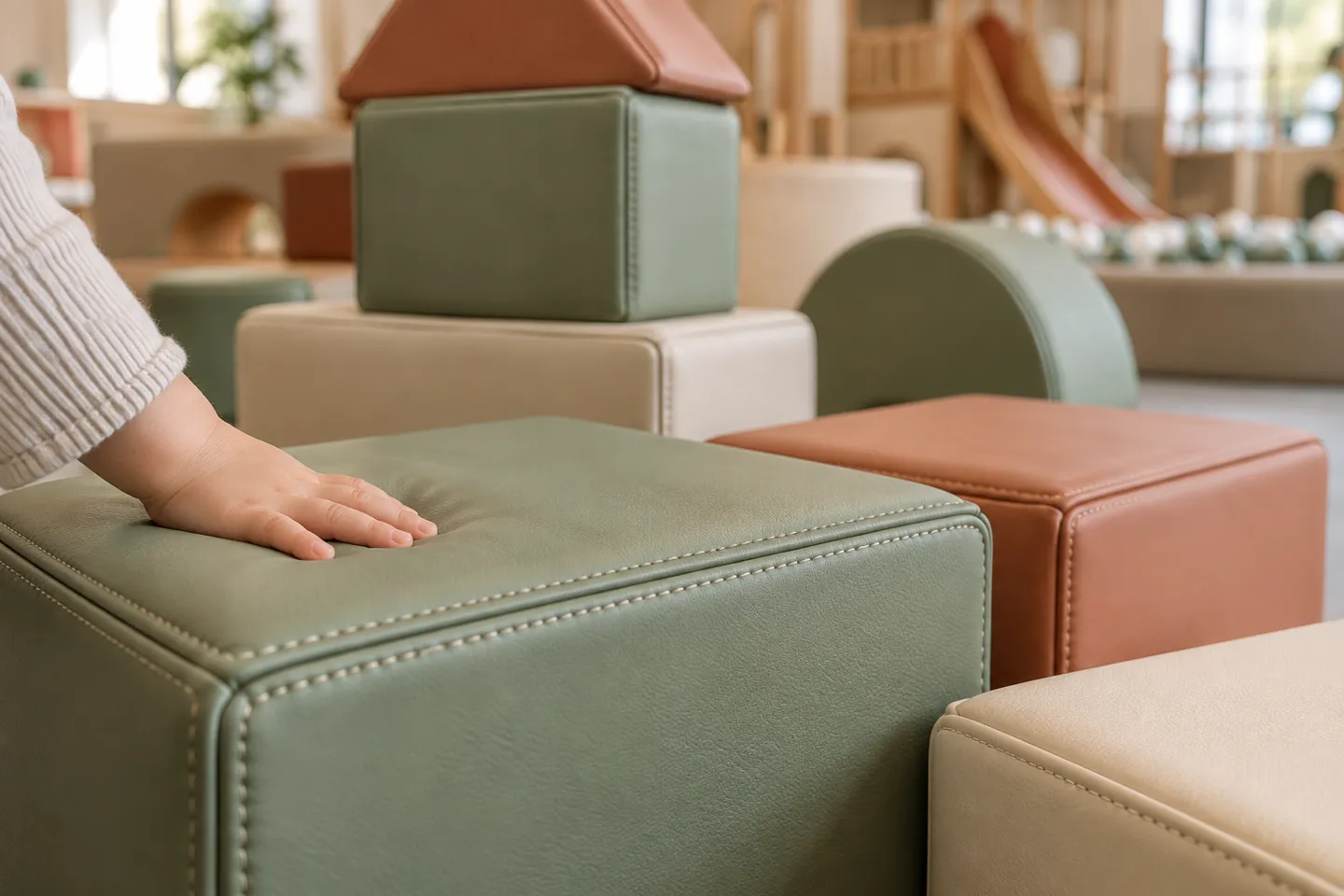
Soft play pieces look like cushions. They’re priced like engineered goods. Commercial-grade soft play is built from foam at roughly 24–28 kg/m³ density, wrapped in a PVC cover around 550 g/m² with double stitching (GetSoftPlay industry glossary, 2026). Manufacturer spec sheets cluster around a 0.45–0.55 mm PVC skin over 50–70 mm of high-density EPE foam (Lefunland commercial specs, 2026). Those numbers are the price. They also explain the $900 foam obstacle set that shocked a home buyer who expected “a few hundred dollars.” The density and skin thickness are what survive daily commercial use. Below spec, edges crush within a year. High-traffic zones (slide exits, entry decks, ball-pit surrounds) show wear in 18–24 months, and ball pits consume roughly 10% replacement balls per year (Koalaplayground, 2026).
Injection-molded pieces: wall thickness, molds, and freight math
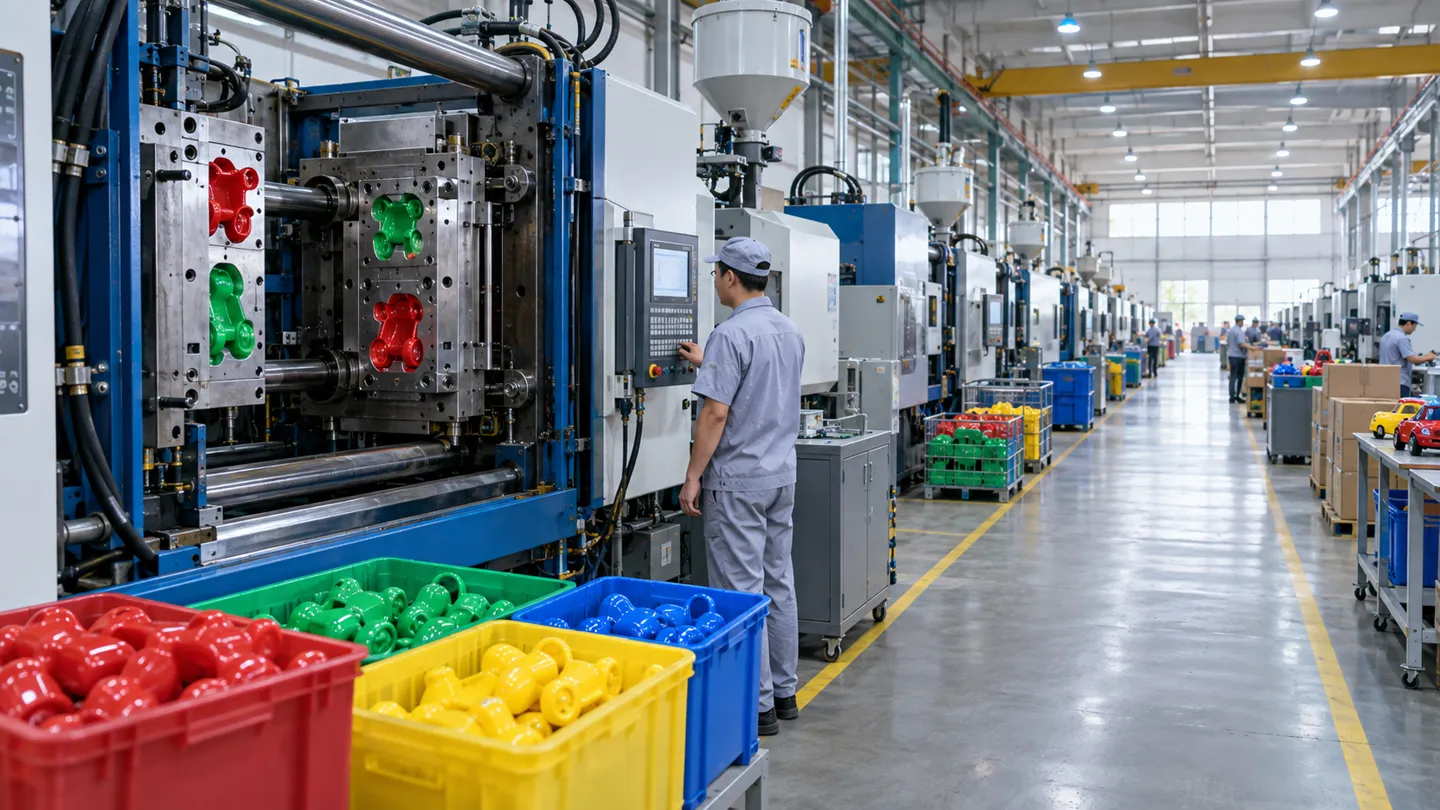
Balance stones, balance beams, stepping buckets, and similar single-piece equipment are injection-molded, usually food-grade polypropylene with an anti-slip base. Two cost drivers hide inside. The first is the mold. A steel tool is amortized across every unit, so a genuinely original shape carries mold cost that a copied catalog shape doesn’t. The second is the wall. Thicker walls cost more resin and more cycle time, but they keep a stepping stone from flexing when an adult steps on it to steady a child. Check the load rating, not just the color range. Packaging matters more than most buyers expect, because these pieces ship by volume. Stackable geometry can cut shipped volume by roughly 15%. On low-unit-value, high-volume goods, freight efficiency moves the landed unit cost more than a factory discount does.
Steel-frame structures: what height and play events do to your quote
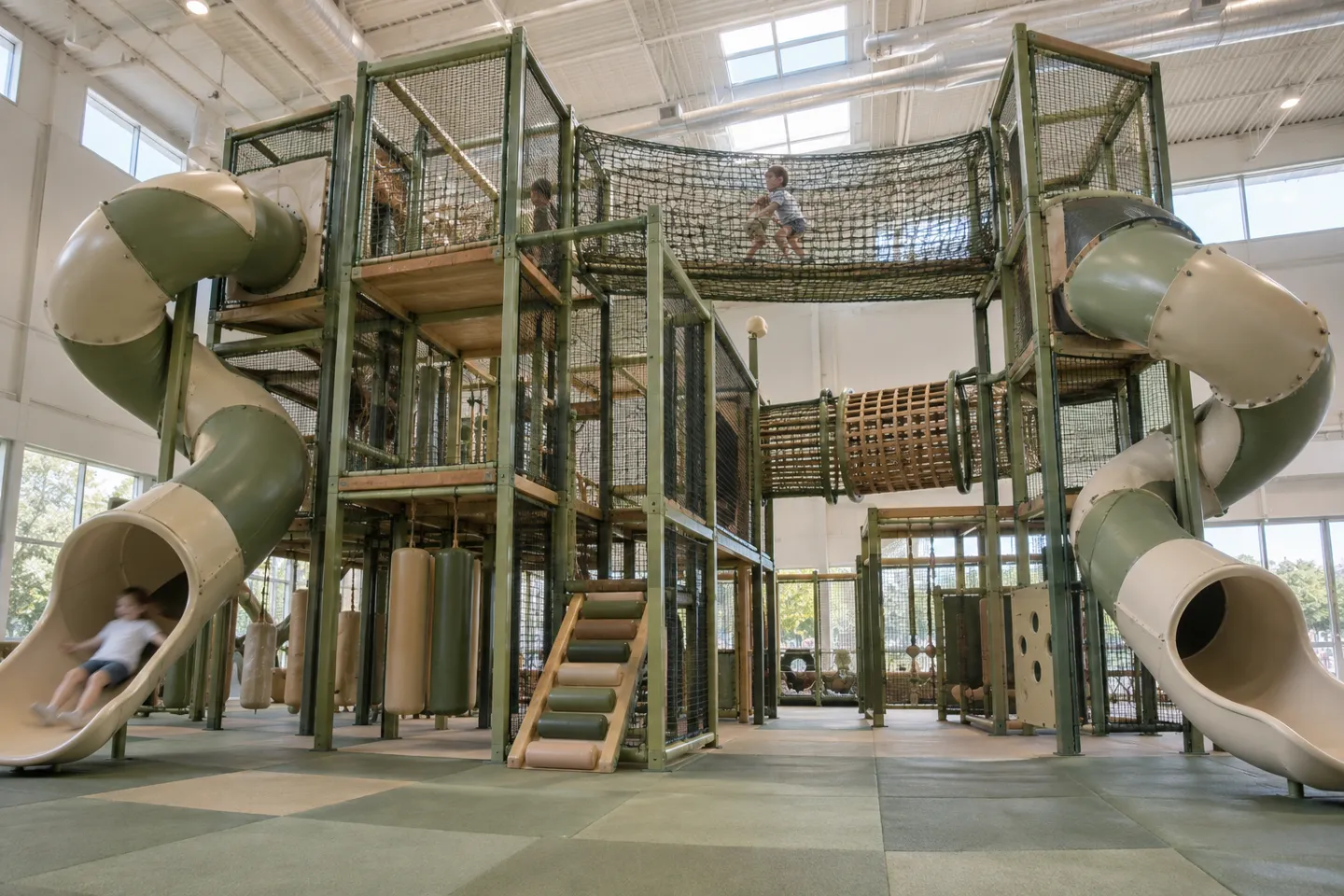
Multi-level commercial structures quote on a different system entirely. Structural steel tube commonly runs 48 mm in diameter with 1.5–3.25 mm wall thickness in commercial builds (Hanlin Playground equipment checklist, 2025). Platforms price by height against your ceiling. The quote scales with the count of “play events”: slides, bridges, interactive panels. Fully themed environments (custom characters, 3D elements) sit on top as destination-level fabrication. One-line map completion: rotomolded (LLDPE) pieces, the classic outdoor-slide material, price by plastic weight and weather-grade tooling. They only touch an indoor budget at the margins, so this guide leaves them there.
Before comparing any two quotes across these families, run the matrix:
Equipment Type × Best Fit × The Check That Saves You
| Equipment Type | Best Fit | Check Before You Buy (the boundary) |
|---|---|---|
| Soft play modules | Toddler zones, play cafes, daycare corners | Demand foam density (≥24 kg/m³) and PVC skin thickness (≥0.45 mm) on the BOM — below spec, edges crush within a year |
| Injection-molded independents (stones, beams, buckets) | Retail multi-packs, home corners, preschool PE | Confirm food-grade PP grade, anti-slip base material, and load rating for adult weight |
| Steel-frame multi-level structures | FECs, mall centers, 3,000+ sq ft venues | Get pipe diameter and wall thickness (48 mm / 1.5–3.25 mm typical), platform heights vs your ceiling, and play-event count itemized |
| Indoor trampolines | FECs, sensory rooms | Verify padding thickness, certification scope, and weight limits per jumping surface |
| Role-play / themed sets | Premium venues, photo-driven marketing | Ask which parts are catalog pieces vs custom fabrication — custom carries mold and theme surcharges |
Source: compiled from manufacturer published specifications, 2025–2026
The pattern across all four families: the checkable spec is always written down somewhere. The cheap quote is usually the one that leaves it off.
Consumer, Commercial, or Institutional Grade: The First Real Fork
Structure decides what you pay. Compliance grade decides whether you’re allowed to open. Get this fork right before you compare a single price, because the tiers aren’t upgrades of each other. They’re different products with different paperwork.
Compliance Tiers: Self-Check Which One Applies to You
| Tier | Typical Setting | Must-Have Compliance | If You Buy the Wrong Tier |
|---|---|---|---|
| Consumer / toy grade | Home playrooms, family gifting | Toy standards per market: CPC (US), ASTM F963, EN71 (EU) | Commercial or public use can void insurance and fail inspection — the equipment itself may need to be replaced |
| Commercial grade | Daycares, churches, play cafes — anything open to the public | Commercial standards: ASTM F1918 (US indoor soft contained play), EN 1176 (EU), CE; fire-retardant materials | A cheap uncertified set is not a discount, it’s a repurchase: $20,000 uncertified and $35,000 certified are not comparable quotes |
| Institutional / bid level | Schools, government projects, chains | Certificates plus audit documentation and conformity files per tender | Missing paperwork disqualifies the bid regardless of price competitiveness |
Source: Standards scope per Koalaplayground guide and Lefunland spec notes, 2026
The self-check is one question: who is liable when the space is in use? Home use with adult supervision sits at toy grade. Anything open to the public, even a church basement or a daycare corner, needs commercial certification. That’s what your insurer and your local inspector will ask to see. Institutional buyers add a paperwork layer: audit reports and conformity files travel with the goods.
Origin bends the same curve. Reputable Chinese manufacturing prices at a baseline. Comparable US-built equipment runs roughly 3–4× that, European-built roughly 4–5× (Koalaplayground, 2026). The differentiator inside any origin is the factory’s certification and QC discipline. That’s why the certified-equipment premium is becoming an entry ticket rather than an upsell, and why 2026 buying guidance increasingly weights durability and compliance over initial price (Dreamland Playground, 2026).
From Quote to Landed Cost: The Hidden Math Most Buyers Miss
A factory quote answers what the equipment costs at their gate. It does not answer what it costs at yours. The distance between those two numbers is where budgets break.
Read the quote like an auditor
A quotable quote has four documents attached. First, a BOM: the bill of materials with the specs from earlier in this guide itemized, foam density, PVC thickness, steel grade and wall, plastic grade. Without it, you received a price, not a quote, and you can’t compare it to anything. Second, certificates: which standards, which testing body, copies you can verify. Third, the packing list: volume in CBM and how the design stacks. Freight is priced by volume, so packing efficiency is a cost line. Fourth, the trade term. EXW, FOB, CIF, and DDP put the same shipment at four different prices because they split responsibility for freight, insurance, and clearance differently. As a benchmark of scale, China B2B marketplaces list wholesale soft play sets around US$1,200 per square metre with MOQs from 1 square metre (Made-in-China listing, 2026). Treat that as a unit sanity-check, not a final price.
The landed-cost chain
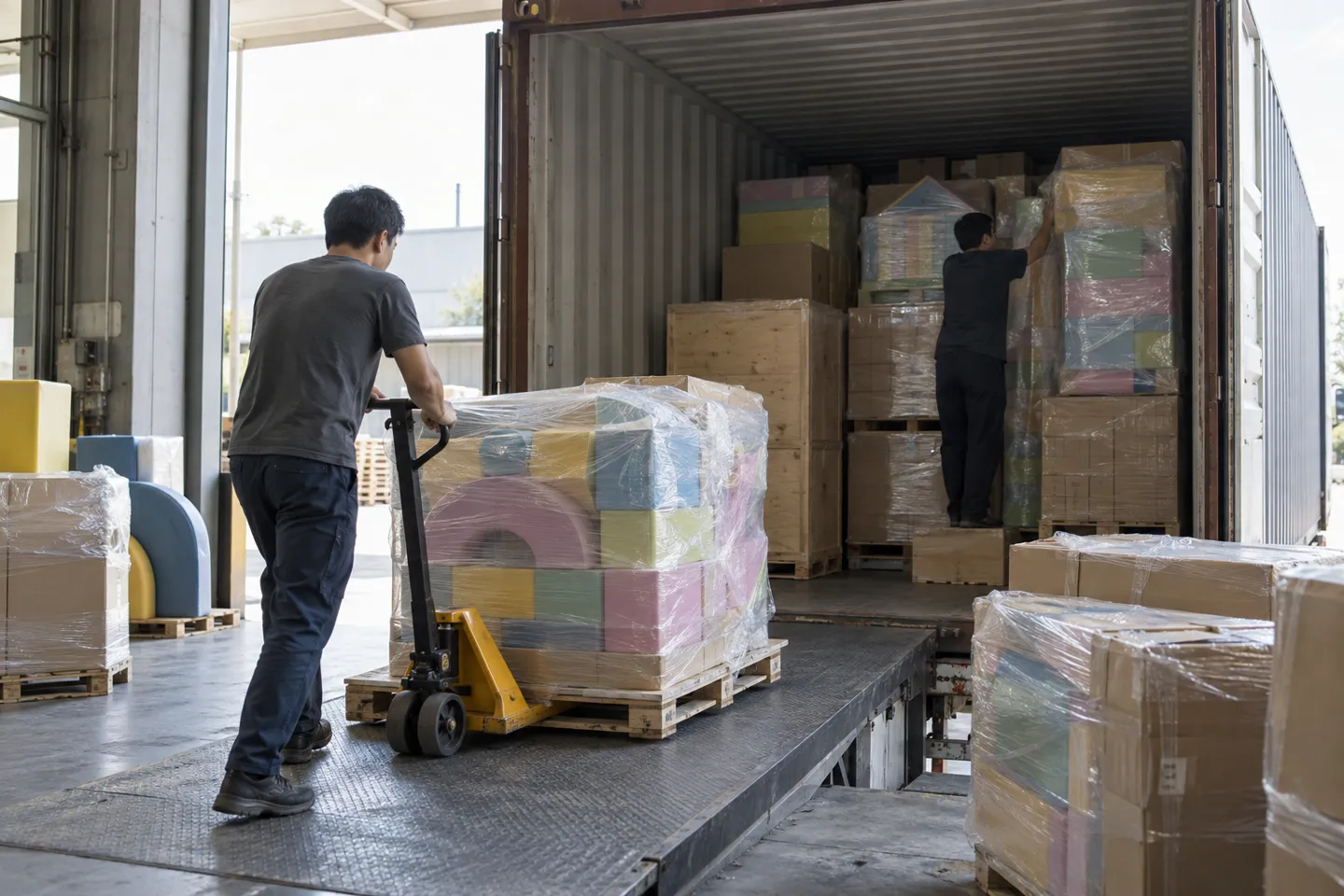
Add the layers in order. Start with the equipment quote (EXW or FOB). Ocean freight, duties, and clearance add roughly 15–20% of equipment value. Installation comes next. The supplier’s daily rate never covers flights, accommodation, and on-site equipment rental, so budget $5,000–15,000 beyond the labor quote for a mid-size build. Site preparation is the wildcard: flooring level, lighting, sprinkler heads, $2,000–8,000 (all per Koalaplayground hidden-costs analysis, 2026).
Equipment quote
EXW / FOB
Freight, duties + clearance
+15–20%
Installation
+ $5K–15K
Site preparation
+ $2K–8K
+30%
landed cost
A quote is not your cost. From the factory gate to opening day, plan for roughly 30% more than the equipment number — before rent, staffing, and marketing.
Channel structure bends this chain too. The “middlemen’s upcharge” buyers complain about is a real line item. But what it removes (local inventory, installation crews, warranty response) has to come from somewhere, usually from you. Know which layer you’re buying from before you celebrate a low number.
Holding costs: the line that keeps billing after opening
Two published rules for annual maintenance disagree openly. One says 8–12% of equipment value per year (Koalaplayground, 2026). The other says 1–5% of annual revenue (Dreamland Playground, 2026). The bases differ, and that’s the tell. Budget by equipment value when your venue is equipment-heavy and small. Use the revenue basis when turnover is large relative to assets. Either way, the wear schedule behind the percentage is checkable. Ask the supplier which parts wear at the 18–24 month mark and what a ball-pit refill costs, then compare those numbers across quotes. A cheap quote that skips certification doesn’t just risk inspection failure. It pushes liability onto insurance you can’t claim against, which is the single most expensive line item in this entire guide.
Channels, Used Equipment, and Cost of Ownership
Where you buy changes the same equipment’s price in three moves. Factory-direct minimizes the markup but hands you freight claims, spare-parts logistics, and certificate paperwork. Distributors and trading companies price in the middle for stock availability and consolidated multi-item shipments. Local installers price highest but carry the install risk and the service call. None of these is a scam. Each is a different split of who handles what. The upcharge buys response time, and buying direct means the response time is yours to manage.
Used equipment deserves its own boundary check. Real deals exist. A church-sold soft play set was listed at $10,000 against a $40,000–70,000 new-equivalent, and smaller used lots trade for a few thousand dollars (aggregate buyer reports, 2026). But the discount exists partly because certification files rarely survive a second owner. Without them, the set is priced for a home, not for any space open to the public. Make certification review a step before price negotiation on any used lot, not after.
One boundary this guide won’t pretend to cross: equipment selection cannot fix an operating model. Operators who’ve opened report that the killer isn’t the equipment bill. It’s revenue structure, like over-reliance on birthday parties through a seasonal trough (r/Entrepreneurs, 2026). Buy the right equipment for the business you’ve actually planned.
Reading Costs Like a Distributor
Put the five layers back together: structure, certification, origin and customization, delivery, holding cost. One conclusion falls out that the SERP’s price tables never state. When two quotes for “the same” playground differ by 2–3×, the difference is almost never negotiation. It’s one of these layers being silently absent from the cheaper number. So the real margin formula for anyone buying to resell or to operate is retail price − (landed cost + aftercare reserve), not retail minus the EXW quote. Comparing EXW quotes across suppliers systematically overestimates your margin.
The working tool is a three-document standard for every supplier: a BOM with specs itemized, verifiable certificates, and a packing list. Any supplier unwilling to provide all three is pricing something they’d rather you not compare.
On inventory, the same logic gives you a defensible position. Commodities, meaning the unbranded and uncertified middle of the market, get price-matched by every buyer with a search bar, so their margin only shrinks. The items that hold margin are the ones where cost structure works for you. Full certification survives inspection and insurance review. Original patented designs can’t be copied without legal exposure. Packing-efficient geometry lowers every unit’s landed cost. Reserve aftercare for the 18–24 month wear points up front, and those are also the products that generate the fewest ugly surprises.
That checklist is how we build our own catalog. Startinal ships its soft play and indoor line with CE, CPC, and CCPSA test certificates you can verify before paying a deposit. Our balance-stone and balance-beam series are original patented designs, with 60+ global patents and stackable geometry that cuts shipped volume by roughly 15%. Ask for our BOM template alongside any quote. We’ll fill it in line by line so the comparison is honest on both sides.
Put that standard to work: ask for the Startinal three-document quote and hold it against any number on your desk.
Request the three-document quoteOne honest boundary: the three-high items carry higher unit cost and slower turns. If cash is tight and the market is unproven, validate with standard stock first and migrate toward them as data comes in.
When you’re ready to pressure-test a real quote, Startinal turns around stocked orders in 1–7 days and samples in 3–5 — bring the floor plan, we’ll bring the BOM.
Distributor pricing you can verify
CE, CPC and CCPSA certificates, a line-by-line BOM, and packing details travel with every Startinal quotation.
Start a quote requestReferences
- Facebook Buyer Answers. “Commercial Indoor Playground Equipment Costs.” 2026. facebook.com
- Reddit, r/NoStupidQuestions. “Is It Normal for Indoor Playground Equipment to Be This Expensive?” 2025. reddit.com
- Reddit, r/Entrepreneurs. “Thinking About Opening an Indoor Playground. What Am I Not Seeing?” 2026. reddit.com