.png)
What Counts as an Indoor Playground? One Idea, Three Scales
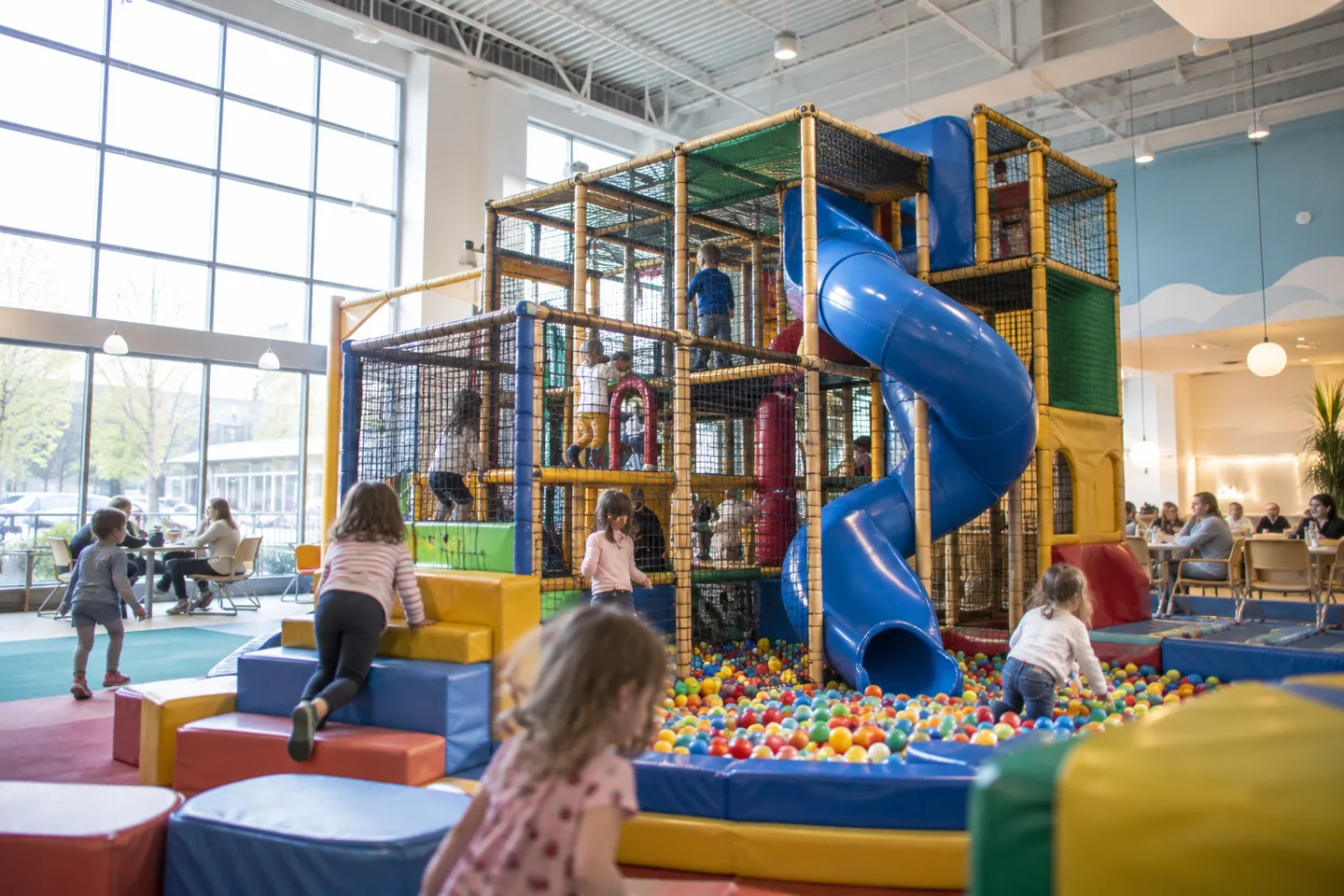
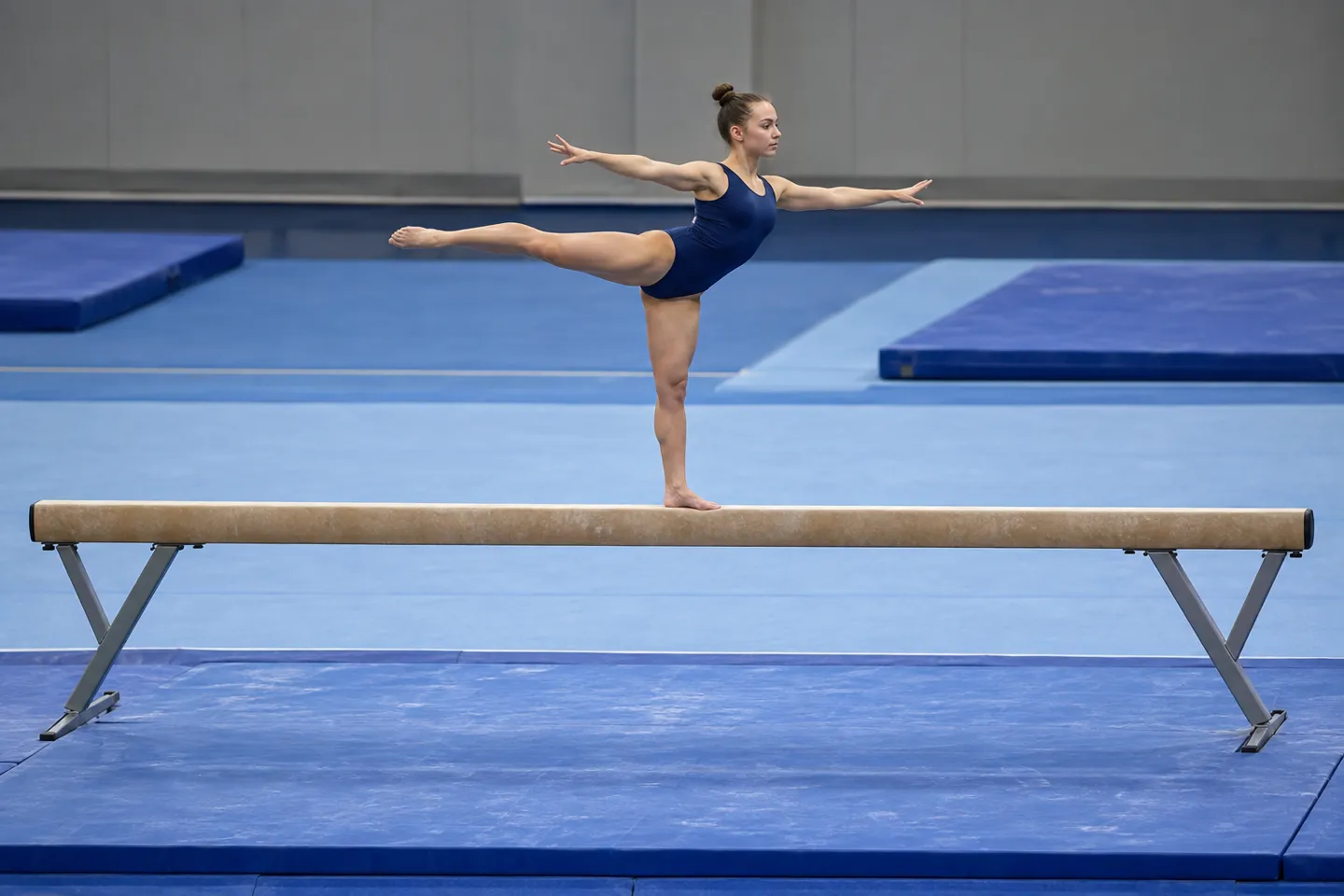
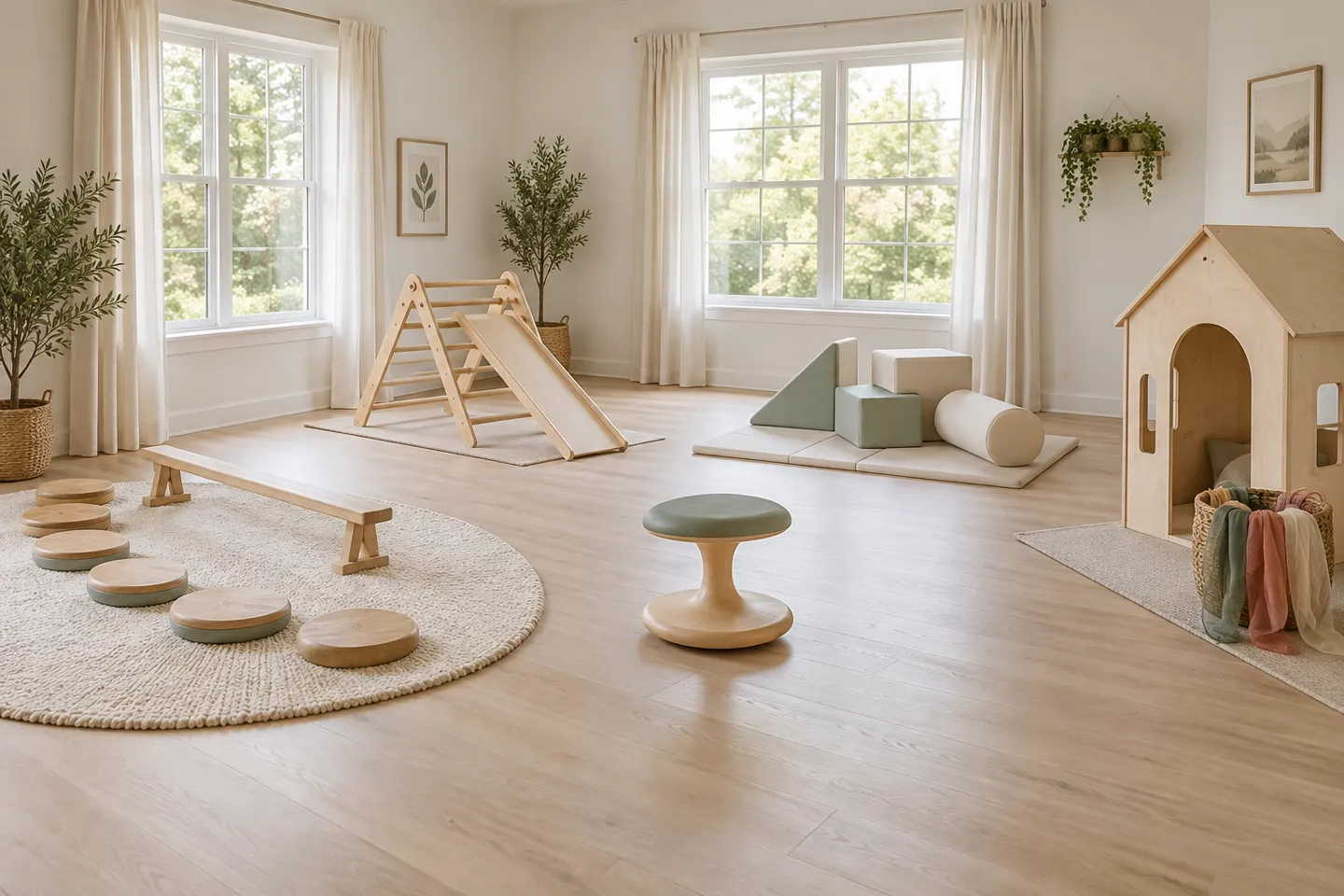
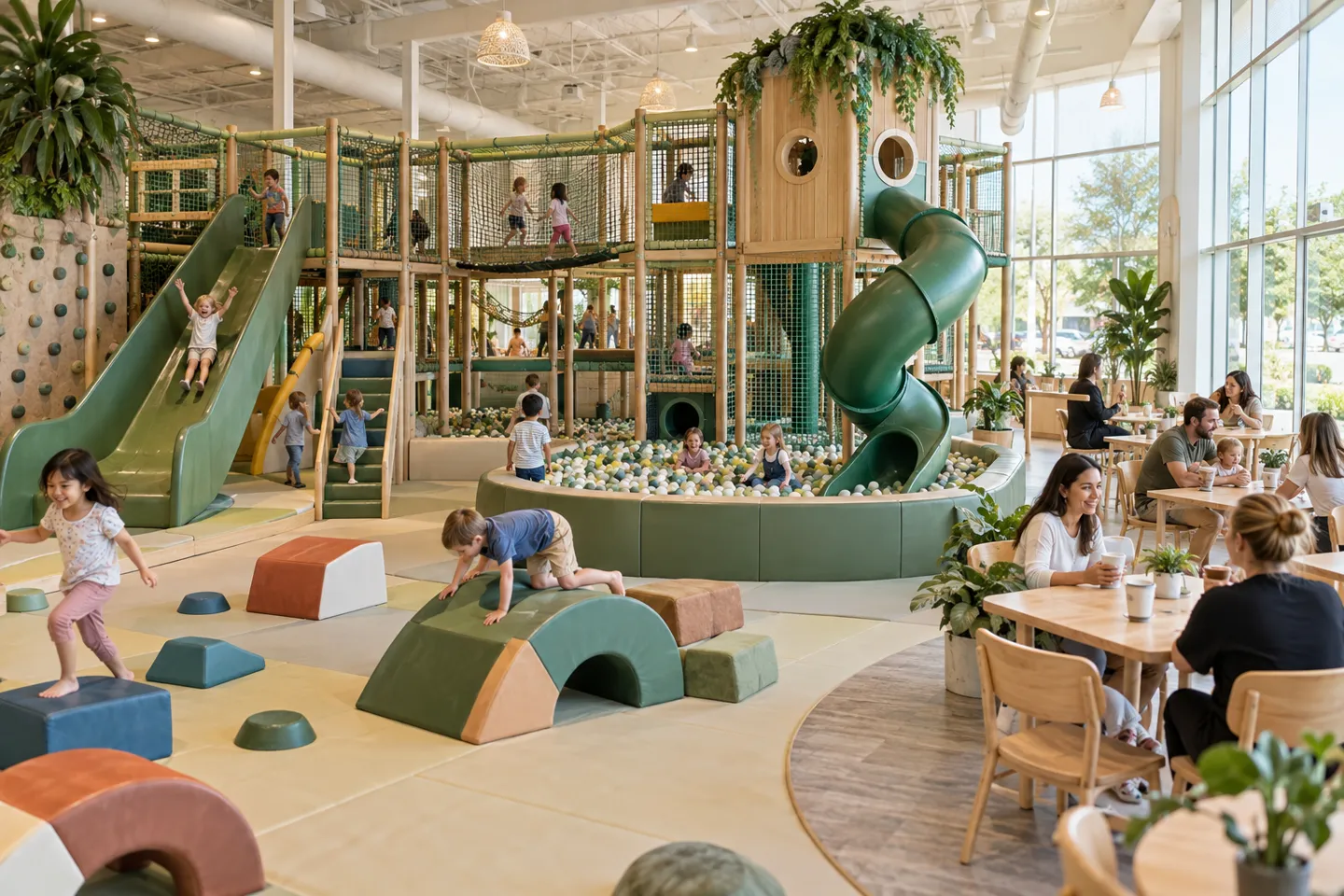
A mall-sized play center with a multi-level climbing structure, a foam block set in a living-room corner, the toddler room at a daycare with stepping stones lined up across the rug: all three are indoor playgrounds, and the right ideas for each have almost nothing in common.
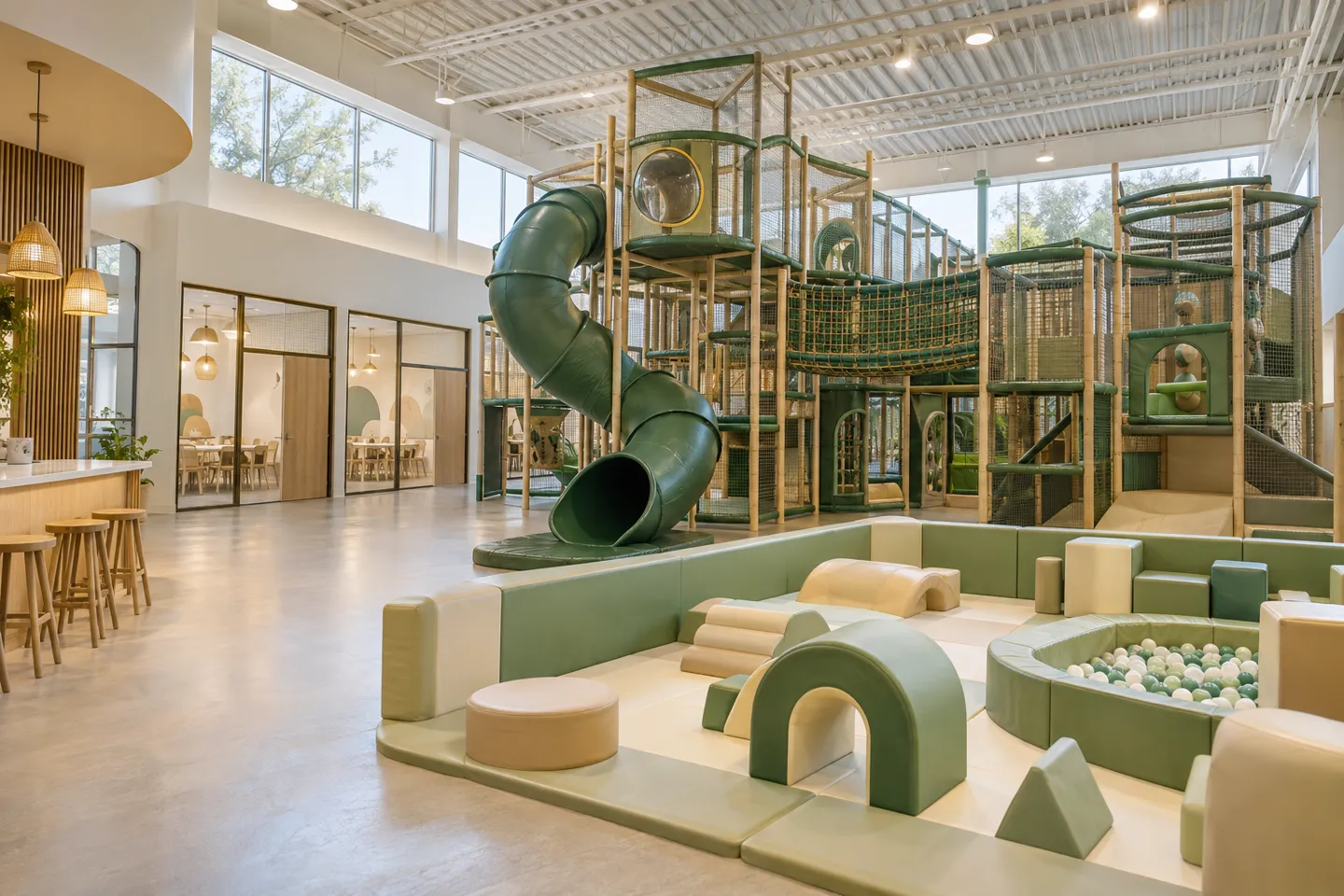
All three are the same idea at different scales. Any space that moves play indoors, on purpose, counts: a corner of the living room, a classroom learning zone, or a commercial play space that sells admission and birthday parties. The scale changes the budget and the rules, but it does not change the underlying logic.
That logic has three parts. First, zoning: deciding what play happens where, so a quiet corner and a wild corner do not fight each other. Second, safety: cushioning what falls, covering what bumps, and matching the setup to the age of the children using it. Third, equipment: the pieces that actually carry the play, from balance beams to crawl tunnels.
Style matters less than those three. A castle theme or a muted Montessori palette can make a space feel finished, and theme definitely helps a commercial venue market itself. But no theme fixes a slippery floor or a climbing piece rated for one child at a time being used by five.
This article walks the full ladder. It starts with the play families every indoor playground draws from. Then it follows two readers with bigger plans: a teacher equipping a classroom, and an operator weighing which equipment actually earns money. The same piece of equipment shows up at every level. What changes is what you should demand from it.
The Idea Catalog: Play Equipment Families and Where Each Fits
Every indoor playground idea, from a rainy-day living room setup to a paid play floor, is a mix and match of a small number of play families. Once you can name the families, you can plan a space instead of buying toys at random. Five of them cover most setups.
Balance and stepping pieces (river stones, balance beams, balance buckets) build the coordination children need before almost anything else. They suit children from about age two upward, they are light enough to rearrange in seconds, and they are the most forgiving family to start with at home. Climbing and sliding pieces (small climbers, slides, crawl tunnels) are the energy burners. Children love them from toddlerhood through early school age, but they demand more floor space and more supervision. Sensory and vestibular pieces (spinning chairs, tactile discs, wobble boards) feed the calmer side of development. Occupational therapists use them deliberately, and a home corner benefits from one quiet-motion piece. Soft play and crawl pieces (foam blocks, padded mats, soft obstacles) are the toddler zone. If your youngest is under three, this family is the floor itself, not an accessory. Creative and role-play pieces (blocks, dress-up, playhouses) round out the mix with slower, imaginative play, which is what lets the high-energy zones breathe.
One table is worth more than paragraphs here. Keep it handy while you measure your space. Read every row against your age mix, because infants and toddlers (0-3), preschoolers (2-6), and school-age children (5-12) take very different things from the same piece.
Play Equipment Families at a Glance
| Play family | Best ages | Home fit | Classroom / childcare fit | Safety must-check |
|---|---|---|---|---|
| Balance & stepping (stones, beams, buckets) | 2+ | Excellent: light, rearrangeable, store flat | Core piece for coordination circuits; check batch test reports | Non-slip bases; falls are low but frequent |
| Climbing & sliding (climbers, slides, tunnels) | 2–8 | Good if you can give it floor clearance and sight lines | Anchor and inspect weekly; capacity limits matter | Landing zones; one-child-at-a-time rules |
| Sensory & vestibular (spin chairs, tactile discs) | 1–8 | One quiet-motion piece per corner | Standard equipment for sensory-integration time | Stable bases; supervise spinning speed |
| Soft play & crawl (foam blocks, padded mats) | 0–4 | The toddler zone itself; doubles as crash padding | Daily sanitation drives material choice | Foam density and seam quality; washable covers |
| Creative & role-play (blocks, dress-up, playhouses) | 2+ | Fits any leftover corner | Calm-corner anchor between active blocks | Small parts vs. youngest age in the room |
A note on DIY versus bought pieces, because the internet is full of cardboard-tunnel tutorials. DIY works when the piece is low, slow, and soft: a cushion obstacle line, a masking-tape balance line, a blanket fort. Buy the pieces that lift a child off the ground, spin, or take repeated weight: balance beams, climbers, spinning seats. The failure pattern with DIY is not the first afternoon, it is the hundredth use.
That is also where the home-grade ceiling appears. Home play equipment is engineered around a handful of children using it a few hours a week, with an adult nearby. Put the same piece into a daycare, and twelve children cycle through it every day. The material, the joints, and the non-slip bases are all asked to do a job they were not built for. Before you buy anything that will serve a group, check two things with your own hands. The bottom should grip a hard floor, and there should be real cushioning anywhere a fall could end.
Classroom & Childcare Setups: From Lesson Plan to Equipment List
A classroom or childcare play zone is where indoor playground ideas meet a curriculum, a mixed-age group, and a procurement rulebook. The setup works best as four steps in order: zone the room, match equipment to the lesson goals, plan for daily cleaning, and then, only then, check the compliance paperwork.
Zone the room
Match gear to the lesson
Plan daily cleaning
Check compliance files
Step 1: Zone the room before you buy anything
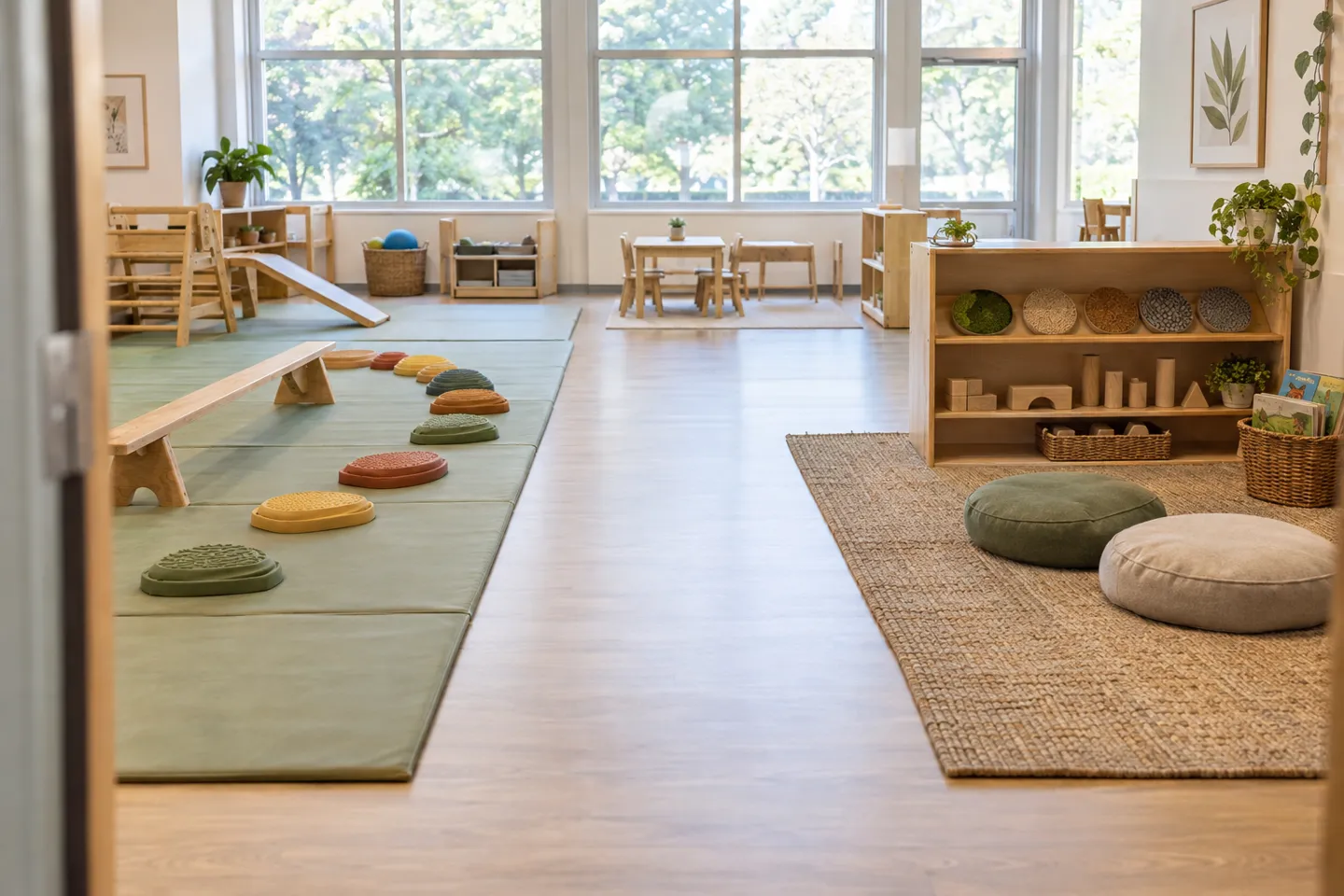
Draw the room and split it into a loud zone and a quiet zone first. Gross-motor work (stepping stones, climbers, tumbling) belongs on one side, and sensory and creative work (tactile discs, blocks, puzzles) on the other. A child mid-balance-beam and a child mid-puzzle need opposite noise levels. For mixed 2–6 groups, keep the pieces that rise above knee height away from the toddler path. Or schedule the zones so both age groups never share the same piece at the same time. Leave the center as open floor; it is your traffic lane, your circle-time spot, and your fall buffer all at once.
Step 2: Match equipment to the course, not the catalog
A sensory-integration and gross-motor program for ages 2–6 needs surprisingly few families. Stepping stones and balance beams cover coordination circuits. Tactile discs and paths cover texture work. One spinning seat supplies vestibular input, and soft obstacles build confidence. Those five cover a full week of lesson plans. Rotate rather than accumulate: two or three pieces out per session keeps novelty high, wear spread evenly, and the floor navigable. A piece in storage lasts years; the same piece in daily circulation has a real service life.
Step 3: Plan cleaning as part of the layout
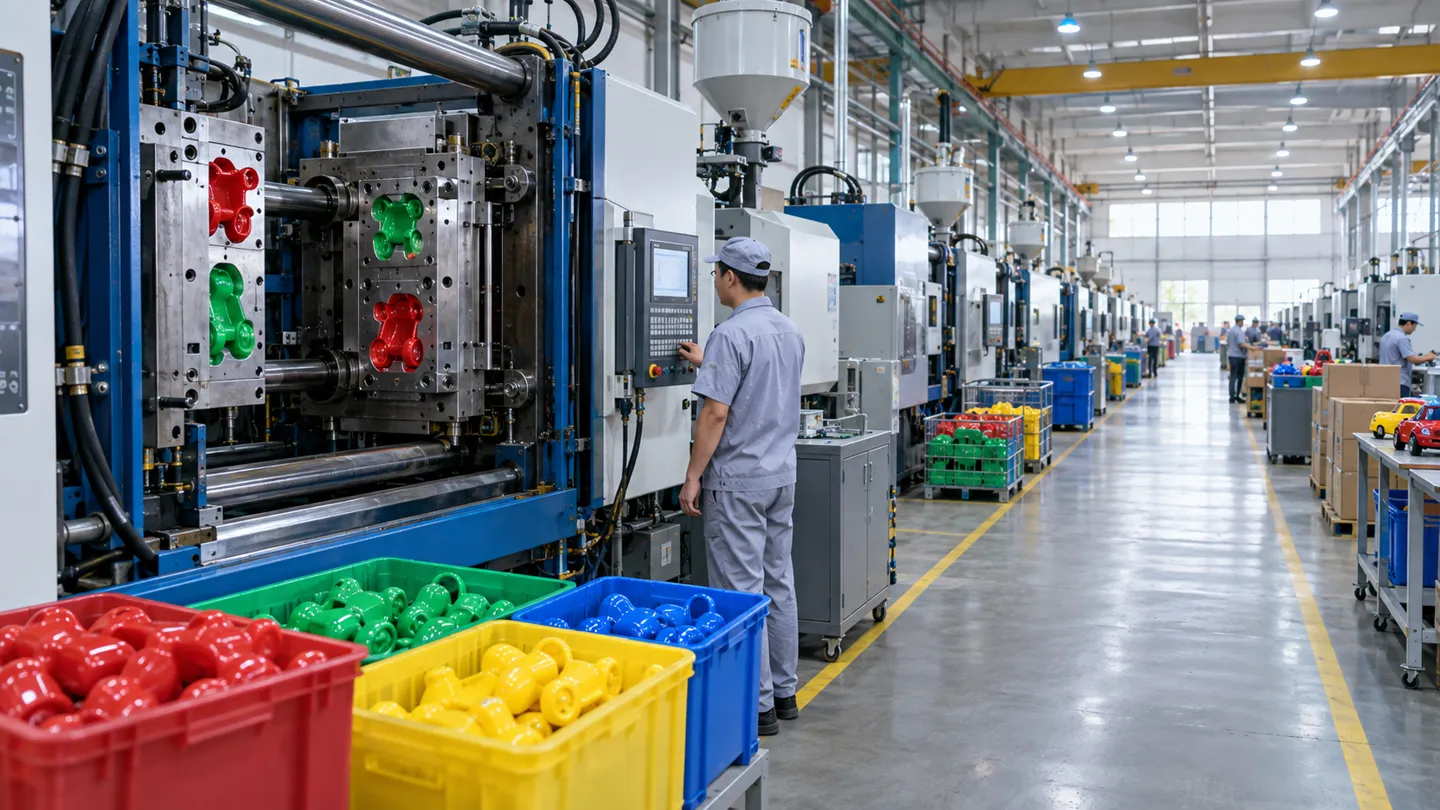
Institutional use means disinfecting wipes on every surface, every day. That routine decides material more than any brochure does. Injection-molded plastic with a smooth, non-porous surface and sealed seams survives daily sanitizing. Fabric-covered foam needs removable, washable covers, or it becomes a hygiene problem by mid-year. When you compare quotes, ask specifically what each piece’s surface tolerates: chlorine-free wipes, diluted disinfectant, daily scrubbing. Put the answer into your decision, because a cheaper piece that cannot be cleaned daily is not cheaper.
Step 4: Check the compliance file before you sign
This is the step that separates “looks like a teaching aid” from “legal to use with other people’s children.” For the US market, toys and children’s products require a Children’s Product Certificate. The toy safety standard behind it is ASTM F963. In the EU, every toy must carry CE marking under the Toy Safety Directive, with the EN 71 series as the test backbone. The document names matter at step 4, and the details behind them are unpacked in the next section, because commercial buyers and institutions ask for the same file chain. One habit is worth adopting now.
Before you sign
Ask for the test report of the exact production batch — not a certificate image from a sales page — and file it with the purchase order.
Commercial Indoor Play Spaces: Let Revenue Lines Drive the Floor Plan
Open a play space for business and the planning question flips. A classroom asks “what does the lesson need?” A commercial floor asks “what does each revenue line need?” Operators who skip that question buy equipment like a family does, one appealing piece at a time, and the floor plan ends up serving nobody in particular.
Four revenue lines, four different loads
A small indoor play business usually lives on four lines, and they load equipment very differently. Open play (walk-in sessions, typically around $10–14 per child in US venues) runs at steady, all-day volume on weekdays. Birthday parties compress a whole week’s traffic into two hours, and the party zone takes the full intensity. Forum-reported packages commonly run $425–700 per event, and high-end venues charge well over a thousand. Courses and after-school programs bring the same children back daily, which is the gentlest load but the strictest compliance path. Food and beverage adds margin per visit but demands separation from the play floor. The numbers above come from operators and parents discussing real venues on Reddit’s r/workingmoms, not from a market report, and they are useful precisely because they are raw.
| Revenue line | Traffic pattern | Equipment load | Zone priority |
|---|---|---|---|
| Open play | Steady weekday volume | Medium, continuous | Large, forgiving floor |
| Birthday parties | Concentrated weekend spikes | Highest per-hour intensity | Dedicated room or hard-separated zone |
| Courses / after-school | Same children, daily repeat | Medium, compliance-heavy | Calm edge of the floor |
| Food & beverage | All-day trickle | None directly | Buffer between play and seating |
What “commercial grade” actually means on a quote
Commercial grade is not a price tier, it is a list of checkable properties. Structure: one-piece molded bodies or welded frames, no snap-together joints that loosen under public use. Materials: high-density foam with stitched, replaceable covers, not vacuum-formed shell padding; surfaces that tolerate daily disinfection. Load rating: stated for public, unsupervised-adjacent use, not “for home use with adult supervision.” Paperwork: for the US market, a Children’s Product Certificate. It must be based on testing at a CPSC-accepted laboratory, with ASTM F963-23 as the mandatory toy standard since April 20, 2024 (US CPSC, 2026; Federal Register, 2024). For the EU, CE marking under the Toy Safety Directive is the entry ticket (European Commission, 2025). Ask for those documents in writing, for the batch you are buying, before the deposit.
Send Startinal your zone list and target opening date, and every quote comes back with the load ratings, foam specs, and certification files named above.
Request an Equipment QuoteMixed ages need separate floors, not polite signs
Ask parents what ruins a play visit and the answer is rarely the equipment. It is bigger children flatting smaller ones; one Reddit parent’s phrase, “big kids trampling littles,” appears in some form in nearly every long thread about play spaces. The fix is physical: separate zones (or separate rooms) for under-4s and school-age kids, each with its own equipment scaled to its group. Give adults a sight line to both zones from the seating area, because parents buy the coffee only when they can watch the children. Then count the cost of the floor over time, not at purchase. Zones that take concentrated party traffic need equipment whose wear you can budget for. A layout that lets one zone run while another is down for repairs is worth more than two extra climbers.
Before You Buy: How Indoor Play Setups Fail
The failure stories are unusually consistent, which makes them useful. Five patterns cover most of what goes wrong, and every one of them was described by an operator, a lender, or a parent who watched it happen.
1. Equipment wear runs the budget. A CPA who analyzed a local play cafe on Reddit found the owners had already replaced several pieces because of wear, inside the first years of operation. 2. Insurance is a second rent. An insurance agent in the same thread put it plainly: premiums for child-focused venues can be “crippling for new owners.” 3. One revenue line carries everything. A commercial loan officer who funded two of these startups watched both fail on a membership-only model in a lower-cost region. 4. Mixed ages share one floor. The trampling complaint drives families away faster than any broken piece. 5. Seasonality goes unplanned. An operator in Utah, where these venues are everywhere, watched facilities “pop up for a year or two and then disappear.” Insurance, upkeep, sickness, and slow seasons did the wearing.
And then there is the paradox worth memorizing. A New England play cafe built a devoted following, was busy nonstop, and still shut down because it never turned a profit.
Packed every day. Closed anyway.
Attendance was never the problem. Full rooms don’t fix equipment wear, monthly premiums, or a one-line revenue model.
Five failure patterns, all first-hand reported: uncontrolled equipment wear, insurance as second rent, single revenue line, mixed-age floors, unplanned seasonality. Every one is cheaper to fix at floor-plan stage than at month six.
Use the matrix below as a pre-purchase check. It is deliberately built from verifiable actions, not advice to “buy quality.”
Boundary Matrix: Where Each Equipment Grade Stops Working
| Equipment family | Home boundary | Classroom boundary | Commercial boundary | Action before you sign |
|---|---|---|---|---|
| Balance & stepping | Fine for daily family use; store indoors away from UV | Needs batch test reports for institutional purchase | Wear concentrates on anti-slip bases; budget replacement cycles | Ask supplier for written anti-slip spec and replace-cycle guidance |
| Climbing & sliding | Requires floor clearance and adult sight lines | Weekly inspection and one-child rules must be staffed | Load rating must be stated for public use, not home use | Get load rating and structure spec in writing, per batch |
| Sensory & vestibular | One piece per corner; check base stability | Verify age grading matches your license range | Spin mechanisms are the first wear point under volume | Request mechanism durability and service-part terms |
| Soft play & crawl | Watch seams and cover washability | Daily sanitation tolerance decides the material | Foam density and stitched covers take the party-load beating | Ask for foam density class, seam method, and cover replacement terms |
| Creative & role-play | Small parts vs. youngest sibling | Small-parts grading per age room | Pieces must survive group handling, not solo play | Confirm age grading documents match your client base |
The Operator’s Lens: Reading Equipment as a Revenue Asset
Run the previous sections back through an operator’s eyes and one reframing does most of the work. Equipment in a commercial play space is not furniture that depreciates quietly in the corner. It is priced capacity: each zone is a machine that converts hours into revenue, and each revenue line loads that machine at a different intensity.
That reframing settles the purchasing question the failure stories raise. The New England cafe that was busy nonstop and still closed was not killed by an empty floor. It was killed by the gap between full rooms and a cost structure where concentrated party traffic chews through equipment, premiums arrive monthly, and one revenue line carries the rent. The CPA’s numbers said the same thing in drier form: solid gross revenue, thin or negative net, several pieces already replaced.
So the stance is specific: budget by revenue line, not by equipment catalog. The party zone and any piece that carries lifting, climbing, or spinning loads get commercial-grade specifications and full paperwork. That is where the intensity and the liability concentrate. Open-play corners can take lighter pieces without risking the business, and the calm zone can even use home-grade creative pieces where loads are trivial. Single-line venues do not need the full framework. A pure after-school program faces different physics than a party-driven floor, and a large financed center has brand standards to answer to. Scale the framework to the floor you are actually running.
Turn that into three asks on every quote. First, written commercial load and material specs. Second, the certification file for your market: Children’s Product Certificate and ASTM F963-23 for the US, CE marking for the EU. Third, a replacement-cycle estimate for the pieces that take party traffic. Then reverse-schedule delivery against your opening date, because the party room that arrives late is the revenue line that starts late.
The operator’s equipment math
$10–14
Open play, per child — steady weekday volume
$425–700
Party package, per event — concentrated weekend load, highest wear
Both figures forum-reported from working US venues.
Budget rule: grade the floor by revenue line. Paperwork per market: US = CPC + ASTM F963-23, EU = CE.
For a benchmark before you request quotes, Startinal’s indoor play equipment catalog lists stock lines that ship in 1–7 days, with light custom color and logo work in about 15–25 days.
Price Your Floor by Revenue Line
Send Startinal your floor plan and revenue mix — equipment grades, certification files, and delivery dates come back mapped to your opening day.
Get an Equipment QuoteReferences
- U.S. Consumer Product Safety Commission. “Children’s Product Certificate.” 2026. cpsc.gov
- Federal Register. “Safety Standard Mandating ASTM F963 for Toys.” 2024. federalregister.gov
- ASTM International. “F963-23 Standard Consumer Safety Specification for Toy Safety.” 2023. astm.org
- European Commission. “Toy Safety.” 2025. ec.europa.eu
- Reddit, r/workingmoms. “Talk Me Out of Starting My Own Indoor Playground Business.” 2024. reddit.com