.png)
What Is Sensory Training Equipment? A Quick Category Overview
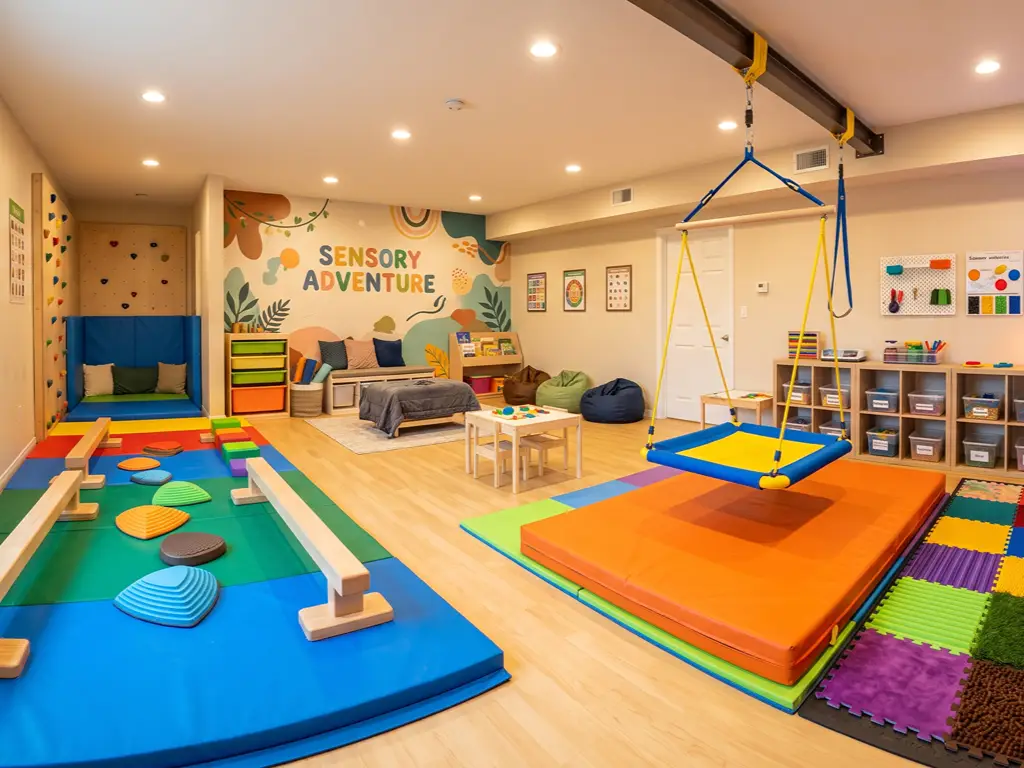
Walk into any well-equipped sensory room and the first thing you notice is how intentional everything looks. Nothing is there by accident. Every balance beam, every textured mat, every swing has a specific job: to deliver a controlled sensory signal to a specific sensory system.
That is the difference between sensory training equipment and general children’s toys. Toys entertain. Sensory training equipment trains. It provides targeted, repeatable input to one or more of the eight sensory systems — proprioceptive, vestibular, tactile, visual, auditory, olfactory, gustatory, and interoceptive — in a way that builds real neural processing capacity over time.
Most equipment falls into five functional categories:
- Balance and vestibular tools — balance beams, wobble boards, stepping stones, platform swings — train spatial orientation and movement processing through controlled instability.
- Heavy work and proprioceptive tools — weighted vests, crash mats, resistance tunnels, scooter boards — deliver deep pressure and joint feedback that helps the brain build an accurate internal body map.
- Tactile exploration tools — textured balance pods, sensory bins, tactile panels, weighted bean bags — develop the skin’s ability to discriminate textures, temperatures, and pressures.
- Visual and auditory tools — bubble tubes, fiber optic strands, distortion mirrors, sound panels — train sensory processing without overwhelming the nervous system.
- Integrated sensory systems — modular sensory paths, multi-station gym sets — combine multiple sensory domains into a single training circuit.
Think of a well-designed gym: the cardio zone, the free weights area, and the stretching corner each serve a distinct training goal. A sensory training space works the same way. Each station targets a specific sensory system, and the equipment at that station determines whether the training actually works.
Why Equipment Quality Determines Sensory Training Outcomes
There is a quiet assumption in many sensory training discussions that any colorful balance beam or textured mat will do the job. That assumption is wrong, and it has consequences you can measure.
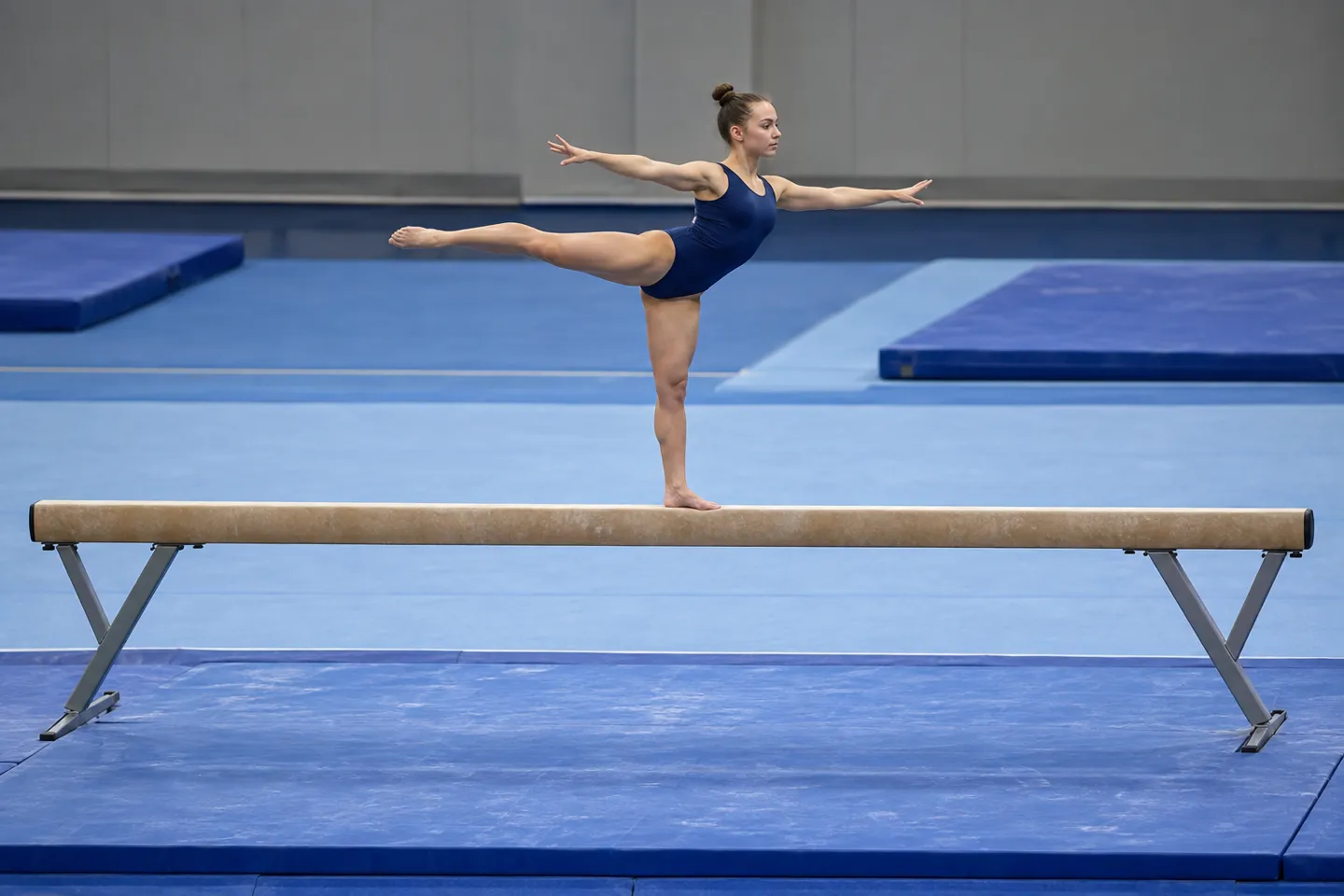
When a child steps onto a balance beam, the sensory signal their brain receives depends entirely on the beam’s physical properties. A beam with a properly calibrated anti-slip surface sends clean proprioceptive feedback: the soles of the feet register precise pressure distribution, and the vestibular system learns to make micro-adjustments. A cheap beam with a hard, slick surface sends muddy signals. The child’s brain learns to compensate for bad equipment, not to train the targeted skill. You are not running a balance training session. You are running a coping-with-bad-tools session.
The same logic applies across every category. A crash mat with inconsistent foam density fails to provide predictable deep-pressure input. What was supposed to be proprioceptive training becomes an uncontrolled fall. Tactile pods whose surface texture wears smooth after three months of clinic use stop providing meaningful discrimination challenges — the child touches them and feels nothing useful. A sensory swing whose suspension points creak and shift under load trains the child’s anxiety response, not their vestibular integration.
Equipment quality is not about luxury or branding. It is about signal fidelity. Every minute a child spends on poorly made sensory equipment is a minute spent training their nervous system to process inaccurate input. The equipment is the medium. The sensory signal is the message. If the medium is noisy, the message never gets through.
How to Evaluate Sensory Training Equipment: A Three-Lens Framework
Choosing sensory training equipment is not a matter of browsing a catalog and picking what looks engaging. The most photogenic balance stone can fail every meaningful quality test. The most unassuming scooter board can be built to outlast a decade of daily clinic use. The difference is knowable, but only if you evaluate equipment through three independent lenses.
These three lenses — material safety, structural design, and certification compliance — are not a checklist where two out of three is good enough. Each lens answers a question the other two cannot answer. If any one lens reveals a problem, the equipment is not fit for purpose. “The materials are questionable but the design is great” is not a trade-off. It is a disqualification.
Lens 1 — Material Safety: What Touches the Child
Material safety is the non-negotiable baseline because it governs what contacts human skin — and, for younger children, what ends up in mouths.
The chemical dimension comes first. Sensory equipment should use food-grade polymers — polypropylene (PP) and polyethylene (PE) grades certified free of bisphenol A (BPA), phthalates, and heavy metals. “Food-grade” is not marketing language. It means the material has been tested to confirm that under prolonged skin contact, oral contact, and temperature variation, no harmful substances migrate out. This is the same safety tier required for baby bottles and food containers. Sensory tools that children bite, lick, and grip for extended periods belong in exactly that tier.
The physical dimension matters just as much. The Shore hardness of a tactile surface — measured on the Shore A scale — determines whether a balance stone’s texture provides meaningful sensory discrimination or just feels generically rubbery. For children’s tactile training, materials in the Shore A 30–70 range hit the sweet spot: firm enough to hold shape under dynamic load, soft enough to provide differentiated tactile feedback. Below 30, surfaces feel mushy and undifferentiated. Above 70, they approach the hardness of a shoe sole — functionally useless for tactile training.
You would not buy a baby bottle made of industrial-grade plastic. Sensory equipment that goes into children’s hands and mouths deserves the same scrutiny.
Lens 2 — Structural Design and Durability: Built for Repeat Use
A balance beam in a school sensory room might support 30 different children in a single day — each stepping, jumping, wobbling, and occasionally falling. That is not the use case of a living room coffee table. It is closer to the use case of gym equipment.
Start with the difference between static load and dynamic load. A label reading “supports 100 kg” tells you the static limit — what the beam holds when weight is placed on it gently. But a 40 kg child jumping onto that beam from a 30 cm platform generates a momentary dynamic load that can exceed twice their body weight. Equipment designed for institutional use accounts for this with a built-in safety factor, typically 2.5× to 3× the rated static load. Consumer-grade products rarely do.
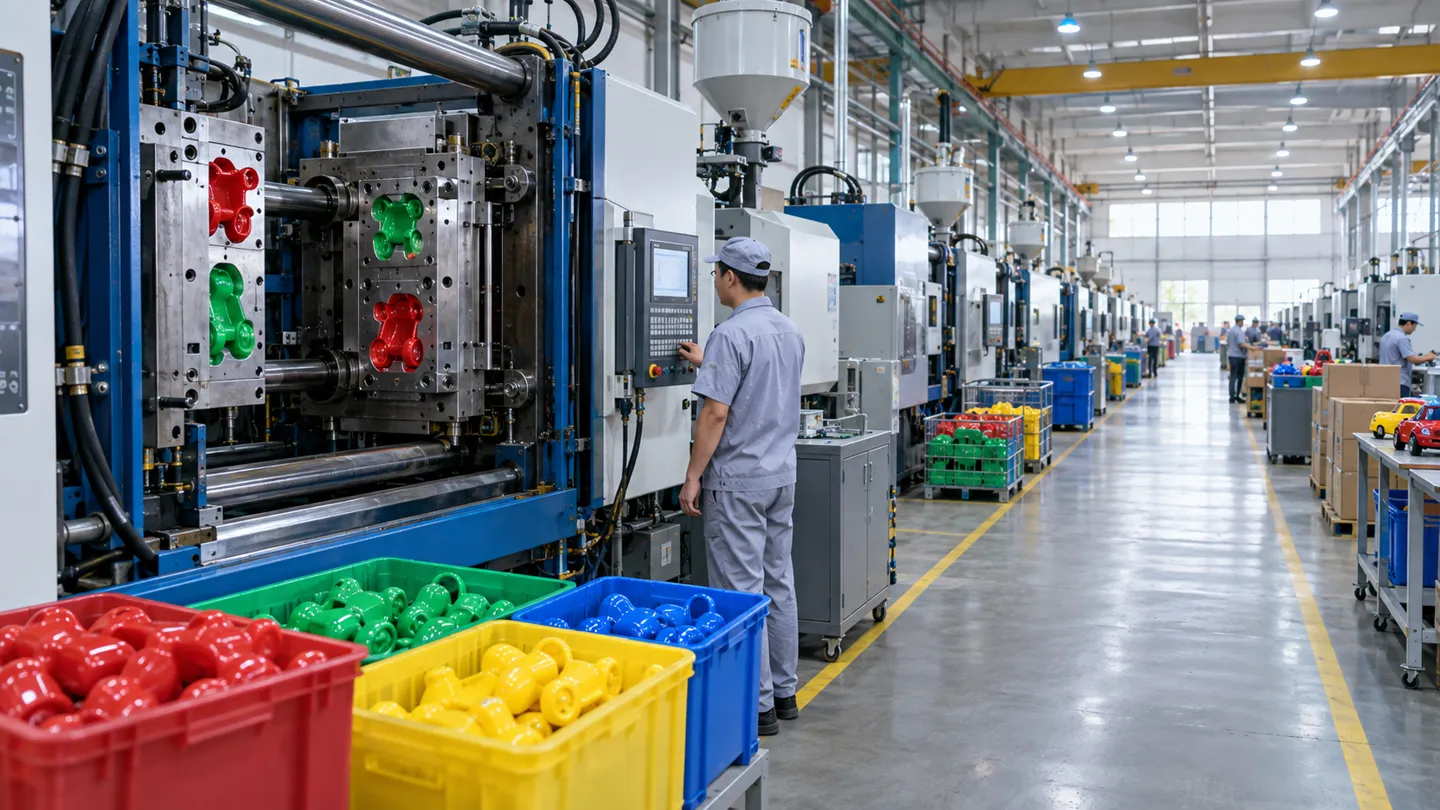
Next, look at construction method. Rotational molding produces hollow, seamless parts with uniform wall thickness — ideal for large outdoor equipment that needs to survive impact without cracking. Injection molding delivers higher precision and works better for smaller components like stepping stones and balance pods, though large injection-molded parts can carry internal stress concentrations that become failure points. Neither method is universally superior. The question is whether the manufacturer chose the right method for the part.
Finally, examine the anti-slip base — arguably the most important safety feature on any floor-contact equipment. What matters is not whether a rubber base exists but how it is attached and what it is made of. A rubber pad glued onto a plastic base will delaminate within months under institutional use. A rubber base that is overmolded — chemically bonded to the substrate during manufacturing — will not separate. The rubber compound matters too: natural rubber compounds with a durometer in the 50–60 Shore A range provide the highest friction coefficient on both wood and tile flooring.
Lens 3 — Safety Certifications and Compliance: The Non-Negotiable Baseline
Certifications are often treated as a checkbox exercise — “CE marked, check, move on.” That misses the point entirely. Certifications are not quality badges. They are a paper trail proving the equipment has been independently verified against specific, published safety standards.
For the US market, the mandatory standard is ASTM F963-23 — the current revision of the toy safety standard enforced by the Consumer Product Safety Commission (CPSC) under 16 CFR Part 1250 (CPSC, 2025). Any children’s product sold in the US must be supported by a Children’s Product Certificate (CPC) demonstrating compliance through third-party laboratory testing.
For Europe, the EN 71 series applies — with EN 71-3 governing the migration of specific elements (heavy metals) being the most directly relevant to sensory equipment that contacts skin and mouths. CE marking is the manufacturer’s declaration of conformity. The underlying test reports from an accredited laboratory carry more weight than the mark itself.
At the factory level, BSCI (Business Social Compliance Initiative) and ISO 9001 tell a different story. They are not product safety certifications but organizational indicators. BSCI means the factory passed a social compliance audit covering labor conditions, health and safety, and environmental practices. ISO 9001 means the factory operates under a documented quality management system. Neither guarantees a specific product is safe, but both signal that the organization producing it has infrastructure beyond a workshop floor.
One practical tip: when a supplier provides a certification document, verify it. Legitimate test reports carry the logo and accreditation number of an ISO/IEC 17025-accredited laboratory. If the report looks like a scanned photocopy of a photocopy, or if the lab’s accreditation cannot be confirmed on the relevant national accreditation body’s website, treat it as unverified.
Passed the three-lens test?
If your current supplier doesn’t clear every lens, it’s time to look elsewhere. Startinal manufactures sensory training equipment with full material traceability, institutional-grade durability, and transparent certification documentation — all from a single vertically integrated facility.
Choosing Equipment by Setting: Classroom, Clinic, and Home
The same sensory training goal — improving proprioceptive processing, for example — demands completely different equipment depending on where the training happens. A tool that works brilliantly in a one-on-one OT session can be useless in a classroom of 25 children. A tool designed for institutional throughput can be overkill in a living room.
Before choosing any piece of equipment, answer three questions: Who is using it? How many people are using it? Who is supervising? The answers will rule out more bad equipment choices than any product specification sheet ever will.
Classroom and School Settings: High Throughput, High Durability
In a school sensory room, dozens of different children use the equipment every day, and the supervisor is usually a teacher rather than an occupational therapist. The equipment cannot require expert-level setup or close one-on-one monitoring to be safe.
Prioritize group-use equipment: large rotational-molded balance beams that handle multiple children simultaneously, stepping stone sets big enough for circuit training, scooter boards with reinforced wheel mounts that survive being crashed into walls, and wall-mounted tactile panels that do not consume floor space. Stackable and nestable designs are not optional in a school. Research suggests they reduce storage footprint by 40–50%, which in a typical sensory room with competing demands on every square meter translates directly to more usable training space.
One common mistake: buying home-grade equipment for school use. A lightweight foam balance beam designed for one child at home degrades visibly within weeks in a school. The foam compresses unevenly, the cover fabric frays, and the anti-slip base peels. The cost-per-use math is unkind: a $60 home beam replaced three times a year costs more than a $200 institutional beam that lasts five years.
Therapy Clinic Settings: Precision Tools for Targeted Intervention
An OT clinic needs equipment that supports differentiated treatment. Two children with the same diagnosis may need different levels of vestibular input, different tactile textures, different proprioceptive challenges. The equipment has to make those adjustments possible.
Prioritize adjustable and modular equipment: vestibular swings with interchangeable seat types (platform, bolster, hammock) and adjustable suspension heights; tactile pods available in a progressive texture range from smooth to heavily textured; modular sensory integration sets that reconfigure into different circuit layouts for different treatment plans.
The tactile progression matters particularly for treating tactile defensiveness. A well-equipped clinic needs not one texture but a gradient — smooth, lightly textured, distinctly bumpy, and spiked — so the therapist can meet the child at their current tolerance threshold and gradually advance. Buying a single set of textured stones and calling tactile training covered is like a physical therapist owning one dumbbell weight.
Home Settings: Safe, Compact, and Multi-Purpose
Home sensory training operates under constraints the other settings do not face: limited space, parent supervisors who are not trained therapists, and the reality that equipment you cannot quickly put away will simply not get used. Research suggests equipment requiring more than two minutes to set up or store sees its usage frequency drop by over 60% in home environments.
Prioritize multi-functional, storable equipment: stepping stones that double as balance trainers, obstacle course markers, and tactile exploration tools; foldable balance beams that slide under a sofa; inflatable sensory pods that deflate for storage. Safety margins should be higher, not lower, than institutional equipment — a parent cooking dinner cannot provide the same supervision as an OT in a dedicated session.
The floor surface underneath the equipment is an underappreciated variable. An anti-slip rubber base that grips securely on hardwood may slide dangerously on polished tile. Before buying, confirm the equipment’s base is rated for your specific floor type, or budget for interlocking foam floor tiles as a safety underlay.
Budget-Smart Procurement: Getting Value Without Compromising Safety
At this point, you know what equipment categories exist, why quality matters, how to evaluate individual pieces, and how to match equipment to setting. The remaining question is the one that keeps procurement managers awake: how do you pay for all of this without getting burned?
The answer requires a shift in how you think about cost. Stop thinking about purchase price. Start thinking about cost per safe training hour. A $200 balance beam that delivers 1,825 training hours over five years costs $0.11 per hour. A $60 beam that lasts 200 hours before its surface wears smooth costs $0.30 per hour — nearly three times as much, despite costing less than a third of the purchase price. Cheap equipment is often the most expensive choice you can make.
Budget Planning: What to Expect at Each Tier
Sensory training equipment spans a wide price range, but most procurement falls into three tiers:
- 2–3 sensory systems covered
- 5–8 pieces of equipment
- Multi-function items prioritized
- 4–5 sensory systems covered
- 15–25 pieces of equipment
- Adjustable + modular configurations
- All 8 sensory systems
- 40+ pieces + dedicated zones
- Flooring + installation included
Three hidden costs that catch first-time buyers:
First, shipping. Large sensory equipment — especially rotational-molded outdoor pieces and heavy crash mats — occupies significant cargo volume. International shipping plus inland trucking plus final-mile delivery can add 15–30% to the equipment invoice, particularly for orders under a full container load.
Second, flooring. Any active sensory training zone involving jumping, climbing, or swinging needs impact-absorbing flooring underneath. Interlocking foam tiles at $3–$8 per square foot add up quickly in a 500-square-foot sensory room.
Third, replacement reserve. Even the best equipment wears. Budget 10–15% of the initial equipment investment annually for replacements — scooter board wheels, swing hangers, and high-touch tactile surfaces degrade fastest.
Supplier Evaluation: Direct Manufacturer vs. Specialty Retailer
The supplier you choose shapes everything downstream: the certifications you can verify, the customization you can request, the lead times you can count on, and the support you can access when something breaks. Five dimensions separate reliable suppliers from the rest:
Price and value. Specialty retailers offer curated catalogs, domestic warehousing, and brand-name recognition — at a 30–50% markup over factory-direct pricing. Direct manufacturers offer lower unit costs and greater customization flexibility but require the buyer to handle import logistics and quality verification independently.
Customization capability. If you need specific colors, branded packaging, custom dimensions, or an entirely new product, a direct manufacturer with in-house R&D is your only viable option. Retailers sell what already exists.
Certification transparency. A reliable supplier proactively shares third-party test reports — not just a CE logo on a website, but numbered reports from ISO/IEC 17025-accredited laboratories that you can verify independently. A supplier who deflects certification questions with “we follow all standards” without providing documentation is a red flag.
MOQ flexibility. Minimum order quantities reveal a supplier’s true business model. A factory that owns its production lines can accept small orders when needed — they control the scheduling. A trading company that aggregates orders from multiple factories cannot go below the most restrictive factory’s MOQ.
Communication quality. Top suppliers respond to technical questions — material specifications, load ratings, customization feasibility — within hours, with specific answers rather than template responses. If your question about Shore hardness gets answered with “our products are very high quality,” you are talking to a sales intermediary, not a manufacturer.
A concrete example makes this tangible. Startinal, a sensory equipment manufacturer based in Wenzhou, China, operates injection molding, metal fabrication, and textile production lines under one roof — true vertical integration across a 10,000-square-meter facility. This structure means the company controls quality at every stage: the polymer grade in a batch of balance stones is traceable to the raw-material purchase order, the R&D team of 50 designers works on the same campus as the production floor, and full CPC, CE, ASTM F963, and BSCI certification documentation is available on request because the testing was commissioned in the manufacturer’s own name. This is the difference between buying from a factory and buying from a catalog.
This is not about finding the cheapest option or the biggest brand. It is about finding a supplier whose capabilities match your actual needs — and being able to verify those capabilities through documentation rather than sales language. Request samples before committing to a bulk order. Put those samples through a realistic use test: let children use them, let your OT evaluate them, let your cleaning staff wipe them down repeatedly. A sample that survives two weeks of real-world abuse tells you more than any catalog page ever could.
Start Your Equipment Specification
Work with a manufacturer that passes every lens. Whether you’re outfitting a single clinic or a district-wide sensory program, our design team can configure a solution around your budget and compliance requirements.
Contact Our Design TeamReferences
- U.S. Consumer Product Safety Commission. “16 CFR § 1250.2—Requirements for Toy Safety (ASTM F963-23).” 2025. law.cornell.edu
- STAR Institute for Sensory Processing. “Treatment Approach.” sensoryhealth.org
- International Organization for Standardization. “ISO/TR 8124-9:2025—Safety of Toys: Comparison of ISO 8124-1, EN 71-1 and ASTM F963.” 2025. iso.org
- Stratistics Market Research Consulting. “Sensory Processing Disorder Tools Market Forecasts to 2032.” marketresearch.com